

Healthy and safe through the cold season. Tips for new owners.
Dusseldorf. Cold, darkness, viruses, salt on the sidewalks: winter brings its own challenges for dogs and their owners. With these basic rules, new dog owners and their four-legged friends can get through the season healthy and safe.
Icy gusts, constant rain or icicles: While we humans keep warm with rainproof coats and lined shoes, dogs often only have their own fur left. Whether this is sufficient for all weather conditions depends largely on the breed. “Dogs experience cold very differently,” says dog trainer and guide author Sabine Winkler. “While Nordic breeds such as huskies or malamutes love snow and sub-zero temperatures, small and short-haired animals freeze quickly. Because they come from warm regions, their fur is often not adapted to the cold season in Central and Northern Europe. A dog coat can be a useful support – especially in cold, wet weather.”
It is crucial that dog owners observe their animals and react to their behavior. When dogs get cold, they start to shiver and hunker down to retain heat. Ears and paws in particular feel very cold.
Paws need protection
Snow, ice and especially road salt can put a lot of strain on the pads of dog paws. After the walk, dog owners can carefully rinse their paws with lukewarm water and then dry them. Vaseline or special paw balms also help with care. Outside, it is also important to avoid icy and therefore slippery surfaces in order to prevent injuries.
Exercise is important even in winter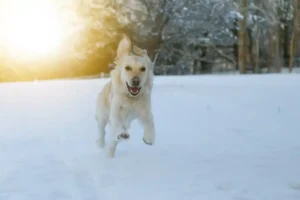 Cold and bad weather are not reasons to limit dog walks in winter. Even in the cold season, dogs need exercise and activity to stay physically and mentally fit and to strengthen their immune system. “When the temperatures are low and it’s wet, you shouldn’t stop for too long while walking the dog – for example because you meet someone you know while walking and want to chat,” says Winkler. “As long as the dog keeps moving, the cold usually bothers him less.” Older animals or animals with poor health require special consideration. In such cases, the veterinarian can explain what can be expected of the four-legged friend.
Don't forget visibility
Winter is not only the cold season, but also the dark season. It gets light later in the morning and dark early in the afternoon. Walking the dog only in daylight is hardly possible. For the safety of people and animals, it is therefore important to be clearly visible to others. The walks should therefore take place on well-lit paths. In addition, dogs and owners can ensure more visibility and safety with reflective vests, harnesses or leashes.
Dogs can also catch colds
Like humans, dogs' immune systems are more vulnerable in prolonged cold than in the warm summer months. Coughing, sneezing or a slight fever can also be noticed in four-legged friends and must be cured. Peace and a warm place to sleep will help. To prevent this, you should ensure a strong immune system with enough exercise and a balanced diet and dry the animal well after every walk if it gets wet.
Pet Supplies Industry Association (IVH) e. v.