
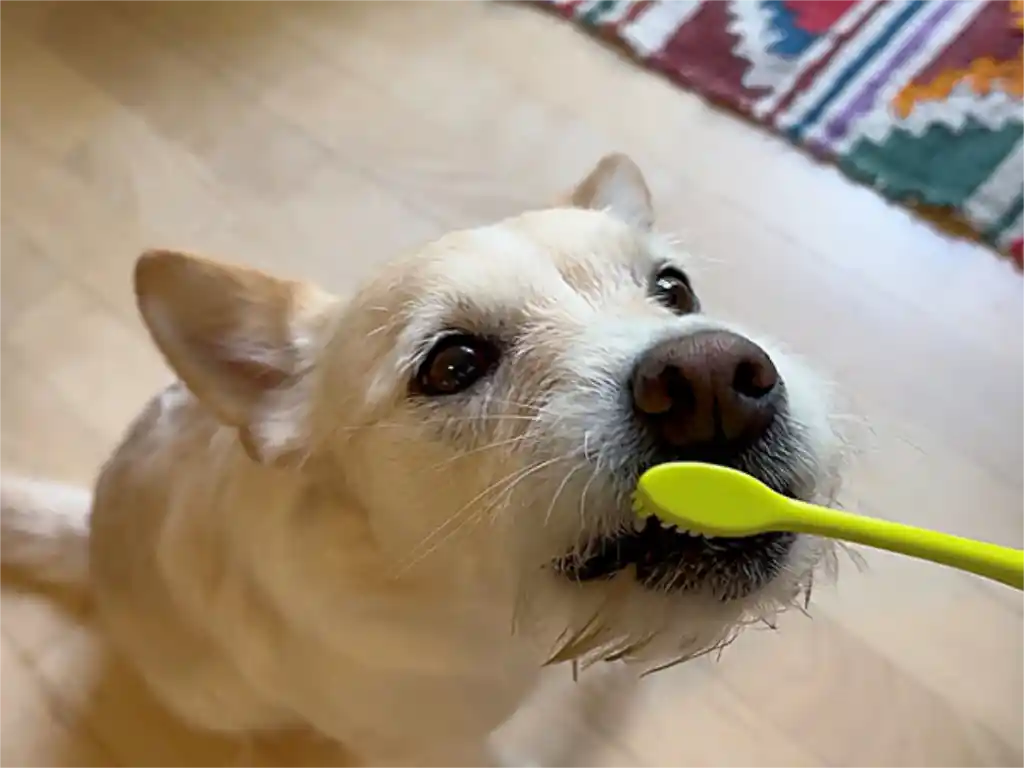
Eschborn. Twice a day, for two minutes – we all know the dental health recommendations. What many people don't know, however, is that brushing our four-legged companions' teeth should also be part of their health care. “Dogs and cats also develop plaque on their teeth after eating, which, when mixed with minerals from saliva and numerous bacteria, can form tartar,” says Dr. Laura Witting, veterinarian and animal protection consultant at the animal protection organization TASSO.
The tartar irritates the gums and can lead to a bacterial infection of the periodontium, i.e. periodontitis. As a result, deep gum pockets and inflammation extending to the root of the tooth can develop, which can cause the animals great pain and even lead to tooth loss. “Since many animals hide their pain well and dental problems are often only discovered with a dental x-ray, the affected animals often suffer for a very long time,” reports Witting from her experience in the veterinary practice.
The most effective way to prevent tartar sounds as simple as it is effective: regular tooth brushing loosens the plaque, less tartar forms and fewer dental diseases occur.
 What sounds so easy can, however, be challenging in everyday life with dogs and cats. Witting also knows this: “Of course, the animals don't understand why brushing their teeth is important from a health perspective. That's why it's necessary that we train them in small steps and based on positive reinforcement and get them used to it.” Witting recommends brushing once a day with special animal toothpaste and a soft brush, a finger cot or a cloth placed over your finger and cleaning as much as is possible without stress for the animal. “If it doesn't work every day, then maybe every two days or twice a week. Anything is better than nothing,” she says. However, there are of course also animals with whom it is not possible to brush their teeth in a relaxed manner. Then the teeth should receive special attention in veterinary care: “A thorough dental check-up in the veterinary practice every six to twelve months would be recommended in order to detect changes at an early stage,” recommends Witting. If you are unsure, it is also worth visiting veterinarians who specialize in teeth.
The topic of brushing animals' teeth may sound like a lot of effort and training, but with a little practice and increasing routine it can be easily integrated into everyday life and is a decisive factor in animal health. By the way, this form of training, so-called medical training, is a fun and relationship-promoting activity from which the animal benefits on many levels.
Was this amount interesting or helpful?
Your rating shows us what you and your furry friend like – it's like a treat for us.