
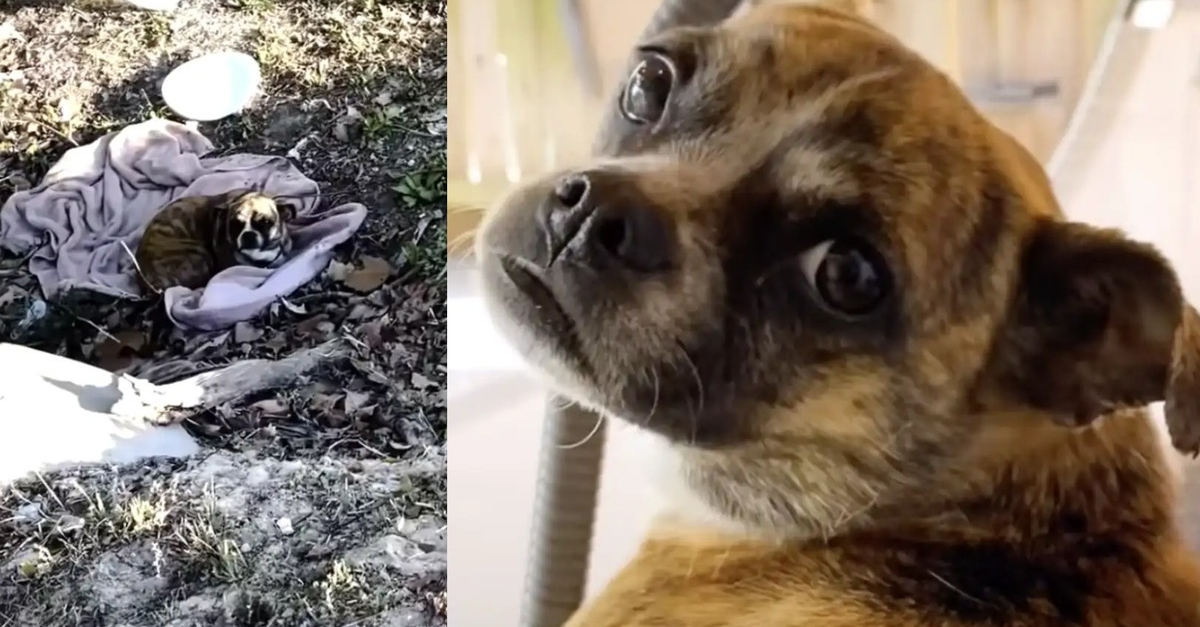
Dianafounder of SpookyKittyKats and helping animals in distress Houstonin Texas (United States), recently spotted a dog in great distress. The latter was lying alone at the bottom of a ditch at the side of the road. The only bed she had was an old blanket.
The Dodo
“ I had to act very quickly because I didn't want her to get scared and run away. “, tell Diana has The Dodo. She approached her slowly and managed to put a leash around her neck, before getting her into her vehicle.
“ When I put her in the car, she immediately snuggled up to me. She was shaking », says his benefactress.
She called a friend, Samanthaof the association Street Life to the Sweet Life. She immediately agreed to become his foster mother.
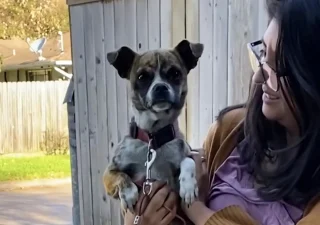
So she took the dog, called Micaat her house. She gave him a good bath and set up a comfortable corner for him to rest.
“ Mica was a little shy at first, but you could tell she just wanted to be loved “, noted Samantha.
The Dodo
“She’s in a great family”
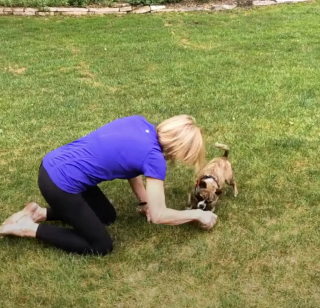
Little by little, the dog began to relax and trust him. She who feared just about everything and everyone now wagged her tail every time she met someone, even doing an adorable little “dance” to express her joy.
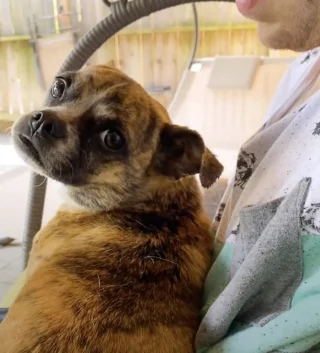
3 weeks after his rescue by Diana and its support by Samantha, Mica was adopted by a loving family, whom she joined in Minnesota.
The Dodo
The dog is no longer called Micabut Ewa. “ She is in a wonderful family. She adores her masters », rejoices Samantha.
The Dodo
Woopets advice: should you leave a rescued dog alone at first to avoid over-stimulation?
In many cases, a recently rescued dog such as was Mica needs alone time and structured quiet time to recover emotionally and avoid being overstimulated. This does not mean isolating him completely, but offering him the right balance between reassuring human presence and moments of rest.
Here are some tips in this direction:
- Respect a decompression phase: in the first days, limit requests (visits, caresses, games, etc.) to reduce stress.
- Allow selected moments of solitude: a dog must be able to retreat to a secure space without forced interaction.
- Avoid excessive human presence: too much attention can paradoxically reinforce anxiety in an animal which does not yet have any bearings.
- Encourage him to interact: after this initial phase, with the help of rewards (treats), and by stopping as soon as he shows signs of weariness or discomfort.
- Establish gradual absences: Short separations help prevent separation anxiety later.