
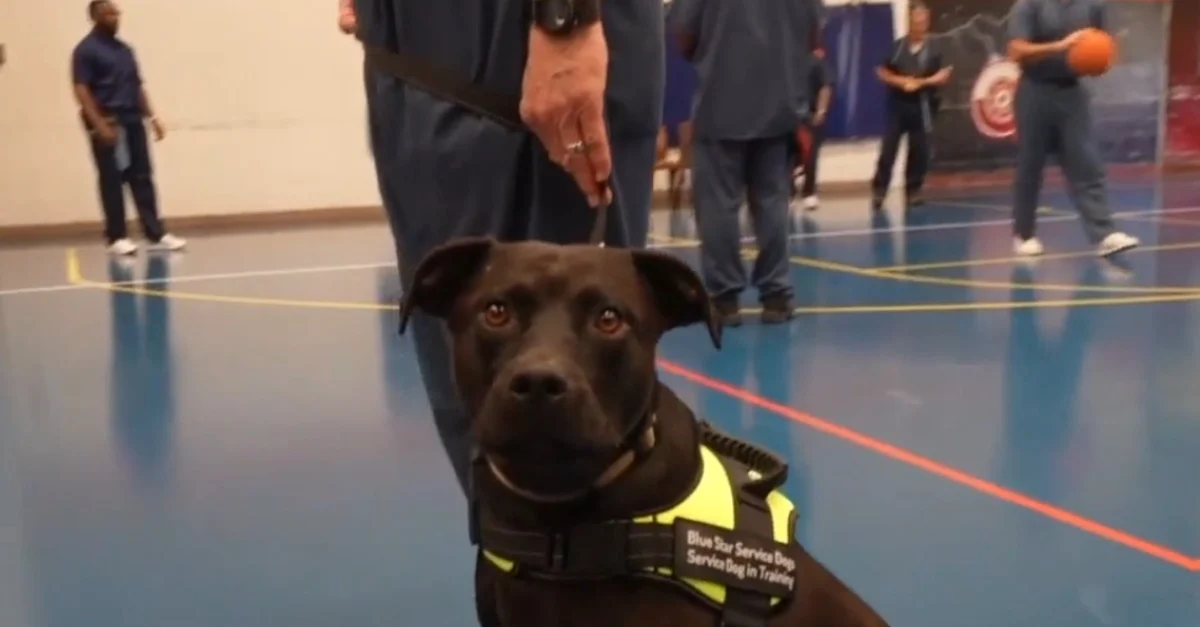
The association Blue Star Service Dogs runs a service dog training program for retired military personnel and first responders suffering from psychological trauma, taught by inmates. The said program, which has trained more than 200 canines and involved more than 350 prisoners, is deployed in 4 penitentiary establishments in Michigan (United States), including the correctional center Thumb has Lapeer.
WXYZ Detroit
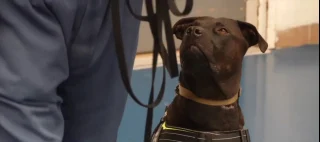
As part of this initiative, detainees are given dogs taken in from the street or from shelters. They teach them the basics of dog training and their future profession: sitting, picking up a leash when he falls, helping the owner in the event of a medical emergency… All while ignoring distractions. The pairs live together 24 hours a day, 7 days a week, for 4 to 6 months.
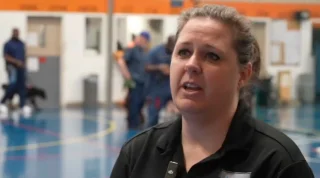
The project is dear to the heart of Trish Barnesexecutive director of Blue Star Service Dogs. She, who had gone through a serious depression, to the point of thinking about ending her life, had recovered by saving and working alongside dogs in distress when she was an animal officer.
WXYZ Detroit
“ There were times when I thought suicide was the solutionshe confides to WXYZ Detroit. This dog gives you purpose. I can't imagine a life without service animals. »
WXYZ Detroit
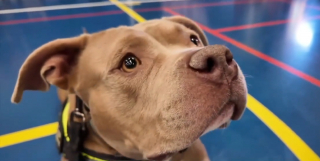
“Transforming good dogs into exceptional dogs”
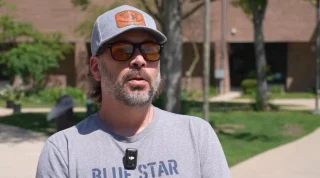
Same feeling on the side of Matthew Sicatraining director at Blue Star Service Dogs. Struck by a family tragedy, he worked tirelessly to “ suicide prevention » and the transformation « from good dogs to exceptional dogs. You can change someone's life. »
WXYZ Detroit
Among the selected detainees is Kevin Campbellincarcerated for 37 years. He has been participating in the program for 5 years. He is currently caring for a young dog called Titan, who will soon be able to join his new master Estin Cantrell. The latter suffered serious injuries after serving in the US Army infantry.

WXYZ Detroit
“ Knowing that we can entrust these dogs to a deserving veteran who served our country… There are no words to describe this “, said Kevin Campbell.
“The first time they felt love was through the eyes of a dog”
Just like this one, Darius Huntington is serving a life sentence and works with a loulou assigned by the association. “ When I'm going through my worst days, this dog helps me, he said. I'm better than I was before. I am grateful to Blue Star. »

WXYZ Detroit
Trish Barnes has a front-row seat to witness the impact of this program on its beneficiaries. “ They say the first time they felt love was through the eyes of a dog.”she says.
WXYZ Detroit
Woopets info: what is the difference between assistance dog, guide dog and therapy dog?
Assistance dog
The assistance dog is trained to accompany a person with a disability (physical, sensory or psychological) on a daily basis. He can carry out concrete actions such as opening a door, picking up an object, alerting people in the event of discomfort or interrupting an anxiety attack. It is allocated to a single person and benefits from a legal status guaranteeing access to public places.
Guide dog
The guide dog is an assistance dog specialized in helping blind or visually impaired people. It makes travel safer, avoids obstacles, stops on sidewalks or stairs and facilitates orientation in complex environments. Its role is above all linked to mobility and autonomy in public spaces.
Therapy dog
The therapy dog is not a service dog in the legal sense. It operates in a supervised setting (hospitals, nursing homes, schools, prisons) to provide comfort and stimulate exchanges. It is not assigned to a specific person and does not have automatic access to public places, because its mission is based on mediation and not on individual help with disabilities.