

Travel abroad well prepared
Bonn. Many owners want to spend their vacation time with their dog. To ensure that the journey is relaxed and safe for people and animals, careful preparation is essential. In addition to organizational issues, health aspects play an important role. This overview shows what is particularly important when traveling with a dog.
1. Entry requirements: Inform early
The legal requirements differ depending on the destination. Largely uniform regulations apply to travel within the European Union, while additional requirements must be observed for travel to countries outside the EU.
For traveling within the EU you usually need:
- a valid EU pet passport,
- a microchip for clear identification,
- a valid rabies vaccination.
Additional regulations apply for some European countries such as Finland, Ireland, Norway and Malta!
 When traveling to countries outside the EU, transiting through other countries or returning, there may also be additional requirements, such as a rabies titer test (determination of rabies-specific antibodies), special health certificates or waiting periods. Entry with insufficient vaccination protection, inadequate identification, etc. can lead to rejection at the border or long quarantine periods in the country of entry!
It is therefore important: not only the entry and return travel regulations, but also the regulations for transit countries should be checked at an early stage.
2. Labeling and documentation
The dog is clearly identified via a microchip. According to EU requirements, this must have been implanted before the rabies vaccination or at the latest at the time of vaccination in order for the vaccination to be recognized for travel purposes.
All relevant information is documented in the EU pet passport, which is mandatory for traveling abroad. These include in particular:
- the individual chip number,
- the date of implantation,
- the location of the marking.
Additionally, vaccinations are recorded, including:
- Type of vaccination (e.g. rabies),
- date of implementation,
- start of validity,
- Expiry date.
The rabies vaccination is mandatory and is usually only considered effective 21 days after the initial vaccination. Refreshers remain valid as long as they are made on time.
3. Register – find again
Entry in a pet register is also important. This is not legally required. If the dog gets lost and gets lost, the owner can only be informed if the chip number and contact details are stored in the databases.
It should be noted, however, that pet registries are often organized on a country-specific basis. Before traveling, it can therefore make sense to check whether the dog can be found in databases for the country you are traveling to or whether additional registration is recommended.
4. Vaccination protection: Well protected on the go
Up-to-date vaccination protection is the basis for a safe journey. In addition to the mandatory rabies vaccination, extended protection may make sense – depending on the travel destination.
These include, among other things, vaccinations against distemper and hepatitis contagiosa canis (contagious liver inflammation in dogs), Parvovirus and leptospirosis. In some cases, vaccination against infectious cough makes sense. If necessary, vaccination against leishmaniasis is recommended when traveling to southern countries.
Which vaccinations are recommended in individual cases should be discussed individually with the veterinarian.
5. Parasite prevention and motion sickness
Depending on the holiday region, dogs can come into contact with parasites that have rarely or never occurred in Germany. The ESCCAP website provides professional recommendations for precautionary measures (European Scientific Counsel Companion Animal Parasites):
The following diseases can be transmitted by so-called vectors and occur in the southern Mediterranean region:
- Leishmaniasis: Transmitted by sand flies. Is chronic with changes in many organs of the body.
- Babesiosis: Transmitted by ticks, it destroys red blood cells and platelets.
- Ehrlichiosis: It is also transmitted by ticks and can cause destruction of blood platelets and subsequently lead to bleeding.
- Heartworm disease: Is transmitted by mosquitoes and is widespread in many countries in southern and eastern Europe. After the infection, the adult stages settle in blood vessels, cardiac arrhythmias, coughing and breathing problems.
- Skin worm disease: Also transmitted by mosquitoes. Nodules, itching and local hair loss can occur.
More information about these diseases under motion sickness, Federal Association for Animal Health.
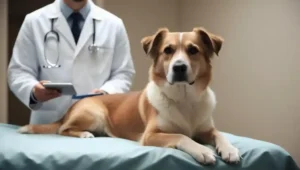 Appropriate parasite prophylaxis should always be agreed upon with the veterinarian before the start of the trip. Some countries have specific entry requirements in this regard (e.g. treatment against tapeworms (Echinococcus) 24 to 120 hours before entry with appropriate proof in the EU pet passport is mandatory in the UK, Finland, Ireland, Norway and Malta).
It is therefore important to have information about this early on. The website is helpful: BMLEH – Pets and Zoo Animals – Regulations for entering the European Union with dogs, cats and ferrets.
6. Transportation: safety and well-being
Safe transport is not only required by law, but also crucial for the dog's well-being during the journey. In the car, the dog should be protected by a suitable transport box or an appropriate safety system to avoid injuries in the event of sudden braking maneuvers.
On longer journeys, regular breaks should be planned so that the dog can move around and relax. In addition, sufficient fresh water should be available at all times. Feeding should be adjusted – larger meals immediately before the start of the trip can lead to nausea.
Particular attention should be paid to protection from heat. Even at moderate outside temperatures, the vehicle can heat up significantly. Dogs must therefore never be left unattended in the car.
7. Information about the destination country
It is important to find out comprehensively about the specific requirements and conditions of the destination country well in advance of your trip. These include, in particular, entry regulations, possible restrictions for certain dog breeds and regional health risks.
Country-specific regulations, such as those requiring leashes or muzzles, should also be taken into account. Likewise, the availability of veterinary care can vary significantly depending on the region.
It is recommended to research a veterinary practice at your holiday destination in advance and to keep important contact details to hand. This means you can react quickly in an emergency.
8. Travel first aid kit:
Prepared for emergencies
A well-equipped first aid kit can be helpful in an emergency. These include, among other things, remedies for nausea and diarrhea, bandages for minor injuries and eye care products, for example for irritation caused by sand or dust. If you have known allergies or chronic illnesses, you should also take appropriate medication with you.
The composition of the travel first-aid kit should be coordinated with the veterinarian in advance.
9. Behavior at the holiday destination
Even at your holiday destination, careful behavior contributes significantly to the dog's health. Regular checks for fleas and ticks, especially after walks, are recommended.
In addition, care should be taken to ensure sufficient rest periods and shady places to avoid overload and heat stress.
With regard to diseases transmitted by mosquitoes, it is important to ensure effective protection, especially in the evening and at dusk, when the mosquitoes are particularly active. It is also advisable to avoid spending time in mosquito-rich areas if possible.
10. After the trip:
Keep health in mind
After returning, it is worth continuing to watch the dog carefully. Some diseases only show up with a delay. If there are any abnormalities such as fever, fatigue, skin changes or breathing problems, a veterinary examination should be carried out promptly. In some cases, additional treatment against certain parasites or examinations for certain pathogens makes sense after your return.
With the right preparation, nothing stands in the way of a relaxing holiday with your dog. Find out in good time and seek advice from your veterinarian so that you and your animal are well prepared for your trip.
Was this amount interesting or helpful?
Your rating shows us what you and your furry friend like – it's like a treat for us.