
A report at the origin of the rescue
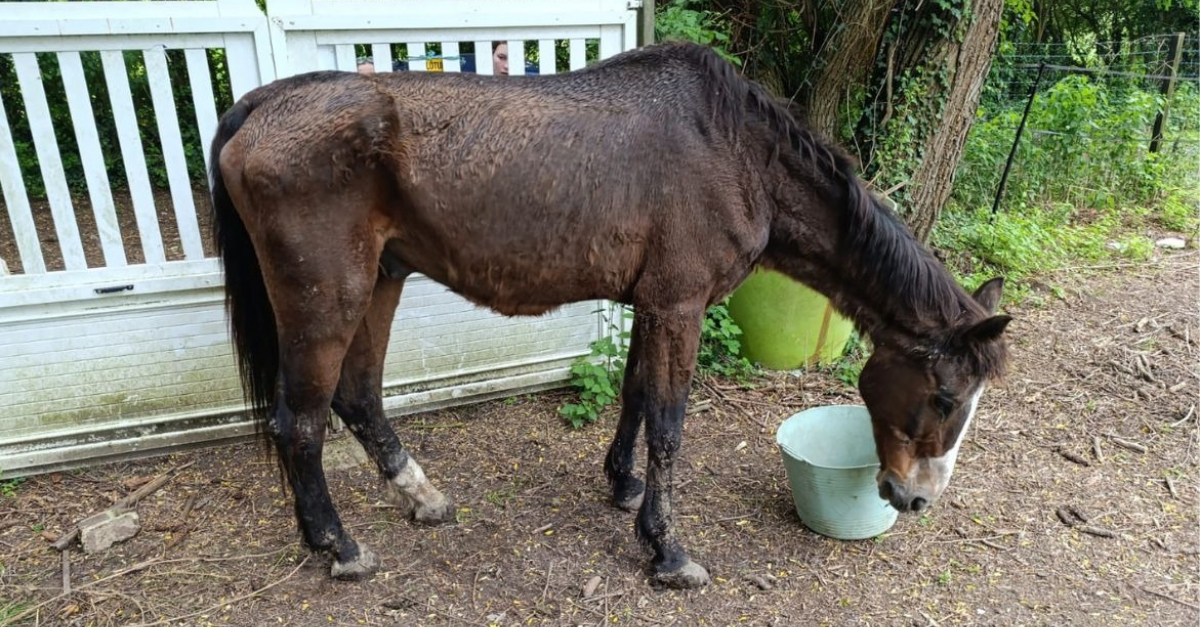
A report had brought to light the situation of Lathleta retired competition horse, left without water or care: “ The horse was very thin, its sides hollow and its ribs very visible. He had no water and was fed pellets instead of hay », explained Maryline, volunteer investigator at the 30 Million Friends Foundation. However, his former owners claimed to take care of him on a daily basis and denied the mistreatment. But the evidence was there: the horse's health, which was worrying, did not worry them. Moreover, they agreed to give it up without any hesitation. “ He also suffered from dental and hoof problems. », described Maryline.
Living on land much too small, he had no room to move », assured Laetitia Bosdirector of The Aubris FarmOr Lathlet has now found refuge.
30 Million Friends Foundation
Weak and cachectic
“ Having become too old to work, the equestrian center which originally had him sold him to the first comers who had neither the skills nor the means required », underlined Laetitia Bos before adding that he “ does not have any vaccinations in order and is not dewormed “. In a state of extreme weakness and suffering from cachexia, Lathlet had to be infused. His weight should have been at least 600 kg, but he was only 365 kg at the time of his rescue. “ He comes from afar », assured Laetitia Bos. Since its seizure, “?he gained 13 kg after a week at the shelter. He keeps his spirits up and asks for lots of food. » Safe within the Foundation, he can finally make a new start.
Woopets info: what is cachexia in a horse?
This is a state of extreme malnutrition, characterized by severe weight loss, with protruding ribs, hips and vertebrae, loss of muscle mass (back and neck, in particular) and fat reserves, as well as poor general condition. It is a sign of a serious problem, constituting a veterinary emergency, and putting the health of the animal at risk. It can occur for several reasons.
-
Insufficient or unsuitable nutrition.
-
A chronic illness (cancer, kidney or liver failure, infections, etc.).
-
Significant parasitism.
-
Dental problems preventing the horse from eating properly.
In France, when a lack of care or abuse is the cause of cachexia in a horse, it can be considered a victim of mistreatment.