
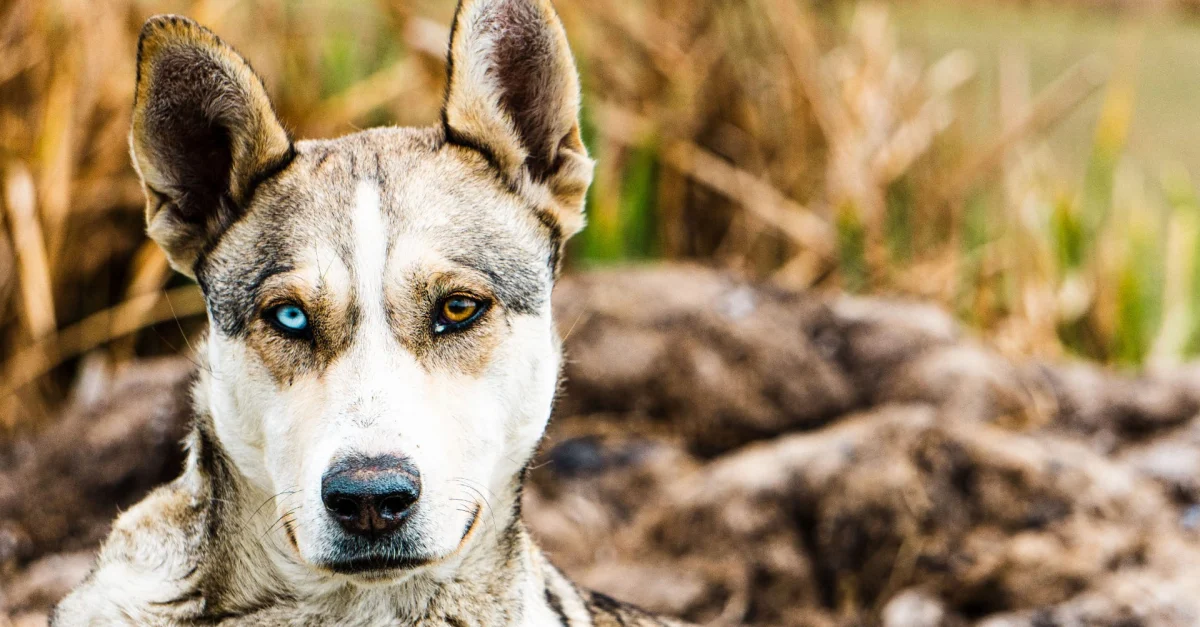
Have you ever come across a dog with one blue eye and the other brown? As original as this look is, there is nothing strange in it and can even be found in cats, horses and even cows. This doggie simply sports a little natural fantasy called “iris heterochromia”.
An astonishing but natural phenomenon
An iris heterochromia is a characteristic corresponding to a difference in color between the two irises (complete heterochromia), or sometimes to several shades present in the same eye (partial heterochromia).
It all comes down to melanin, the pigment which gives its color to the coat, but also to the iris: the more abundant it is, the darker the eye will be; when it is less present, the eyes can take on blue or light shades.
In dogs, this particular distribution of pigmentation is generally of genetic origin and, in the vast majority of cases, it has no impact on vision.
Certain breeds are particularly known for these looks that do not go unnoticed, such as the Siberian HuskyTHE Australian ShepherdTHE Border CollieTHE CollieTHE Bobtail or even the Great Dane harlequin.
© Illustrative photo
The role of the Merle gene
So how does a dog end up with one eye blue and the other brown? To understand this mystery, we need to look at ocular genetics and how pigments are distributed during dog development. In certain doggies, the Merle gene plays spoilsport by modifying the distribution of melanin. This gene which influences the color of the coat causes areas of lighter pigmentation, giving a marbled or spotted appearance to the coat, but also eyes of different colors and sometimes a partially depigmented nose.
But be careful, “Merle gene” does not automatically rhyme with “mismatched eyes”: not all dogs carrying this gene have mismatched eyes, because the expression of color also depends on other genetic factors.
Finally, you should know that, contrary to popular belief, having crooked eyes is not in itself a vision problem. It's just a pigmentation peculiarity. On the other hand, certain genetic configurations associated with the Merle gene deserve particular attention: double Merle (especially when 2 dogs carrying this gene reproduce) can in fact be associated with ocular and hearing anomalies.