

Like many breeds, the Labrador is not spared from small health problems: researchers have identified no less than 67 of them, some of which are linked to being overweight, a real weakness among these little gourmands on their legs. But all Labradors are not in the same boat… Indeed, according to a study published in Canine Genetics and Epidemiology*, THE Labradors chocolate would be more exposed to certain pathologies than their black or sand cousins.
The sketch of the British Labrador
Australian and British researchers were interested in this problem. To better understand the profile of Labradorsthey immersed themselves in the data of VetCompass™, a large program that brings together the electronic medical records of dogs followed by veterinarians at United Kingdom, then they were interested in 3 types of data: demographics, mortality and diseases that affect these doggies.
© Illustrative photo
Their demographic analysis thus covered no less than 33,320 Labradors. To study diseases and causes of death more precisely, the scientists then randomly drew a sample of 2,074 dogs, or 6.2% of the group.
The data thus made it possible to draw up a sketch of the Labrador British: black dresses are the most represented (44.6%), ahead of sand (27.8%) and chocolate (23.8%). On the scale side, the average adult weight reaches 33 kg, with a notable difference between the sexes: males, at 35.2 kg on average, are significantly heavier than females, who weigh 30.4 kg. Enough to give a fairly precise idea of the population studied before focusing on their small – and sometimes big – health concerns.

© Illustrative photo
Chocolate Labradors more exposed to certain diseases
During this study, the researchers notably discovered that, in the Labradorchocolate dresses seem to have some additional weaknesses, particularly on the ears and skin. In the study, 23.4% of Labradors chocolate had in fact suffered from external otitis, compared to 17% of sables and 12.8% of blacks.
Pyotraumatic dermatitis, these famous “hot spots” which can suddenly appear on the skin, was also more common among chocolates: 4%, compared to 1.6% among sables and 1.1% among blacks. And the difference doesn't stop there! Their median longevity reached 10.7 years, compared to 12.1 years for Labradors not chocolate.
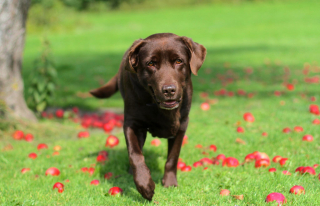
© Illustrative photo
So, should we directly blame the gene responsible for the brown coat? Not necessarily. Scientists put forward another hypothesis: as the chocolate color is recessive, its selection may have favored the use of more restricted lines, with the risk of concentrating predispositions to certain diseases. A plausible mechanism, but which remains a hypothesis. If the study clearly shows an association between chocolate dress and certain health problems, it does not demonstrate that the color itself is the cause.
*McGreevy, PD, et al., “Labrador retrievers under primary veterinary care in the UK: demographics, mortality and disorders”, Canine Genet Epidemiol, 5, 8, 2018.