
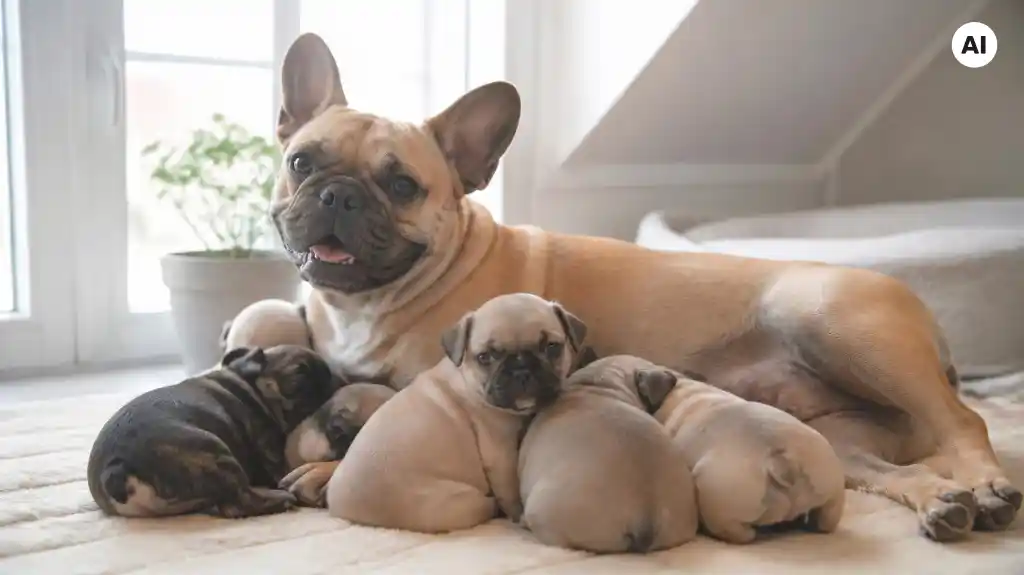
The hunt for false ideals of beauty exacerbates the suffering of many dogs – all the more reason to be careful when buying! With the new awareness campaign “False Ideal. Real Torment.” The animal protection organization FOUR PAWS draws attention to the suffering of dogs with torture breeding traits.
Hamburg. Live happily, live happily, like the pug in the oat straw? The assumption that the pug is necessarily a happy animal seems to have fallen out of time, as did the poetry albums in which this questionable wish could be read all too often. Because the reality looks different. “Many dogs of popular breeds suffer from shortness of breath, chronic back pain or sore eyes,” warns veterinarian Ulrike Lessiak, expert for dogs and cats at FOUR PAWS. These symptoms are not random. Rather, the animals' silent suffering is often the result of torturous breeding.
The term torture breeding describes the targeted breeding of animals in which breeders and buyers consciously promote physical characteristics and hereditary defects in favor of a certain appearance, even though they impair well-being, health, physical functions or natural behavior. Not only in pugs or the no less popular French bulldogs, conscious selection for the shortest possible snout reinforces the so-called brachycephalic head shape: While their skull is greatly shortened, their soft tissue remains largely unchanged. Because the airways are so narrow, affected animals often suffer from severe shortness of breath when exposed to heat or exercise.
These 12 characteristics can cause suffering in dogs:
- Excessive/deep folds of skin on the head, legs, tail and body.
- Short, flat muzzle (less than a third of the head length).
- Protruding eyes.
Eyelids that do not close completely or curl up. - The chest and stomach are very low due to short legs and a long back.
- Gigantism (excessively large animals).
Dwarfism (excessively small animals).
Hairlessness or lack of fur.
Shortened or bent legs. - Missing or short tail, limiting communication ability and balance.
- Underbite, or a protruding lower jaw that makes it difficult to eat.
- Limited mobility due to a thick, short neck or excessive muscles.
2.5 million dogs in Germany are affected by cruel breeding According to current estimates, one in four of the approximately ten million dogs nationwide is affected by cruel breeding. In recent years in particular, trends in social media have promoted the orientation towards false ideals of beauty. Buyers are increasingly accepting illnesses in dogs as a “breed-typical fate”. In this way, the problem is normalized and the health restrictions are no longer recognized as such. On the contrary: many owners perceive tears as normal in their dogs. In fact, they are a result of the bulging eyes, which can lead to chronic irritation of the cornea and, in the worst case, even loss of vision.
“Many people don't know how much these dogs suffer. Animals with big eyes, round heads and childlike facial features seem particularly sweet to many buyers. However, they often require lifelong veterinary care, operations and medication to enable them to live a pain-free life. In fact, more than 80 diseases can be traced back to traits of torture breeding,” says veterinarian Ulrike Lessiak, expert for dogs and cats at FOUR PAWS.
Prioritize health over appearance
Ulrike Lessiak recommends finding out more about cruel breeding and asking for transparent evidence of the dog's health and well-being as well as genetic tests when purchasing. “As long as extreme characteristics are considered cute or typical of the breed and interested parties actually buy affected dogs, there is an economic incentive for many dubious breeders to continue to breed precisely these animals,” says the expert.
For this reason, for Lessiak, adopting a dog is a right step against cruel breeding. Of course, it is absolutely okay to take in a dog with torture-breeding characteristics from animal welfare. Lessiak: “In this case, the question is no longer whether he should be bred, but rather how to give him the best possible life. Dogs with torture breeding characteristics in particular often benefit particularly from being placed in an informed and committed family.”
Further information about torture breeding characteristics and their specific effects on dogs can be found at www.vier-pfoten.de.
Was this amount interesting or helpful?
Your rating shows us what you and your furry friend like – it's like a treat for us.