
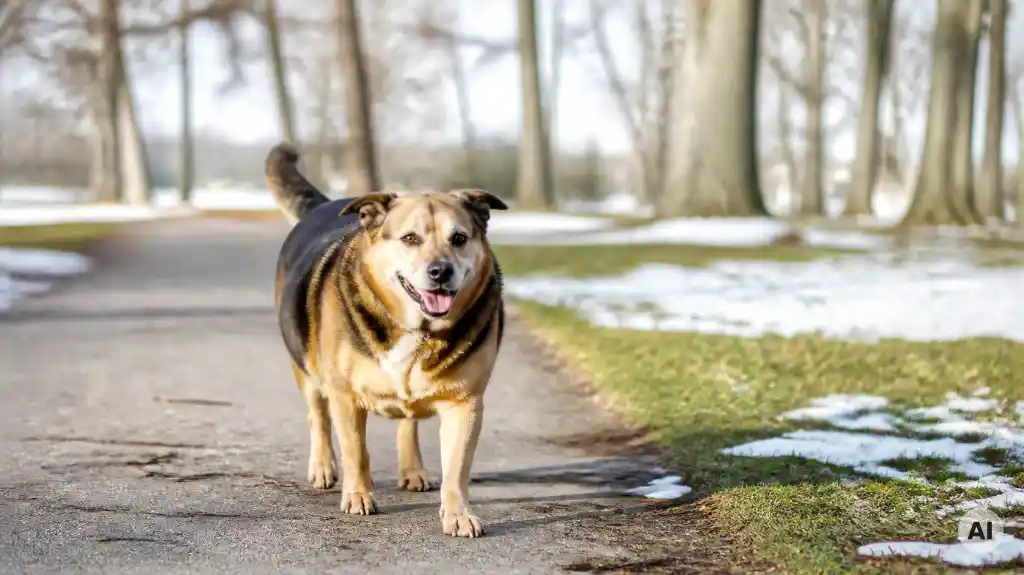
Dangerous kilos – PETA expert explains
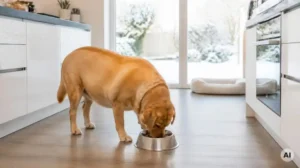
Stuttgart. Don't overdo it with the treats: Many dogs and cats love to eat. The bowl is quickly emptied or the cookies are stolen from the table. Dogs in particular often have no natural barrier: they eat what is given to them – even if it is too much. Pet owners should therefore be careful that their four-legged friends do not gain too much weight, as this poses serious health risks. Jana Hoger, specialist for animal companions at PETA and animal psychologist, explains what causes animals to become too fat, what the serious consequences can be and how people can sustainably reduce the weight of their pets.
“What is well-intentioned can quickly become a health risk: too many treats and extra portions can cause dogs and cats to become overweight and significantly reduce their quality of life. Many animals move less, have difficulty playing or cleaning themselves and develop serious illnesses in the long term,” says Jana Hoger. “Responsible pet owners therefore ensure a healthy balance between exercise, activity and nutrition.”
 Obese dogs and cats tend to be lethargic, sleep a lot and are often short of breath. They often lose the fun of playing and running around due to limited mobility. They also have a harder time grooming themselves, which is something cats that are generally very clean suffer from. Other possible consequences of being overweight include diabetes mellitus, cardiovascular diseases, diseases of the musculoskeletal system, metabolism and skin, the general weakening of the immune system and an increased risk of anesthesia. Humans have no influence on some factors that promote obesity, such as genetics, the age of the animals or changes in the hormonal balance. However, you should definitely pay attention to the following points.
This way you can avoid being overweight
- Less is more: Many people cannot withhold anything from begging animals and therefore give them too much food. The reasons for longing looks are often not really hunger, but rather cravings or boredom.
- Fixed times: Better than a permanently filled bowl of food are fixed meal times, whereby dogs and cats should receive a fixed ration two or three times a day.
- Not too much by the way: Small calorie-rich treats or leftovers from the table in between meals are often not included in the daily calorie requirement. So if four-legged friends get more treats, pet owners should reduce the food at solid meals accordingly and adjust it for each day.
- Energy content too high: Giving the wrong food, including adult puppy food, can also be a reason for weight gain. For this reason, you should choose a diet that is specifically suited to the animal's age, size and activity level.
- Good at training: Just like with humans, sufficient exercise is important for animals to have a healthy body. Regular, long walks with dogs and playtime with “house cats” are essential. Many people forget that it is important to find balance in a playful way, especially for cats that only stay indoors. For example, feeding – even with dogs – can be done using active throwing or hide-and-seek games. There are many ways to make your food intake more active, which can also be varied daily.
Recognize excess weight
- There is a layer of fat over the ribs. The ribs must be able to be felt when stroking with light pressure. If this is not the case, the four-legged friend is probably suffering from overweight.
- When viewed from the side, the belly is not slightly pulled up – as is the case with animals of normal weight – but can even hang.
- The skin on the neck and shoulders is thick and bulging; the animal may have fat deposits at the base of the tail and in the groin. Severely overweight dogs and cats are literally round. They have no visible waist.
Reduce the weight
- Before dogs and cats are put on a diet, their health should be checked at a veterinary practice.
- If there are no other illnesses preventing weight loss, a suitable program must be determined together with the veterinary specialist. This mainly includes changing your diet or reducing calories and slowly getting used to more exercise so as not to harm the musculoskeletal system. The goal is to reduce excess fat and maintain muscle mass. For example, cats that live in the house can be introduced to “physical exercise” through regular play and dogs can be introduced to “physical exercise” through walks. The duration of the movement should be increased slowly.
- Instead of high-calorie treats, part of the daily food ration can be taken on the walk and used as a reward.
- Under no circumstances should a drastic reduction diet be started without consultation with the veterinary practice, as this can lead to dangerous metabolic diseases.
Was this amount interesting or helpful?
Your rating shows us what you and your furry friend like – it's like a treat for us.