
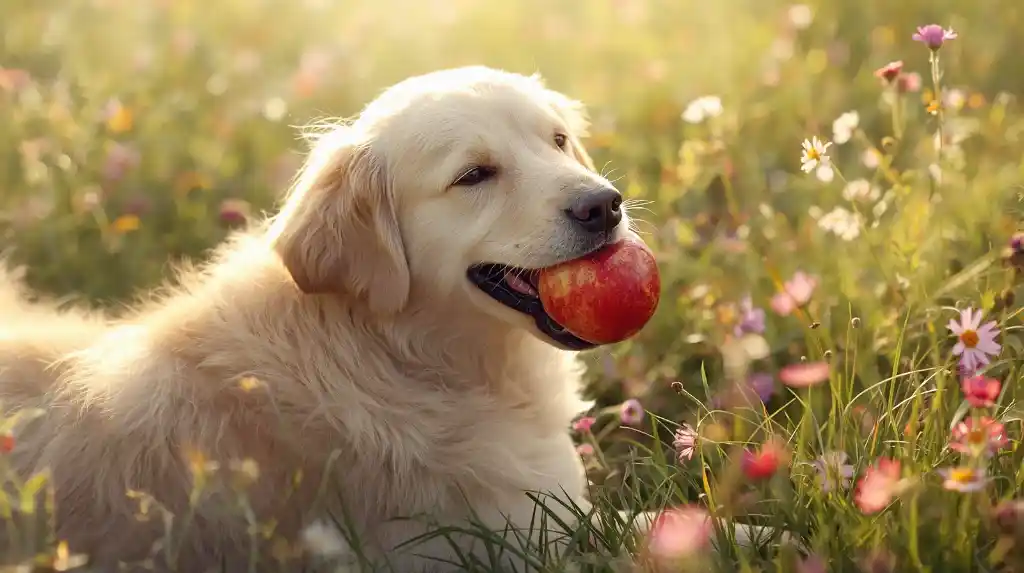
What dog owners should pay attention to when it comes to home-grown food
Hanover. Fruit and vegetables from your own garden are often fresher and taste better than store-bought food. You can also avoid using harmful fertilizers and pesticides. For dog owners with a garden, however, the question arises as to which of the self-harvested fruits they can share with their four-legged friend, even if they grow their own food free of harmful substances.
“In principle, every food that is newly added to the dog’s diet should be tested carefully,” advises Franziska Obert from . “Our four-legged friends can have allergies or intolerances just like us. If you have any questions or are unsure, you should always seek veterinary advice.”
Not everything in the garden is dog-friendly
“Even home-grown food is not automatically suitable for dogs,” explains Obert. “You need to be very careful with onions, for example. They are fundamentally intolerable to dogs because they contain substances that can damage red blood cells.” The following applies to both raw and processed states: even small quantities should be consistently avoided.
 According to the Agila expert, apples and pears, on the other hand, can be a useful addition to the menu. Both types of fruit provide valuable nutrients and are well tolerated in moderate amounts. However, it is important that the cores and casings are removed before feeding: these contain substances that are unsuitable for dogs and also pose a risk if swallowed.
There is also nothing wrong with snacking together at the strawberry patch. “However, the sweet, red fruits should only be fed in small quantities to avoid digestive problems,” says Obert.
Homegrown vegetables:
Be careful with nightshade plants
Some home-grown vegetables are suitable for dogs if properly selected and, if necessary, prepared. Cabbage, for example, should not be fed raw. It can also cause flatulence in dogs and should therefore only be given carefully and in small quantities. Some dogs can also tolerate kohlrabi raw as long as they don't eat too much of it.
Some popular garden vegetables belong to the nightshade family, which when unripe can contain solanine, which is poisonous to dogs. That's why potatoes should only be added to the bowl when cooked. Unripe fruits and green plant parts also pose a health risk when it comes to peppers and tomatoes. If you grow peppers and want to give your dog some of the vitamin-rich harvest, you should only select fully ripe, red pods, de-seed them and then only give them small amounts. When it comes to tomatoes, however, Franziska Obert advises not to feed them to dogs at all. “When fully ripe, the fruit itself is no longer poisonous, but it can lead to intolerance reactions. This is why the tomato does not belong in the dog's bowl, at least without prior veterinary consultation.”
Cucumber, pumpkin and zucchini:
Please cost in advance
Cucumbers contain a lot of water and are therefore a refreshing snack, especially in the summer months. They are generally well tolerated and can therefore be fed raw. However, according to Franziska Obert, care should be taken to ensure that home-grown cucumbers, as well as the botanically related pumpkins and zucchini, do not contain any bitter substances – so-called cucurbitacins. “They are usually no longer available in commercial products,” she explains. “However, if you grow your own, they can occur and lead to poisoning.” Since dogs have fewer taste buds on their tongues than humans and also tend to gulp, they may not notice the bitter toxin that is clearly noticeable to us. The expert therefore recommends that dog owners taste carefully before passing the harvest products on to their four-legged friend.
Otherwise, pumpkins, like carrots, are generally considered to be well tolerated and can be a nutrient-rich supplement when cooked or steamed. Ornamental pumpkins, on the other hand, are poisonous for dogs as well as for people and therefore generally do not belong on the menu.
Fruit and vegetables from the garden
- Apple: yes, without seeds.
- Pear: yes, without seeds.
- Strawberry: yes, in moderation.
- Cucumber: yes, exclude bitter substances.
- Carrot: yes, in moderation (contains a lot of sugar).
- potatoes: just cooked.
- Cabbage: only cooked, in moderation.
- Kohlrabi: yes, in moderation.
- Pumpkin: only cooked, exclude bitter substances.
- Paprika: only red, very ripe pods and in moderation.
- Tomato: no.
- Zucchini: better cooked, exclude bitter substances.
- Onion: no, always poisonous.
Was this amount interesting or helpful?
Your rating shows us what you and your furry friend like – it's like a treat for us.