
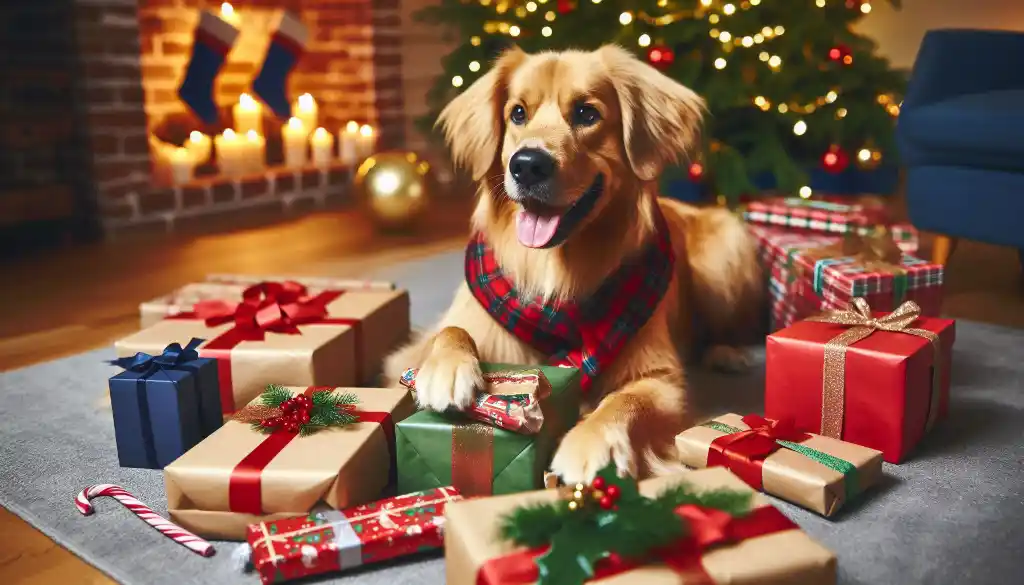
Tarp. Advent and Christmas with dogs and cats are something very special. But between the Advent wreath and Christmas tree, cookies and family visits, there are also some dangers lurking for our four-legged friends. To ensure that the holidays, and especially the first Christmas, are safe and relaxed, Corinna Ruddat, veterinarian at TRIXIE, gives tips on what owners should pay particular attention to.
Christmas candy does not belong in the food bowl During Advent and Christmas, people eat like no other time of the year. However, what is a pleasure for us can quickly become a problem for dogs and cats. Chocolate in particular poses a major risk of poisoning for animals. The substance it contains is theobromine, which the four-legged friends only break down very slowly. The following applies: The risk of poisoning increases the larger the quantity consumed, the higher the cocoa content and the smaller and lighter the animal is.
The sugar additive xylitol, known as birch sugar or xylitol, is also highly dangerous for dogs. It is no longer just found in sugar-free chewing gum, but is now also found in many Christmas cookies, sweets and other low-sugar foods. However, xylitol is considered harmless for cats.
Alcohol should also be absolutely taboo for pets. Even relatively small amounts can lead to alcohol poisoning because dogs and cats cannot break down alcohol like humans can. Particular caution is required with schnapps chocolates, as several risk factors come together here. Even small amounts can be particularly dangerous for pets.
Therefore, sweets, pastries and drinks should always be kept out of reach and guests should be advised not to give their four-legged friend anything from the Christmas table to snack on.
Feast food is not automatically animal food When family and friends come together at the festive and delicious table during the holidays, dogs and cats are usually right in the middle of it instead of just there. But what ends up on the plate or is left after eating is not automatically suitable for pets and should not simply be fed to the animals. Even if the dog sits faithfully next to you or the cat looks curiously at the food, steadfastness is required.
Eating bones and leftover food in particular can have serious consequences. Cooked bones splinter more easily and cause injuries to the mouth, throat or digestive tract. Leaving a festive table unattended poses further risks. If food or leftover food is left before or after the meal, dogs and cats could help themselves. In addition to the risk of injury from bones, pets also come into contact with greasy, spicy or unsuitable foods, which can lead to health problems. If you want to make your pet happy, you should use snacks made specifically for pets instead.
Make your Christmas tree and decorations safe
The decorated Christmas tree not only creates a special atmosphere and increases people's anticipation, it is also particularly exciting for many pets. While dogs might explore it curiously and play with the branches, cats often see it as a climbing tree. Therefore, the tree should stand securely and not tip over. Christmas decorations can also be dangerous: edible tree decorations encourage snacking and fragile Christmas tree baubles can cause injuries. It is best to avoid tinsel as it strongly tempts cats to play. Because of the small barbs on their tongues, the animals are often unable to spit it out and easily swallow it, which can lead to a life-threatening emergency.
Burning candles, whether on the Christmas tree or Advent wreath, create a cozy atmosphere, but should never be left unattended as curious four-legged friends can easily knock them over or burn themselves. It is therefore worth using LED candles, especially in households with dogs or cats. They also create a festive atmosphere while avoiding the risk of fires.
Pets also need a break at Christmas
Between family visits and presents, it's easy to forget that Christmas can not only be stressful for us humans, but can also be an unusual situation for pets. A lot of visitors, unfamiliar noises, a higher noise level and a change in daily routine can quickly overwhelm dogs and cats. It is all the more important to offer your pet a quiet place to retreat to and relax undisturbed at all times.
 This space should be respected by guests. It's also worth reminding family and friends that they also have responsibility for how the animal experiences the holidays. Everyone's attention is required, especially when unpacking presents together. Rustling wrapping paper and bows are particularly inviting for cats to play with and can be swallowed due to the small barbs on their tongues, leading to serious health problems. Therefore, packaging materials should be put away as quickly as possible after unpacking.
At the same time, it is important to carefully observe the animal's behavior and offer it what it wants. Some animals enjoy the additional attention, others react more sensitively to the many impressions. With a little foresight and consideration, nothing stands in the way of a harmonious celebration. This makes Christmas a safe and contemplative time for all family members, whether with two legs or four paws.
Was this amount interesting or helpful?
Your rating shows us what you and your furry friend like – it's like a treat for us.