

Health begins in the bowl and nature provides the best ingredients of Marion Thömmes, veterinary practitioner
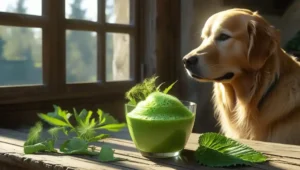 Quierschied. More and more dog owners pay attention to healthy eating in their four -legged friend. In addition to high-quality food, game and medicinal plants are also becoming increasingly important, because in principle they are domestic treasures. Whether sprinkled as a dog and dried over the feed: wild herbs can be easily integrated into everyday life – a simple but ingenious addition to our dogs. Of course, the following applies: in the event of serious symptoms, the four -legged friend belongs to the practice, not on the meadow. And watch out for cat fans: Because of the essential oils, restraint is required here.
But basically it is clear: health begins in the bowl and nature provides the best ingredients for it. Very free. You just have to learn to look again.
Why wild herbs are real health boosters for our dogs
Wild herbs are real nutrient miracles: they are full of vitamins, minerals and secondary plant substances, – exactly the ingredients that get the body and immune system trot. Among them are antioxidants, bitter substances, tannins, mucus, flavonoids and essential oils – all small helpers with a great effect.
Secondary plant substances? These are the substances that the plant actually produces for itself – as protection against predators, pests or diseases. However, they are just as valuable for our dogs: they can strengthen the immune system, boost digestion, relieve inflammation and even promote blood formation.
With regard to vitamins and minerals, wild herbs have a lot to offer – significantly more than conventional salad or spinach. This is exactly why they are ideal for naturally upgrading the bowl of our fur friends.
In this article, a small selection of domestic herbs is presented, which grow over large parts of the year – and can be used wonderfully fresh or dried for dogs.
Dandelion – more than just a “weed”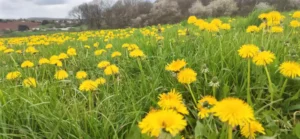 Dandelion is a real power package. Whether leaves, flowers or roots, everything on it can be used. It provides valuable bitter substances, flavonoids, vitamins minerals such as potassium, calcium and magnesium as well as inulin, a natural fiber from the root.
What can he?
Dandelion has an appetizing, digestive, anti -inflammatory, diuretic and supports the liver, bile and pancreas. Particularly exciting: it boosts the bile flow, helps with fat digestion and does not stress the body with potassium loss, on the contrary, it even delivers it properly.
This is how it works:
Young leaves and flowers can be easily chopped or pureed simply under the feed, ideal in spring when the dandelion is particularly nutritious.
Spitzwegerich – the little helper with cough, wounds + Co.
The Spitzwegerich is a real all -rounder from the natural pharmacy. In its leaves there are mucous materials, tannins, flavonoids, minerals such as zinc and potassium as well as antibacterial plant substances such as Aucubin and Acteoside.
What can he?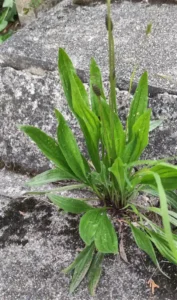 It has an anti -inflammatory, antibacterial, antispasmodic and wound healing effect. Its mucils protect themselves protectively over irritated mucous membranes, particularly helpful for cough or inflamed airways. At the same time, it strengthens the immune system and helps with small injuries or insect bites directly on site when you crush and put on the fresh leaves.
This is how it works:
Cut the fresh leaves into small pieces or puree with fruit/vegetables and mix it into the feed – but please do not heat, otherwise it loses its antibacterial effect.
Climbing skip – tender herb, stay gluing!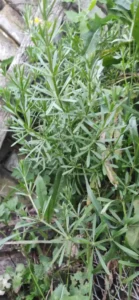 The climbing cap, or also called adhesive, can “stick” to stems and leaves, on other plants, clothes and fur by tiny, hook -shaped bristles. As a result, the climbing abstrasse has the option of using other plants as climbing aid. Since the fruits are also equipped with small bars, its distribution is also taken care of, because they like to stay in the fur of the animals and clothing.
The leaves of the adhesive are rich in tannins, cumarines, glycosides, flavonoids, essential oils and pebbles, all of which have rich in positive effects on the body. The high vitamin C content of the plant is of course very valuable for the immune system.
What can it do?
The climbing cap helps to free the blood and lymph of slimy residues and to support the body in detoxification. It has a positive effect on the intestinal mucosa and thus on the immune system. On the outside, it helps with dry skin and vortex wounds.
The climbing abstrasse supports the kidney function and the derivative urinary tract and is ideal for a spring cure. It has a detoxifying, metabolic stimulating, diuretic, lymph cleaning, blood cleaning, lymph flow stimulating, against worms.
This is how it works:
The fresh young leaves can be pureed in the mixer or fed as a smoothie. But dogs are also very happy to take it. It can be mixed under the vegetables.
Greed yourself fit – detoxification very natural
The giers is full of vital substances. It is characterized by a very high content of vitamin C and provitamin A and numerous minerals. It is the best protein supplier among the domestic wild herbs and thus an excellent nutritional plant.
100 grams of the fresh plant included:
- 200 mg vitamin C
- 16.6 mg iron
- 1.99 mg copper
- 2.13 mg manganese
- 1.68 mg titanium
- 3.98 mg boron
What can he?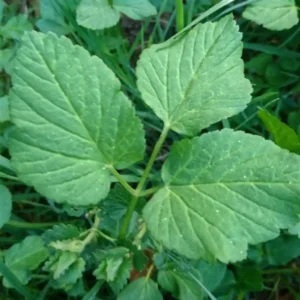 The leaves of the Giersch contain four times as much vitamin C as a lemon and are particularly rich in iron, potassium, magnesium, zinc, boron, copper, manganese and silica. Giersch supports the kidney, bladder and intestinal function. It has an anti -inflammatory and varicose. Giersch not only has a diuretic effect, it is even able to discharge the uric acid and is therefore used in medicine, for example in gout, rheumatism and arthritis. Anti-phlogistic (anti-inflammatory), diuretic and uric acid-solely, vitamin and mineral donating, laxative, digestive, detoxifying, draining, vitalizing.
This is how it works:
The fresh young leaves are very delicate and can be used as part of the fruit/vegetable mixture. The older leaves are tart and also a little firmer. You can cook them like spinach and add the dog food.
Nettle – do not touch, just feed
The nettle is an absolute all -rounder. It is full of vitamins, minerals, trace elements and plant acids. It shouldn't be missing in any diet. In winter, their seeds can be used as a superfood.
What can she?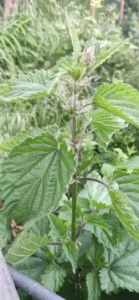 The nettle stimulates the overall metabolism, cleans the body from the inside and washes it through it. The diuretic effect is based on the high potassium content. Due to the large number of minerals, vitamins and trace elements contained, the body reproduces strength and vitality. The flavonoids support the anti -inflammatory effect of various unsaturated fatty acids and the caffeoylic acid, which have an inhibitory effect on the production of inflammatory mediators. This positively influences chronic inflammatory processes. The iron in the nettle is important for blood formation, the vitamin K for blood clotting and vitamin C for the immune system. It has a diuretic, detoxifying, blood -forming, anti -inflammatory, stimulating metabolism, activates the pancreas, supports the excretion of uric acid.
This is how it works:
The young leaves of the nettle can be steamed as vegetables such as spinach and added to the dog food or pureed in the mixer and added as a smoothie. The dried seeds can be mixed under the feed in winter.
Only wild herbs should be collected that can really be recognized and can determine exactly. So that the body does not get used to the wild herbs, you should change the herbs again and again. A cure is not carried out for more than six weeks. After that, a break of one to two weeks should be taken.