

Less stress, more trust
Eschborn. Stress when trimming nails or checking your ears? Escape at the sight of the transport box? Afraid of the vet? That doesn't have to be the case. The animal protection organization TASSO, which operates Europe's largest free pet registry and promotes responsible animal ownership, motivates pet owners to undergo medical training with their dogs and cats.
 The principle of medical training originally comes from zoo animal husbandry and aims to prepare wild animals for medical examinations or nursing measures. Applied to our pets, this approach means that pet owners can train their dogs and cats at home to carry out targeted care measures and health checks in a stress-free manner, so that changes and abnormalities can be discovered at an early stage and, in the long term, visits to the veterinary practice may also be less stressful. A central component of medical training is the animal's cooperative behavior. The aim is not for the animal to simply “endure” treatment, but rather to actively cooperate, voluntarily and at its own pace.
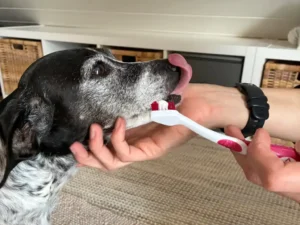 “It is of course very individual. Depending on what type of animal it is, what previous experiences the individual animal has had and what its character is, the training has to be adapted,” says veterinarian and animal welfare officer at TASSO, Dr. Laura Witting. Therefore, pet owners should not approach the training with the expectation that all conceivable examinations can be carried out in a relaxed manner after a short time in the veterinary practice. “If we achieve the minimum goal at home of being able to touch our animal everywhere and look at everything, then a lot has already been achieved in the first step,” explains the veterinarian. Good training includes grooming measures such as trimming claws, brushing teeth or checking ears. It is also useful to practice holding holds. In this way, the animal gets used to not being able to move freely for a short period of time so that examinations can be carried out. Getting used to the transport box is particularly important for cats.
What is crucial in everything is that the training is structured positively and in small steps. Depending on the training goal, there is numerous information material online and offline that supports pet owners in setting up the training. Many animal trainers also offer relevant courses.
Sounds complicated? It doesn't have to be that way. Just a few short sessions a week can make a big difference and the benefits are significant, Dr. Witting is convinced: “Medical training can be an important part of a trusting relationship between humans and animals. It reduces stress, increases well-being and makes it easier for both the animal and the owner and, not least, veterinarians to deal with medical measures. In addition, the animals develop trust in the situation and in their caregivers through the targeted training, positive reinforcement and the exclusive time together. And last but not least, it is just a lot of fun to achieve small goals together.”