
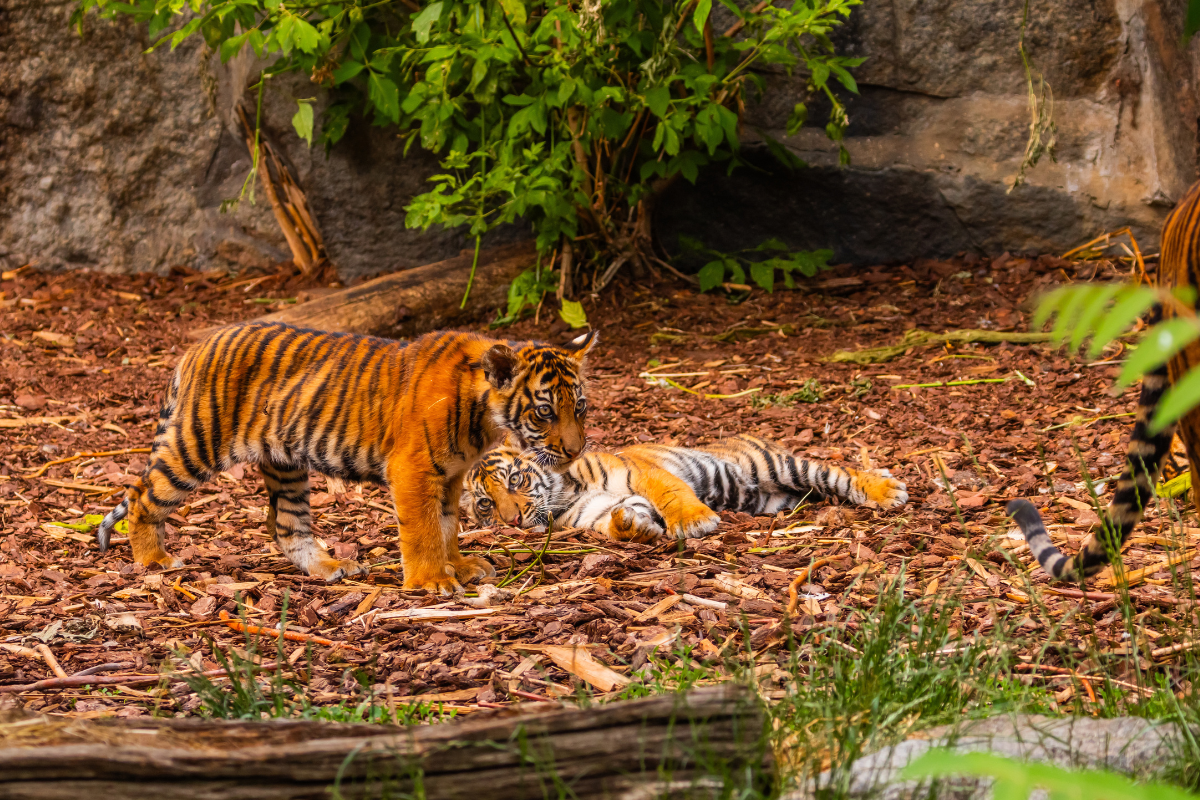
The decision looks drastically for outsiders, but experts see them as a necessary measure. They justify this with the protection of animal welfare and the natural development of the big cats.
Why the tigers had to be put to sleep
At the beginning of August it became known that three tiger babies were put to sleep in the Leipzig zoo shortly after their birth. The mother had not accepted the boys, a hand breeding by the nurses was rejected.
Veterinarian Volker Jähnig, Vice President of the Saxon State Veterinary Chamber, explains: “Only rearing by the mother ensures natural behavior without mispronances.” Mislaps arise when young animals perceive human caregivers as a replacement for their mother. This later leads to problems with socialization with fellow species and makes it impossible to mediate to other zoos.
Why hand breeding is often not an option
- Missing on humans, not on fellow species
- Difficult later integration into zoos
- Practical rearing only sensible in individual cases
- Common in circuses, rare in modern zoos
Jähnig emphasizes that hand rigs in zoos is only an alternative in very special situations and in certain species. The aim of modern zoos is a natural attitude that respects the behavior of the animals.
Alternatives: mediation or circus?
A frequently discussed scenario: could the animals be accommodated in a circus? “Theoretically yes, practical no,” explains the expert. The attitude of large -sou who has decreased in circuses and the conditions were significantly worse. This would not have been reasonable to mediate.
The decision to fall asleep was therefore the only way to save animals suffering. Even in optimal conditions, a mother can reject her young animal, similar to how this could also happen with dogs or people.
The role of the mother and the natural process
Accepting a litter by the mother is not an automatism, but a sensitive process that depends on many factors. “The zoo has optimized all conditions to promote the acceptance,” said Jähnig. Nevertheless, there is no guarantee that the mother accepts the young animals.
Experience can be valuable for the tiger mother: at the next throw it is more experienced and the nurses can support them more specifically. Mislaps and bad rearing prevent animal suffering in the long term in modern zoo posture.
Veterinary perspective: Avoid blame assignments
Jähnig emphasizes that blame is inappropriate in this context. “To speak of guilt is forbidden. This is a natural process in which many factors are not predictable.” Under these circumstances, the animal protection measure of an absolutely pain -free sleep is the cleanest solution.
The decision to put the tiger babies was based on technical criteria for protecting animals. Natural rearing, avoiding misprints and the well -being of the mother were in the foreground. Alternatives such as manual breeding or circus brokerage would not have improved the situation and might have led to longer suffering.
She might also be interested:
- The tiger: all information in the profile
- Zoo Magdeburg: First sensation, then shock – one of the mother's tiger baby killed
- Nice gestures in animals