
Price and workmanship comparison
For millions of dogs in Germany, industrially produced dry or wet food ends up in their bowls every day. But a new scientific study shows that how heavily a dog food is processed can make a bigger difference than many owners realize. Researchers found that highly heated and highly processed products contain, on average, higher amounts of certain heat-related reactants than freshly cooked meals. Surprising: According to the study, the price of a food says little about how many of these substances it contains – some expensive premium products even performed particularly poorly. Veterinarian Dr. Dr. explains what role manufacturing processes play in the quality of dog food and what dog owners should pay attention to. Ciara Clarke, co-author of the study.
Berlin. Around 10.5 million dogs live in Germany, and around one in five households has a four-legged friend. At the same time, dog food is a billion-dollar market: around 1.8 billion euros are sold in dog food every year in stationary retail alone (1, 2). The majority of this comes from industrially produced dry and wet food. These products are very heated (often at 120°C to 180°C or more), so that they have a long shelf life and can be stored safely. Freshly cooked meals, on the other hand, are cooked more gently at around 90°C. But it is precisely this processing that can trigger chemical changes. When sugar and proteins react at high temperatures, Maillard reaction products are created – substances that are also produced when frying or baking foods. These compounds promote inflammatory processes and oxidative stress in the body. “Small amounts of these substances can be broken down by the body. But if dogs are fed the same highly processed meal every day, the exposure can add up over time,” warns veterinarian Clarke.
Study examines certain process substances in dog food for the first time For the study, researchers from Hacettepe University analyzed a total of 41 commercial dog food products from the British market. Fresh meals, wet food, dry food as well as freeze-dried and cold-pressed versions were compared. The focus was on several chemical compounds that are formed under high heat. These include Advanced Glycation End Products (AGEs) and certain reactive carbonyl compounds. The study is the first to systematically analyze these substances in commercial dog food. The results can also be transferred to the German market due to comparable production standards. “The more a food is heated or processed industrially, the more reaction products are created,” says Clarke.
Surprising result:
Price says little about quality
Another result of the study may surprise many dog owners: the price of a food says little about how heavily it has been processed or how many reactants it contains. The analysis showed no clear connection between price category and the measured values. Some of the high-priced premium products examined were even among the feeds with particularly high amounts of undesirable reactants. “Many people assume that more expensive food is automatically better. However, our results show that processing plays a crucial role,” says the Butternut Box veterinarian.
Wet food performs particularly poorly –
but is fed frequently There were also clear differences between the types of food themselves. Classic wet food (e.g. canned food and shelf-stable “fresh” products) on average contained the highest proportion of harmful AGEs and glyoxal compounds. CEL – a substance linked to chronic inflammation – was 128 mg/kg in wet food, more than four times higher than in freshly cooked food. Freshly cooked meals also had fewer harmful chemicals in all other measurement categories. The results illustrate how different manufacturing processes can have an impact on the composition of a feed. However, representative surveys show that dogs in Germany are still predominantly fed conventional dry and wet food (3). Despite these results, Daniel Topolanek, managing director of the dog food manufacturer Butternut Box Germany, sees a positive development: “We are noticing that more and more people are reading up on their dogs' diet. They are increasingly relying on freshly cooked, less processed food and are also giving us positive feedback about health improvements.”
Heat can also alter nutrients
In addition to the reactants, the researchers also examined how intensive processing affects important nutrients. The focus was particularly on the amino acid lysine, an important building block for muscles, growth and metabolism in dogs. If a food is heated strongly, lysine can be chemically changed. This nutrient is then no longer fully available to the body. The analysis showed that, on average, freshly cooked meals contained more than twice as much available lysine as dry or wet food. “If this nutrient is changed during production, some of the originally contained nutrients may be less able to be used by the body,” explains Clarke.
Dog owners should take a closer look
For many people, dogs have long been part of the family. Accordingly, there is also growing interest in what ends up in the bowl every day – and how food is made. “Many dog owners today are concerned with questions similar to those they have with their own diet,” reports Topolanek. For him, the study proves the urgency of the nutritional issue: “This includes not only the selection of ingredients, but also the question of how heavily the food has been processed.”
Freshly cooked instead of heavily processed:
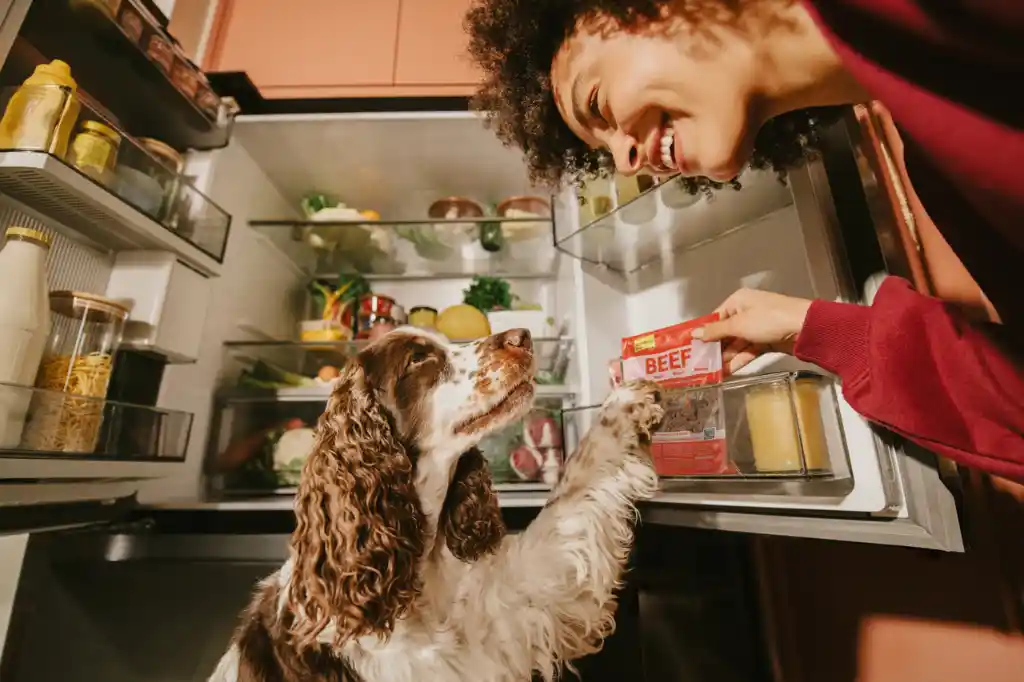
The Butternut Box approach The majority of classic dog food products are manufactured industrially and heated to high temperatures so that they have a long shelf life. Butternut Box deliberately takes a different approach. The company gently cooks fresh meals from natural ingredients and delivers them individually portioned directly to the dog owners' homes. “The results of the study show that processing actually plays a role,” says Topolanek. He concludes: “The fact that our freshly cooked meals and their gentle preparation at 90°C minimize exposure to harmful AGEs has now been assessed and scientifically proven. We cook so that dogs not only get full, but stay healthy. Our entire concept is based on this.”
Study: A Comparative Analysis of Maillard-Derived α‑Dicarbonyl Compounds and Advanced Glycation End Products in Fresh, Wet, Kibble, and Freeze-Dried Dog Foods, Journal of Animal Physiology and Animal Nutrition (2026), onlinelibrary.wiley.com/doi/10.1111/jpn.70053.
About Butternut Box
Butternut Box is rethinking dog food. Since it was founded in Great Britain in 2016, the two founders Kev and Dave have pursued one goal: to bring more health and joy to all dogs and their people. The leading company for freshly cooked food delivers meals, tailored for dogs of all ages and breeds, directly to your home in a flexible subscription model. All dishes are made from natural, food-grade ingredients – without any unnecessary additives – and served fresh from the fridge. Not dry, not wet, not raw, but freshly cooked! Further information at www.butternutbox.de.
Sources
1 Statista / ZZF / IVH: Sales of dog and cat food in Germany by food type
2 Statista / ZZF / IVH: Sales of ready-to-eat pet food in Germany
3 https://www.fortunebusinessinsights.com/de/hundefuttermarkt-115464
Was this amount interesting or helpful?
Your rating shows us what you and your furry friend like – it's like a treat for us.