
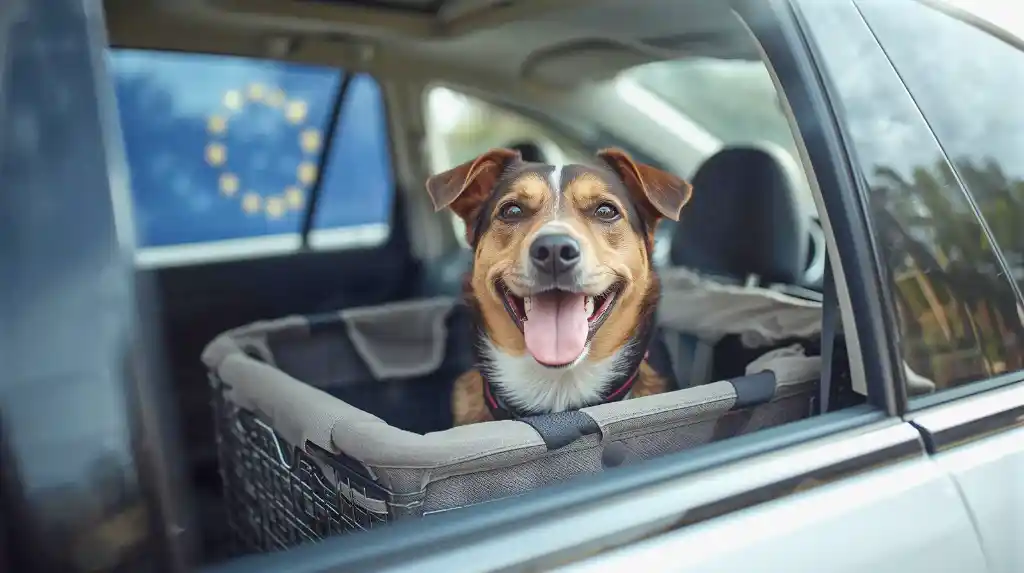
Boppard. Anyone traveling with their dog across national borders within the European Union has had to take a closer look since this month. Since April 22, 2026, new EU regulations for the transport of pets have come into force. While the basic pillars of traveling with animals remain, Brussels is, above all, tightening controls and drawing a clear line between private travel and commercial trade. For dog owners this means: documentation requirements and a strict “five animal rule”.
The “five animal limit”
The most striking innovation concerns the number of animals carried. From now on there is a strict limit of five dogs per vehicle for non-commercial, i.e. private, travel. Anyone traveling with more animals – such as breeders or large families – must be able to prove that the trip is to take part in a competition, exhibition or sporting event. Without this written receipt, the trip will automatically be classified as commercial transport. This has far-reaching consequences: In this case, stricter animal welfare requirements apply that are actually intended for commercial trade, including special approvals for the vehicle.
Identity and health:
The microchip in focus
The well-known blue EU pet passport remains the most important document. But the requirements for the chronology of the entries have been tightened. The EU Commission is reacting to the ongoing illegal puppy trade. Since April, more meticulous attention has been paid during border controls to ensure that identification by microchip must be carried out before or at the latest at the same time as the initial rabies vaccination.
 In addition, the transponders used must comply with ISO standards 11784 or 11785. If the chip is not readable or does not meet the standard, entry may be refused or quarantine may be ordered. An important note for puppy owners: The minimum age for rabies vaccination remains at twelve weeks, followed by a 21-day waiting period for vaccination protection. The entry of unvaccinated puppies is now finally prohibited in almost all EU countries.
Traceability through central databases
A key part of the reform, which will be rolled out further over the course of the year, is the linking of national databases. The aim is for authorities across the EU to be able to check in real time whether a dog is correctly registered. For owners, this means: Be sure to check whether your dog is not only registered in registers such as TASSO or FINDEFIX, but whether the chip number is also stored correctly. A lack of comparison between the ID card and the database could lead to delays in controls in the future.
Outlook: what’s to come
While the transport rules and the five-animal limit already apply, further changes are pending. From October 1st, new forms for animal health certificates will be introduced, mainly used when entering from non-EU countries (like Great Britain or the Balkans) become relevant. These documents should be made more forgery-proof through digital signatures.
Conclusion for dog owners
For the classic family vacation with one or two dogs, little changes to the routine, but a lot to the duty of care. Anyone crossing the border should ensure that:
- the pet ID card is complete and legible.
- the rabies vaccination is current and was given after the chip implantation.
- If there are more than five dogs, confirmation of registration for an event is available.
Important: Some countries also maintain their own entry requirements, for example on worm treatment or leash requirements. The EU reform does not replace these rules, but complements them. In any case, be sure and find out about the regulations of the destination country in advance. It is also ideal to discuss your travel plans with the vet and, if necessary, have a check-up done.
The new regulations strengthen animal protection and create uniform standards that make travel within Europe easier to plan. The new EU rules are intended to strengthen animal welfare and dry up the “black market” for dogs. Dog owners who only travel occasionally will hardly notice most of the changes – but will still benefit from clearer rules and better protection for their four-legged companions. (SR)
Was this amount interesting or helpful?
Your rating shows us what you and your furry friend like – it's like a treat for us.