
Identical twins have an almost identical genetic heritage, to the point that DNA analysis techniques used in forensics can sometimes not be able to distinguish them. However, DNA does not say everything about our biological identity: our body odor results from many factors and could constitute a more subtle signature. It is this hypothesis that Czech researchers from the University of Prague sought to explore using police dogs specially trained to identify human scents. Their objective: to determine if, despite their exceptional genetic proximity, 2 identical twins give off a sufficiently different smell to be distinguished by a canine nose.
Police dogs facing the twins’ enigma
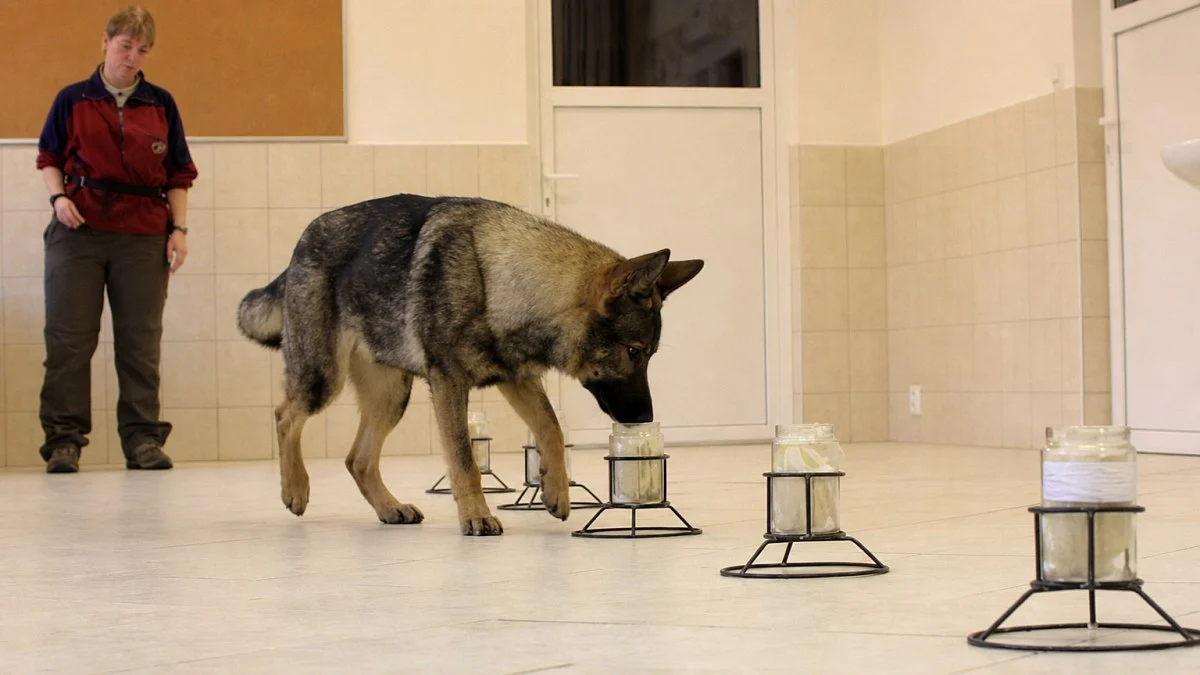
In this study published in the journal PLOS One*, the researchers used 10 German Shepherds police officers, trained to identify odors, and 4 pairs of twins, including 2 pairs of identical twins. Samples were collected on cotton squares and then presented to the dogs among several other odors. Each time, the dog had to find the corresponding odor, without its master knowing where it was or what result was expected. This was a carefully controlled protocol to determine if canine scent could actually tell the difference between 2 genetically identical twins.
© PLOS One
The result: the dogs hit the mark
The result of this little experiment is spectacular: the 10 dogs indeed succeeded in distinguishing the odors of the 2 homozygous twins in each trial, with 120 correct identifications out of 120 and no errors! Even raised in the same environment and with the same diet, the twins therefore seemed to present a sufficiently different olfactory imprint for these specially trained dogs. Their chemoperception (in other words their ability to detect and differentiate odorous molecules) has thus enabled them to truly bio-detect individual identity.
This obviously does not mean that our dog friends are capable of “smelling DNA”. Rather, they perceive chemical differences linked to each person's physiology, development or environment. Likewise, this spectacular result must be interpreted with caution, because the study only concerns only 2 pairs of monozygotic twins and 10 specialized dogs. It therefore does not allow us to assert that all dogs could distinguish all identical twins, nor that their scent could replace DNA analyzes in forensics. However, it raises a fascinating question: what do our doggies actually perceive when they recognize a person's scent?
* Ludvík Pinc, et al., “Dogs Discriminate Identical Twins”, PLOS One, June 15, 2011.