
Tomatoes against stinky fur?
What really helps if your dog smells unpleasant?
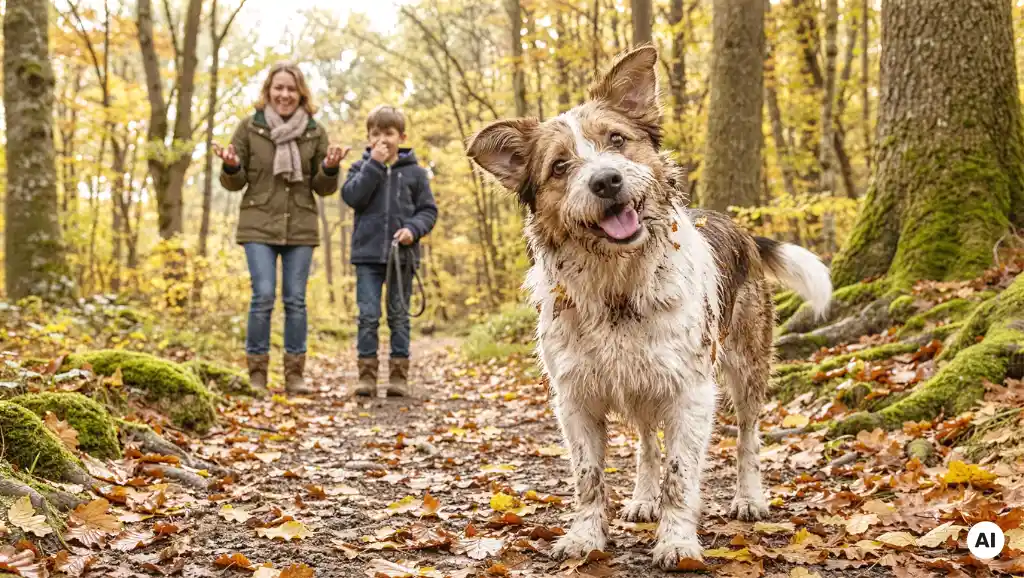
Boppard. Many of us dog owners know this situation: The walk was wonderful until the four-legged friend suddenly discovers a particularly interesting source of scent and rolls around in it with pleasure. Wild boar solutions are among the particularly unpleasant surprises.
Wild boar slurry, carrion or other foul-smelling remains: Some dogs seem to be magically attracted to unpleasant smells. As soon as the walk has begun, the four-legged friend rolls around with pleasure in a particularly fragrant residue. For dog owners, a less than pleasant cleaning process usually begins. But what really helps against the pungent smell in dog fur? And does the well-known tip with pureed tomatoes actually make sense?
Why do dogs wallow in wild boar solution?
It's hard for people to understand: While we keep as much distance as possible from wild boar slurry, carrion or other animal remains, some dogs seem to feel an irresistible attraction to these smells.
 The behavior probably has various causes. Dogs perceive their environment primarily through their sense of smell. Intense scent trails provide them with a wealth of information about other animals, their presence and possible food sources. Wallowing in strong-smelling substances could also be related to primal behavioral patterns. Discussions include covering up one's own body odor or distributing interesting scent information within a social group. However, there is no single, scientifically proven explanation for all dogs.
It becomes particularly unpleasant when your four-legged friend rolls around in wild boar solution. The residue can smell intensely and stubbornly stick to the fur. Depending on the condition of the fur, the length of the hair and the degree of dirt, cleaning can be quite time-consuming.
Wild boar solution:
Not just a question of smell
If the dog has come into contact with wild boar solution, the unpleasant smell should not be the sole focus. Possible pathogens and parasites also deserve attention.
 Wild animals can excrete various pathogens. The risk of transmission of the Aujeszky virus is particularly well known in wild boars. This virus is extremely dangerous for dogs and is almost always fatal once infected. Transmission occurs primarily through contact with infected tissue or body fluids, especially when eating raw wild boar meat or offal.
Simply touching wild boar solution does not automatically mean infection with the Aujeszky virus. However, the dog should, if possible, be prevented from eating the waste or from licking itself extensively afterwards.
After contact, it is recommended to thoroughly clean the affected areas of fur. If the dog has eaten wild boar remains or shows noticeable symptoms after such contact, veterinary advice should be sought immediately.
Strained tomatoes for bad fur smell -'
is that really true?
A tip that is always circulating among dog owners is: pureed tomatoes or tomato juice are said to remove unpleasant odors from dog fur. The idea sounds plausible at first, after all tomatoes are also mentioned as a home remedy for particularly stubborn skunk smells.
In fact, this is more of a myth than a proven cleaning method. Tomatoes may be able to temporarily mask an unpleasant smell, but this does not reliably neutralize the actual odor substances.
When cleaning dog fur after contact with wild boar solution, pureed tomatoes are therefore not recommended. In addition, tomato products leave residues in the fur and can discolor light-colored fur in particular.
If you want to save your dog an additional wash, you should therefore use suitable cleaning products.
-
- Aujeszky virus: I have deliberately made it clear that simply touching wild boar solution does not automatically mean infection. The greatest danger comes from contact with infectious tissue and body fluids and from eating infected wild boar parts.
- Tomato myth: We shouldn't claim that tomatoes are fundamentally ineffective. It is true: Reliable odor neutralization has not been proven.
- Healthy smell: The section on skin, ears, teeth and anal glands usefully expands the article. So it is not only interesting in the event of a mishap in the forest, but also for dog owners whose four-legged friends generally smell unpleasant.
What really helps when your dog's fur stinks?
The good news: In most cases, the unpleasant smell can be eliminated with thorough and gentle cleaning of the coat. The key is to remove the contamination as completely as possible instead of just covering up the smell with other fragrances.
First, any coarse dirt should be carefully removed with kitchen paper or an old towel. It is advisable to wear disposable gloves and to be careful not to spread the solution on the fur.
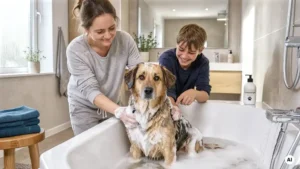
The affected areas are then rinsed with lukewarm water. For heavier soiling, a mild dog shampoo can be used. It is important that it is suitable for the dog's skin and coat. Human shampoo, aggressive cleaning agents or household cleaners have no place in grooming!
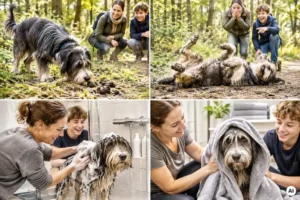
The shampoo is carefully massaged into the damp fur and then rinsed thoroughly. Depending on how dirty it is, a second cleaning may be necessary. Particularly with long-haired dogs, care should be taken to ensure that no residue remains between the hair. After washing, the fur is first dried with a towel. If your dog is sensitive or the outside temperature is low, your four-legged friend should then be able to dry completely in a warm, draft-free place.
Ears, paws and the area between the toes should also be checked. This is where dirt can get stuck and is easily overlooked the first time you wash it.
If the dog generally smells unpleasant
A wallowing attack in the forest is not always the cause of an unpleasant smell. Sometimes dog owners notice that their four-legged friend smells increasingly unpleasant, even without any visible dirt.
A certain smell is completely normal for dogs. However, if it becomes noticeably severe, changes suddenly or persists despite thorough care, there may be a health cause behind it.
Skin problems are particularly often involved. Inflammation, bacterial infections, yeast or allergies can cause the fur and skin to smell unpleasant. There are often other signs such as itching, redness, flaking or increased scratching.
The ears shouldn't be forgotten either. Inflammation of the external ear canal can cause a noticeable, sometimes sweet-rotten smell. Head shaking, frequent ear scratching, or unusual ear secretion are additional warning signs.
Another possible origin is the teeth and the oral cavity. Tartar, inflammation of the gums and other diseases in the mouth area can cause unpleasant breath.
Last but not least, the anal glands can also play a role. If they are clogged or inflamed, they can produce a particularly intense, often fishy smell. Some dogs then slide their backsides across the floor or noticeably lick their anal region frequently.
It is therefore important: an unpleasant smell should not always be combated with frequent bathing. If it persists or if further abnormalities occur, a veterinary examination is advisable.
Prevention is better than bathing
Of course, not every rolling attempt can be prevented. However, dog owners can do a lot to reduce unpleasant surprises.
If you know that your dog is particularly interested in game droppings, carrion or other remains, you should remain attentive on walks. In well-known wildlife crossing areas, it may make sense to keep the dog on a leash at times.
A reliable callback and a well-constructed cancel signal also help. It is important to train these signals regularly and positively. A dog that has learned to let go of an interesting source of smell when given the appropriate command may save its human a time-consuming wash.
It can also be helpful to have a small cleaning kit with you when you're on the go. A pair of disposable gloves, kitchen paper and a towel are often enough to initially remove large amounts of dirt.
Checklist: What to do if your dog smells unpleasant?
After rolling in wild boar solution or other remains:
- If possible, prevent the dog from licking or eating the dirt.
- Put on disposable gloves and carefully remove any coarse dirt with kitchen paper or an old towel.
- Rinse affected areas of fur with lukewarm water.
- If necessary, use a mild shampoo suitable for dogs.
- Rinse the coat thoroughly so that no shampoo residue remains.
- Check ears, paws and between toes for dirt.
- Dry the fur with a towel and then keep the dog warm and away from drafts.
- Watch out for unusual symptoms and seek veterinary advice if symptoms occur.
If the dog smells unpleasant without any noticeable dirt:
- Check skin and fur for redness, dandruff or inflammation.
- Check ears for unpleasant odors and noticeable secretions.
- Pay attention to your teeth and mouth for possible problems.
- If you notice a noticeable fishy smell, also think about the anal glands.
- If body odor persists or suddenly changes, have the cause clarified by a veterinarian.
Conclusion: Tomatoes are better left in the kitchen
If the dog has rolled in wild boar slurry or other foul-smelling residue, a thorough coat cleaning is the best solution. On the other hand, pureed tomatoes are not a scientifically proven home remedy for stubborn odors and should not be used as a substitute for suitable dog shampoo.
 Dog owners should also remember that it's not just about the smell. Wild animal remains can pose hygienic risks. Therefore, the following applies: remove dirt as quickly as possible, stop the dog from eating the waste and seek veterinary advice if there are any health problems.
And maybe it will help to take a particularly attentive look at your four-legged friend on your next walk in the forest. Because not every scent that is irresistible for the dog also has to be an experience for the human. (SR)
Was this amount interesting or helpful?
Your rating shows us what you and your furry friend like – it's like a treat for us.