
Medical emergencies usually occur if you do not expect them. Now it would be exaggerated to drag a first -aid kit around with the daily walk. But there should be a small emergency bag.
A water bottle, a clean cloth (necker or scarf) and a package that has not yet been opened, belongs to the bag. The water not only helps with thirst and heat, it also serves to quickly clean wounds. You can make an emergency association out of the fresh paper handkerchiefs and the cloth. For longer hikes in a seed areas, a first aid bag from camping or sports retail is recommended. Basically, you should always have the telephone number of the pet doctor and/or the veterinary emergency service in the respective region.
Before you fall into chaotic activity in the event of an emergency, you should first take a deep breath in an extreme situation, judge the situation and set priorities. In the event of a traffic accident, for example, the accident site must first be secured so that no more happens. The injured dog has to be prevented on the way. In the event of severe pain or panic, the favorite dog can bite, so you may have to put on a muzzle or a mustache.
Breathing and pulse
Breathing and pulse must first be checked. Whether the animal breathes, it is known to raise and lower the flank or on the air flow in front of the nostrils. If no breathing can be determined, the airways must first be checked and, if necessary, cleared. This includes removing foreign bodies or vomit from the catch. Foreign bodies sitting deep in the airways can be loosened if you hold the dog up on the hind legs and shake them carefully.
If the dog does not breathe despite the freely airways, it has to be ventilated: you stretch your head, pull your tongue out of the mouth and closes the catch with one hand. Then you blown air into the dog's nose every three seconds until it breathes again independently. The normal respiratory rate in dogs varies depending on the size of the animal and is between 40 (very small or young dogs) and 10 trains per minute. You can hear the dog's heartbeat when you put the ear near the elbow on the left side of the chest. In addition, the pulse is touched in the middle of the inside of the thigh near the bar. The normal pulse is between 80 and 120 per minute.
Heart pressure massage
If no heartbeat is audible and no pulse can be felt, a heart pressure massage must be carried out. To do this, put the dog on the right side and press the bale of the hand rhythmically (approx. 10 compressions in six seconds) on the chest close behind the elbow. In small dogs, the chest is grasped close to the elbows from below and press the chest rhythmically “open and up”. It is best if it continues to ventilate. As soon as breathing and heartbeat have started again, the dog has to go to the vet.
shock
In a shock, the animal is dazzled and sometimes looks weak, be a mucous membranes pale and limb unnatural cool. Some animals tremble. The dog has to go to the vet to stabilize the circulation immediately. Keep it as warm as possible. You can read more details in our article when the dog is in shock.
Wound
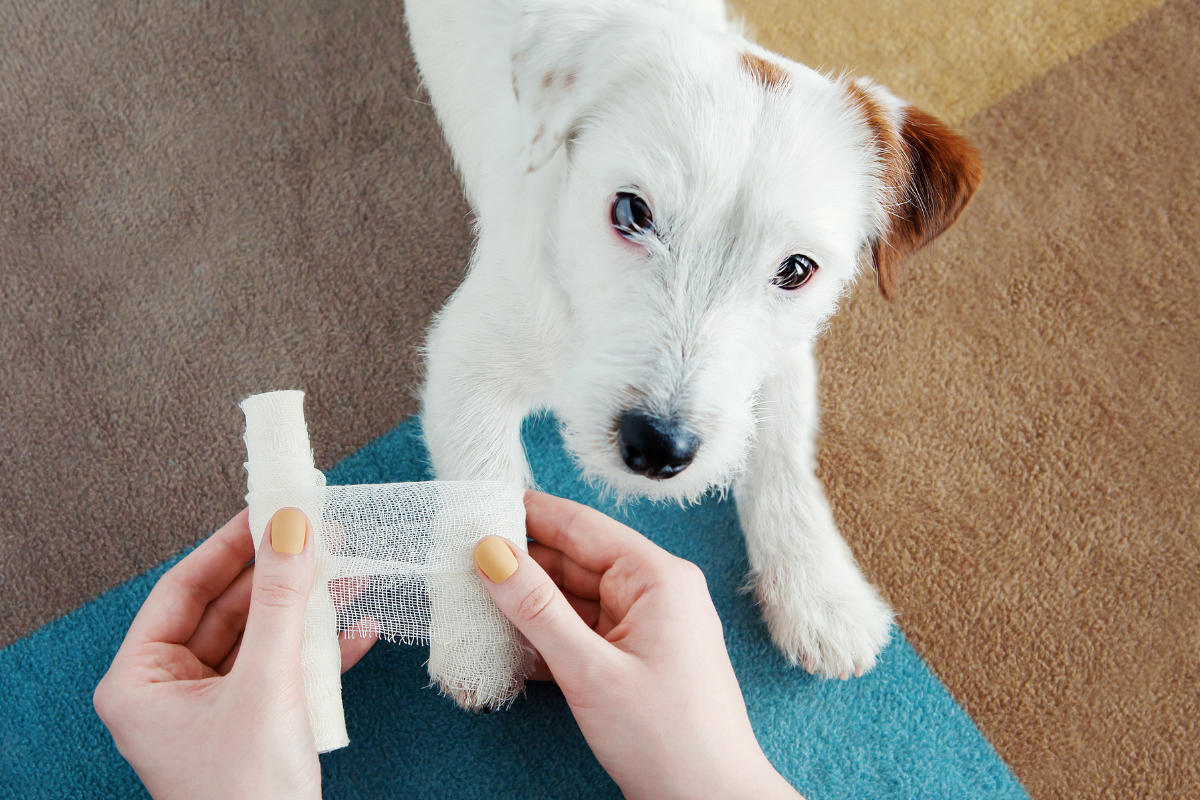
Skin scratches or superficial abrasions are checked and rinsed them clean with a little water. A light bandage protects these wounds from further pollution. Wound powder, ointments or disinfectants should only be applied to the express recommendation of the doctor, because many preparations from the pharmacy are intended for humans and not tolerated for dogs!
Wounds that have cut the skin or extend even deeper into the tissue must be added and treated by a veterinarian within a maximum of five hours. For primary care, they are rinsed with plenty of water and protect them with a light bandage. You can find out how you treat the dog correctly with a bite injury here.
Serious injuries
In the case of heavily bleeding wounds, the bloodstilling is in the foreground – if necessary with a pressure bandage. You shouldn't pull out stuck foreign bodies with violence, otherwise you will increase the wound. The foreign body should be stabilized with an association. Bone breaks should also be stabilized with a temporary rail to play from a cloth and branches. Injuries to the eye are covered with a damp clean cloth and protect them with a light head bandage. Such serious injuries must be used in veterinary treatment immediately after the first aid.