
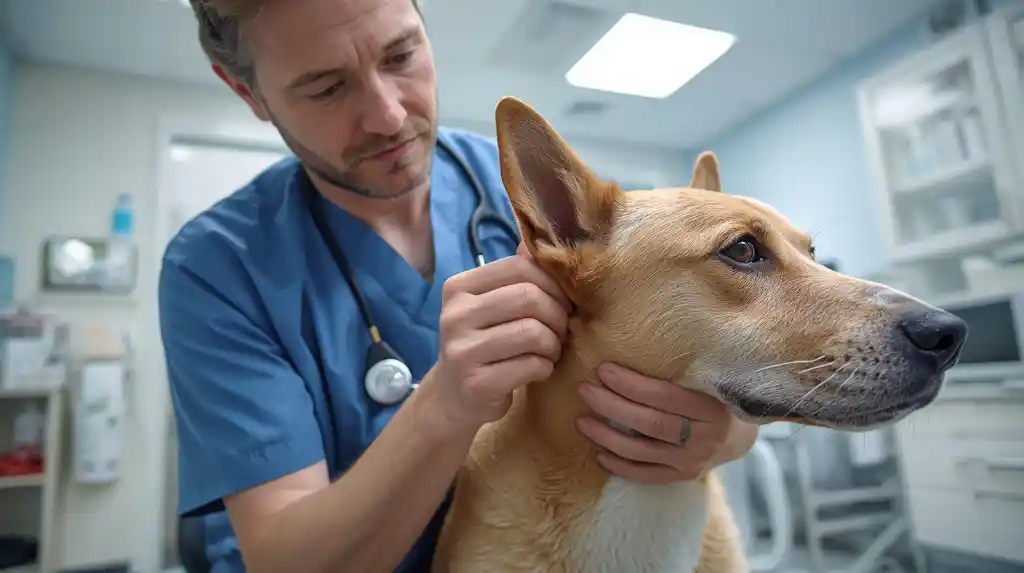
Allergy-like symptoms are now one of the most common reasons for dogs and cats to visit the veterinary practice. Especially in spring, itching, paw licking, or reddened skin quickly lead to suspicion of pollen or food allergies. But this explanation often falls short. Dr. Dávid Zárecký, veterinarian at “The Healthy Animal”, explains why the intestines need to be given more consideration when it comes to allergy issues, why it is not enough to treat individual symptoms, and why hasty food changes often do more harm than good to affected animals.
Berlin. Itching, red skin, ear infections: more and more pets are suffering from allergies. According to current pet insurance data, skin allergy-related cases in dogs and cats increased 13 percent in 2024 compared to 2023 (1). “We have been observing for years that allergy-like symptoms in pets are increasing significantly. They are now one of the most common reasons why dogs and cats come to our practice,” explains Dr. Dávid Zárecký, veterinarian at “The Healthy Animal”.
 When four-legged friends scratch themselves sore or clean themselves noticeably frequently, many pet owners quickly think of a seasonal allergy, especially in spring and summer. The timing seems clear: pollen is flying, grass is growing, environmental stimuli are increasing. But from a veterinary perspective, this explanation often falls short: “Often the four-legged friends' complaints cannot be traced back to individual causes. Much more important is the question of why the animal's system reacts so sensitively in the first place,” says Dr. Zárecký. Allergy-like symptoms often arise from an interaction of various factors. Environmental stimuli can play an important role, but the skin barrier, immune system, nutrition and intestinal health also influence how strongly an animal reacts.
From Dr. Zárecký, the intestines in particular are often taken into account too late when it comes to allergy-like symptoms, even though they are closely linked to the skin and immune system. The problem: Many animals receive short-term help for itching or skin irritation, but the underlying causes remain unclear. According to the veterinarian, a clear diagnosis is primarily needed before individual measures are taken: “If you want to get allergy-like symptoms under control in the long term, you can't just look at the skin. We need a holistic approach to understand which factors interact with our four-legged friends,” emphasizes Dr. Zárecký.
Why the intestines need to be taken into account when it comes to skin problems
Especially when skin problems keep recurring, the focus is often on the fur, the paws or the ears. The intestine quickly falls out of focus, even though it plays a central role in the immune system. Digestion, intestinal flora, immune system and skin are connected to each other via the so-called intestinal-skin axis. “The intestine is one of the body's most important immune organs. If the intestinal barrier, digestion or microbiome become unbalanced, this can increase inflammatory processes in the body and promote skin reactions,” explains Dr. Zárecký. From his point of view, this does not mean that every skin problem comes from the food. But it shows why the intestines should not be ignored when it comes to allergy-like symptoms. “We also often observe changes in the intestinal flora in dogs that we treat for environmental allergies. If you want to understand the cause of allergy-like symptoms, you should not only ask what irritates the skin, but also whether digestion, feeding and intestinal health are stable,” explains Dr. Zárecký.
Food can help – but not as a quick fix
If the intestines are to be included in the treatment of allergy-like symptoms, the idea of changing the food is obvious to many owners. This is understandable, because anyone who sees that their animal is suffering wants to change that quickly. But that is exactly where the risk lies: If the food is changed immediately every time a new symptom occurs, there is rarely any clarity. It can be more difficult to understand what the animal is actually reacting to. At the same time, a sensitive intestine needs stability so that digestion and the immune system can calm down.
“When it comes to allergy issues, we often see animals that have already undergone many food changes, medication or short-term measures. Food can be part of the therapy, but it must be used in a controlled manner,” explains Dr. Zárecký. Pet food is rarely the sole trigger of allergy-like symptoms. Diet can play an important role by influencing the animals' microbiome and therefore the skin barrier and immune system. The decisive factor is therefore not whether a product is advertised as “sensitive”, but rather whether the feeding suits the animal and is implemented consistently: with suitable protein and fat sources, sufficient energy supply and good feed hygiene. “If you really want to rule out a food allergy, you need an elimination diet: the animal only gets a precisely defined food for several weeks and no additional treats or table scraps. A targeted check is then carried out to see whether certain ingredients trigger symptoms again,” explains Dr. Zárecký. He continues: “This is the only way a change in food does not become a guess, but rather a usable part of the diagnosis.”
Paw licking, skin odor, ear problems:
These warning signs are often underestimated Allergy-like symptoms in dogs and cats often do not begin with an acute emergency, but rather with small changes in everyday life. These include recurring ear problems, paw licking, noticeable skin odor, excessive grooming or changing stool quality. Since these signals can seem harmless at first, they are often examined individually: the ears are cleaned, the food is changed, the paws are checked. From Dr. For Zárecký, it is precisely the context that is crucial.
“Many early signs are underestimated because they do not immediately act like an allergy. When the skin, intestines, immune system and environmental factors interact, these small changes can provide important information,” explains the veterinarian. Owners can therefore help by documenting symptoms and possible triggers. You should observe when symptoms occur: after walks, in certain rooms, after new snacks, during stress or in parallel with digestive problems. Environmental factors such as dust or mold and previous medical history can also be relevant. It is crucial not to see these observations as self-diagnosis, but rather as a basis for better clarification.
“Anyone who recognizes patterns helps the diagnosis enormously. That's exactly what treating allergy-like symptoms is all about: not just seeing the itching, but also connecting the various factors together in a meaningful way. Only when symptoms, everyday life, feeding and history are classified together can a way be found that will help the individual animal in the long term,” summarizes Dr. Zárecký together.
The company
“The Healthy Animal” stands for holistic animal health with a focus on nutrition, intestinal health and individual advice. The company offers food, supplementary feed, care products, test kits and digital advice for dogs, cats and horses. The basis is the 5‑E™ health concept developed by veterinarian Thomas Backhaus, which does not look at animal health in isolation, but rather considers nutrition, intestines, organ connections and individual needs together. “The Healthy Animal” draws on over 40 years of veterinary experience, an interdisciplinary team of experts and its own veterinary practice. Through DGT MEDICAL, the company also offers individual online veterinary and nutritional advice. The products are developed or manufactured in Germany and are aimed at pet owners who want to holistically support their animal's health, feeding and everyday life. Further information at: www.dasgesundetier.de.
source
1. https://www.dvm360.com/view/skin-allergies-rank-among-rank-among-the-mo st-common-conditions-in-dogs-a nd-cats-pet-insurance-data-shows
Was this amount interesting or helpful?
Your rating shows us what you and your furry friend like – it's like a treat for us.