
Have you ever heard of the intestinal microbiota? These are the billions of microorganisms that live in our intestine and play an essential role in digestion, the functioning of the immune system and the general balance of our body. This true bacterial symbiosis is in fact essential for the proper functioning of the organism: in exchange for a habitat and nutrients, these bacteria participate in numerous essential functions for their host.
Each individual has a unique microbiota composition, influenced by their diet, environment and lifestyle. A true “bacterial signature” which can also present similarities with that of beings who share our daily lives, such as our dogs.
Living together also means sharing your bacteria
A study published in the journal eLife* was interested in these invisible links between dogs and their owners, through the analysis of their microbiota.
To compare their bacterial communities, the researchers took samples from 159 people from 60 families, as well as 36 dogs, from different locations in the body (intestine, mouth, skin). They then used genetic sequencing of bacterial DNA, including analysis of the 16S ribosomal RNA gene, to identify and compare the bacteria present.
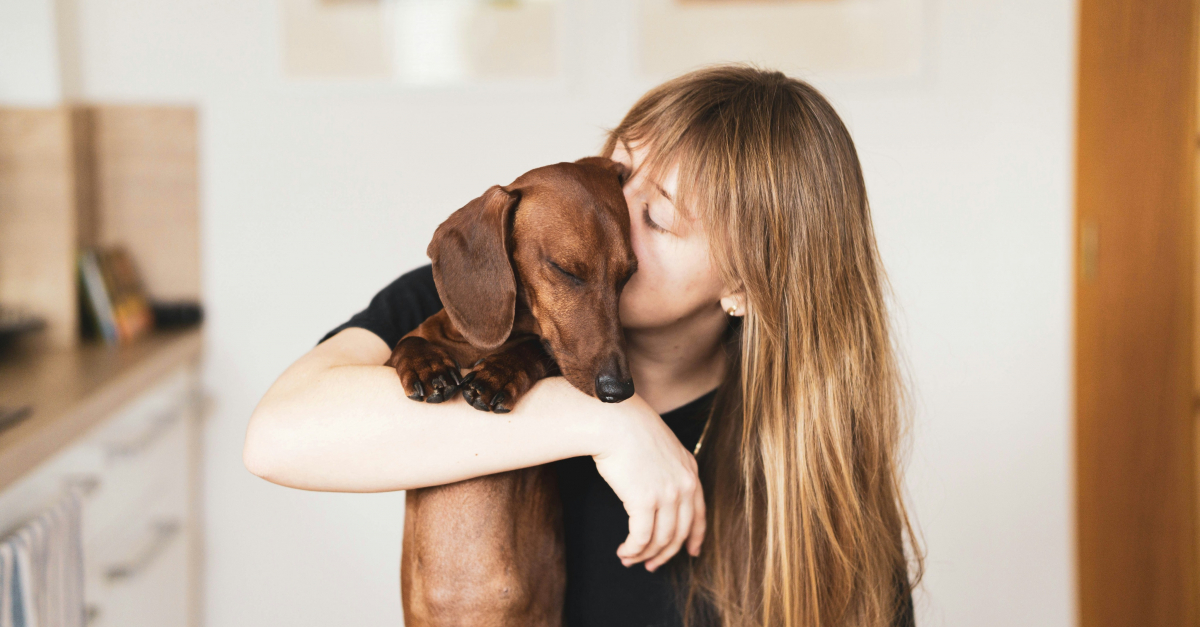
The results showed that members of the same household, both humans and animals, share more similarities in their microbiota than individuals living separately. This proximity is particularly marked at the skin level, regularly in contact with the environment and other members of the household. Living together therefore seems to encourage bacterial exchanges between dogs and their humans.
A discovery that illustrates the concept of “One Health”
This study reminds us that the health of humans, animals and their environment is closely linked: this is the principle of “One Health”. By sharing the same home, the same spaces and certain lifestyle habits, dogs and their owners interact daily with a common microbial environment.
This discovery opens new avenues of research to better understand how microbes circulate between humans and animals. Scientists are seeking in particular to determine whether these shared bacteria settle permanently in our body or whether they only pass through after contact. Better understanding these mechanisms could contribute to the prevention of certain diseases, the fight against antibiotic resistance and, more broadly, the improvement of public health, both in human medicine and in veterinary medicine.
* Se Jin Song et al., “Cohabiting family members share microbiota with one another and with their dogs”, eLife 2, 2013.