
ESCCAP expert advice from Professor Dr. Anja Joachim and Dr. Maria Unterköfler
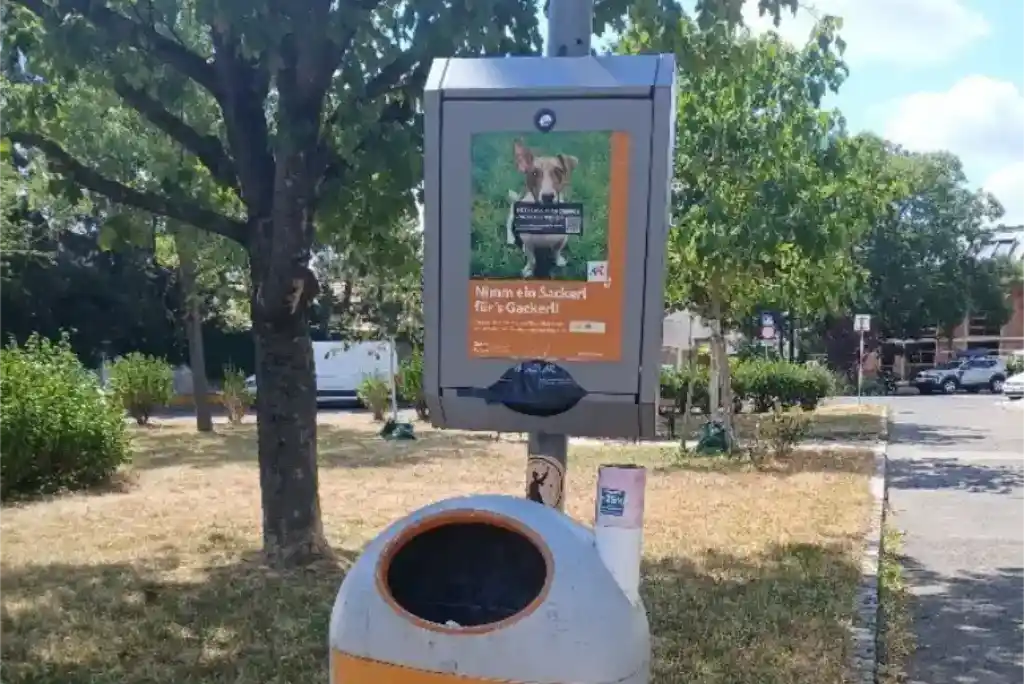
 Cologne. According to a report from October 2025, Germany's capital produces 252,000 piles of dog feces per day, which corresponds to around 55 to 60 tons daily and 20,000 tons annually. Picking up poop is certainly one of the less popular tasks for dog owners – and it is often avoided, although cities and municipalities sometimes provide the plastic bags intended for this purpose in dispensers free of charge. The reasons for not picking up range from “It’s just fertilizer” to “I want to avoid plastic waste” to “My wife would otherwise do that”.
 Dog feces left lying on streets, paths and green spaces cause odor nuisance as well as dirty surfaces and shoes, especially in urban areas. The piles attract flies and may contain pathogens that spread throughout the area.
Hidden danger in poop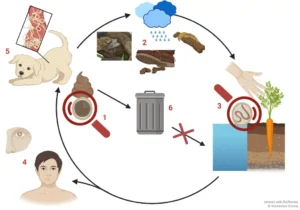 Parasites are among the various pathogens that dogs can excrete. A common parasite in dogs is the dog roundworm Toxocara canis, whose eggs are found in fecal samples from an average of around four percent of city dogs in Central Europe. That doesn't sound like a lot of parasite eggs at first, but even if only 100 eggs are excreted per gram of feces, that's 220 million eggs every day in the city of Berlin alone (and more than 8 billion annually), that get into the area with dog feces. There is no risk of becoming infected with this parasite when collecting fresh feces. This can only happen when an infectious third larva has formed in the eggs after a few weeks.
These eggs can survive in the environment for years. They are then no longer in a visible “dog pile” on the ground, but have been spread by rainwater, flies or snails and thus reach plants, soil or surface water. This applies to all parasites that are transmitted to other dogs, other animals or people through the environment.
Consequences for dogs and humans
In the egg of the dog roundworm, a third larva develops over two larval stages within the first few weeks in the environment. This hatches after oral ingestion (Smear infection, drinking surface water, etc.) in the intestines of their new host, penetrates the intestinal wall and begins to migrate throughout the body. Only in dogs and canids such as the red fox do the larvae eventually return to the intestines and reproduce, while in humans they travel through internal organs over a long period of time and can cause inflammation and bleeding. Depending on the number of larvae and the organ affected, this infection in humans either remains asymptomatic or leads to serious illness and loss of function, for example in infections of the eye or brain.
Dogs may also excrete additional roundworm and tapeworm eggs or larvae, parasitic protozoa and bacterial pathogens (e.g. salmonella, campylobacter, coli bacteria) with their feces, which can be contagious to other animals and/or humans and should therefore not be left in the environment.
This is how the infection happens
Slugs, which like to ingest feces from infected dogs, play a special role. Not only do they contribute to the mechanical spread of pathogens, but they are also intermediate hosts for canine lungworms. Dogs can become infected by consuming snails or animals such as mice that have eaten these snails.
Dogs fed raw meat from cattle or roe deer may also be infected with the protozoan Neospora caninum and stages of transmission (oocysts) excrete, which in turn infect cattle. This protozoan can cause abortions and other reproductive disorders and is therefore very important for cattle health. Therefore, dog excrement has no place on pastures or arable land, and if dogs do defecate there, it must be cleaned up just as in urban areas.
Dogs that catch and eat mice can also be infected with the fox tapeworm Echinococcus multilocularis. This parasite usually affects red foxes, but rarely also dogs, and the eggs excreted in the feces are also infectious to humans. Since they do not require any development time in the environment, but are already contagious in fresh feces, disposal is particularly important here in order to prevent the eggs from spreading in the feces. The disease caused, alveolar echinococcosis, is rare in humans but requires lengthy treatment if diagnosed and can be fatal if left untreated. It is therefore important to take all measures to avoid human infections.
Everyone can prevent the spread
Collecting dog feces and disposing of them correctly with household waste ensures that the pathogens they contain, which can be transmitted to humans or other animals, do not spread into the surrounding area. Household waste is usually burned, which kills the germs it contains.
Some dog owners don't want to create plastic waste and put dog waste on the compost heap using reusable containers. However, this is not recommended because composting organic waste in household format does not reliably kill pathogens. The use of mature compost (as well as fresh dog poop) For example, in garden beds, the very environmentally resistant eggs of some intestinal worms can end up on lettuce and vegetables that are eaten raw.
Deworming helps
If you would like to know whether your dog is excreting parasites that can be dangerous to other dogs, other animals or humans, you can have your veterinarian carry out a fecal examination. Deworming at regular intervals can reduce the excretion of worm eggs and thus their spread in the environment, but not that of bacteria or single-celled parasites. Some dewormers (as well as flea and tick repellent) are also excreted in the feces and then potentially pose a burden for insects or free-living worms in the environment. Disposing of feces in household waste is therefore an important addition to the prevention of parasites and the diseases they cause in dogs, other animals and people, as well as a contribution to protecting the environment.
Lots more information and tips at www.esccap.de.
Was this amount interesting or helpful?
Your rating shows us what you and your furry friend like – it's like a treat for us.