
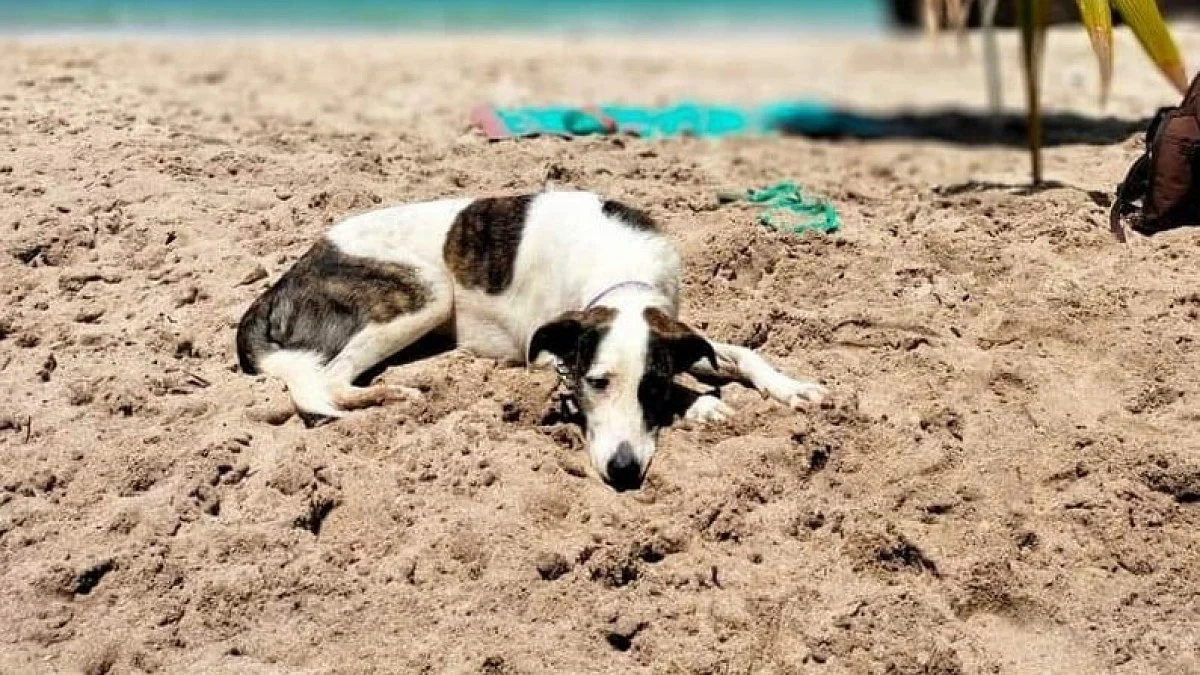
Michele And David Guilberta couple in their sixties, had decided to make a new start at Saint Pierre and Miquelon after having lived in mainland France, but also Mayotte. It was also on this last island that they took in and adopted their dog. Roger.
Saved from wandering, the 6-year-old, 28-kilogram canine was obviously on the trip to the overseas territory near Canada. However, everything did not go as planned.
THE Guilbert have, in fact, experienced a mishap when landing at the airport Saint-Pierre-Pointe-Blanche. They then learned that their dog was not on board their plane. It would have been “forgotten” during the Canadian stopover at St. John's Newfoundlandjust like one of their luggage.
“ We got news very quickly because the person at the Saint-Pierre airport contacted the people in Saint John's who were also very annoyed. “, tell Michèle Guilbert has Franceinfo.
A night at the shelter before taking the plane back to join his family
A solution was quickly found; Roger was placed in shelter for the night. Airline staff members PAL Airlines sent photos of him to his humans to reassure them.
Everything is back to normal finally. On Monday August 31, the quadruped was transferred to Halifaxin Nova Scotia, then was flown to Saint Pierre and Miquelon where he found his owners, relieved.
If this reunion reassured the masters of Rogerthey have difficulty understanding how the animal could have been thus forgotten, “ knowing that it is a dog which still weighs 28 kilos and which has an XXL sized cage “, underlines Michèle Guilbertwhich reminds us that “ the dog, once it is registered, (East) considered baggage “.
Woopets advice: how to limit the risks of a dog being lost during a plane trip?
The risk of an incident is never zero when you take your dog by plane. It is even more important when the flight has one or more stopovers. The latter increase the number of handling and transfers, hence the importance of reinforcing the identification of your animal before departure. Here are some reflexes to adopt to reduce this risk:
- Verify that microchip identification information is up to date.
- Attach, if the company authorizes it, a tag with a telephone number on the dog's collar.
- Clearly label the transport box with the name of the animal, its destination and contact details.
- In the event of a stopover, do not hesitate to confirm with the company that the animal has been transferred to the next flight.