
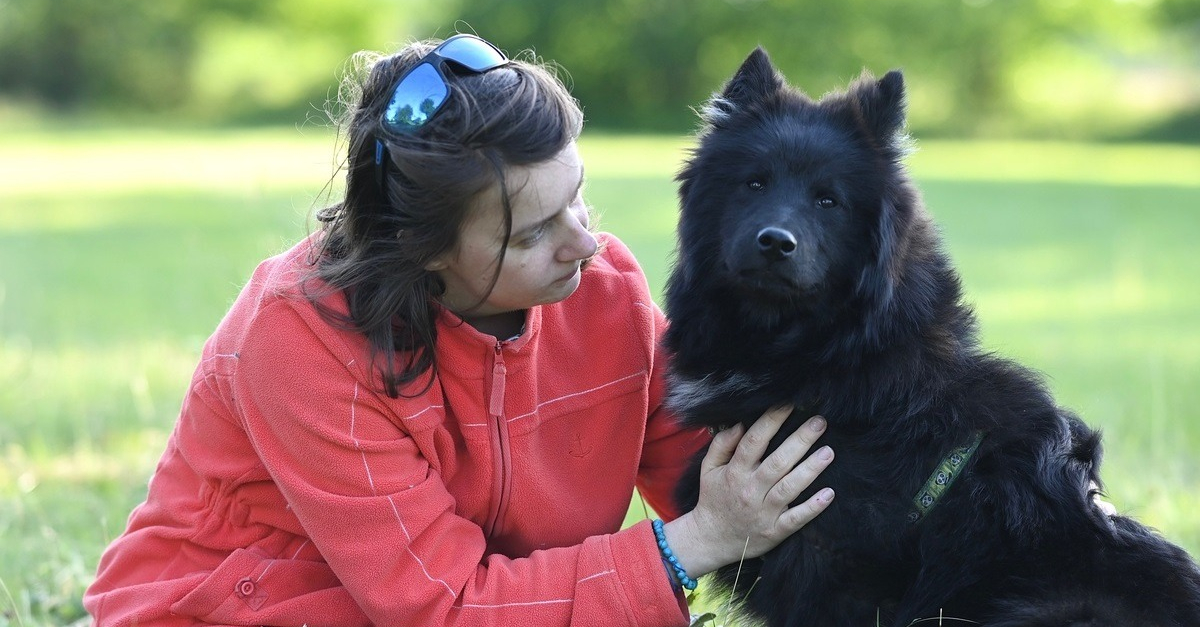
When an illness develops, our body produces extremely subtle chemical changes, called VOCs (volatile organic compounds), in breath, sweat or urine that we are not able to perceive. Some dogs, on the other hand, have the ability to spot them thanks to their sense of smell, which is much more powerful than ours. As a reminder, our canine friends have 200 million olfactory receptors, while we only have 5 to 6 million.
These natural abilities have been the subject of scientific research for years, particularly in terms of early detection of certain cancers. This is how in France, the program KDOG devoted to breast cancer has been carried out since 2016 at theCurie Institute.
Promising results, but still insufficient
Concretely, the method evaluated within the framework of the said program consists of dogs specially trained to sniff compresses worn by the participants for 6 to 12 hours on their breast, and therefore impregnated with their sweat.
The results known so far are promising, but suggest that the technique cannot replace mammography, which remains the most reliable means of screening. Published in November 2025, the conclusions of the clinical study KDOG1having seen the participation of a Labrador called Nougaro and a Malinois named Owenindicated that 80% of the positive samples had been identified by at least one of the 2 dogs. And only 49% had been by both.
In 2025, less than one in 2 women (47.5%) aged 50 to 74 had participated in the national breast cancer screening program, which is based on a mammogram every 2 years. There is therefore still a lot to do to raise awareness among the population concerned.
Dogs with “electronic noses”
Coming back to the olfactory detection method, researchers are now working to identify VOCs linked to cancer and sniffed out by dogs. The objective for them would be to develop “electronic noses” inspired by canine capabilities in this area, and therefore to develop more efficient and less invasive screening methods.
Work thatAgria Pet Insurance has chosen to highlight, on the occasion of Pink October, the annual breast cancer awareness campaign, aimed at encouraging screening, prevention and support for those affected.
Agria intends to shine a spotlight on a little-known aspect of the human/animal bond. Through this research, the animal world thus becomes a real field of exploration for researchers, who find new avenues to push the frontiers of innovation and design future scientific solutions.
Agria Pet Insurance protects more than 1.5 million animals in Europe, without age limit, with flexible dog and cat insurance according to their needs and the budget of their owners.