
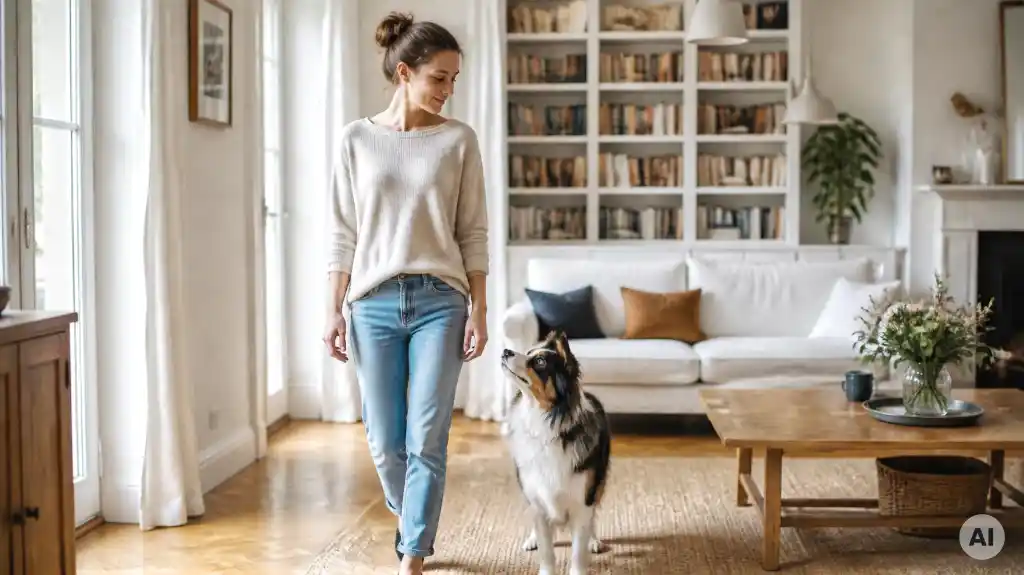
Body language is more important than loud commands
Dusseldorf. Dogs watch their people closely. They pay attention not only to words or signals, but especially to body language, facial expressions and tone of voice. An invitation to play, praise or a calming gesture are often more meaningful non-verbally than spoken language.
Over thousands of years of living with humans, dogs have learned to detect the smallest changes in our posture. You can tell whether a person is relaxed or tense, whether they want to make contact or are distracted. “Dogs observe us much more closely than most people realize. They often react to our body language before we even say anything,” explains dog trainer Anton Fichtlmeier.
Radiate calm yourself This means that bipeds can and should use their body language consciously. Especially in exciting situations or when there is uncertainty, such as when meeting another four-legged friend, dogs first orient themselves towards their caregivers. Anyone who falls into hectic activity will also infect their pet. However, if you stay calm yourself, you will help your dog to react calmly. “What I can pay attention to in order to radiate calm are slow movements, a relaxed posture and an even tone of voice,” says expert Fichtlmeier.
Show the dog affection
Even if we want to show our love or affection to our beloved pets, the right signals are important – and the preferences of the respective dog. What people perceive as loving does not necessarily have to be pleasant for every animal. Some four-legged friends enjoy close physical contact and long cuddles, others feel harassed by it.
Can a friendly look create trust instead? “Basically yes, but here again it depends on the degree. Many animals find intensive, sustained eye contact unpleasant or even a challenge,” says the dog trainer.
Learn to assess your own dog How a dog reacts to human contact depends primarily on the experiences it has had so far in its life. If a dog is used to being touched at an early age and has had a lot of contact with other dogs and different people, he is often more approachable. Bad experiences, on the other hand, often lead to reluctance or even mistrust. It is therefore worth watching your own dog carefully. “Important questions include: Does he turn to me in a relaxed manner? Does he seek contact on his own? Or does he avoid or try to withdraw from the situation?” says Fichtlmeier. “Anyone who notices these reactions can better adapt their own behavior and body language to them.”
Was this amount interesting or helpful?
Your rating shows us what you and your furry friend like – it's like a treat for us.