
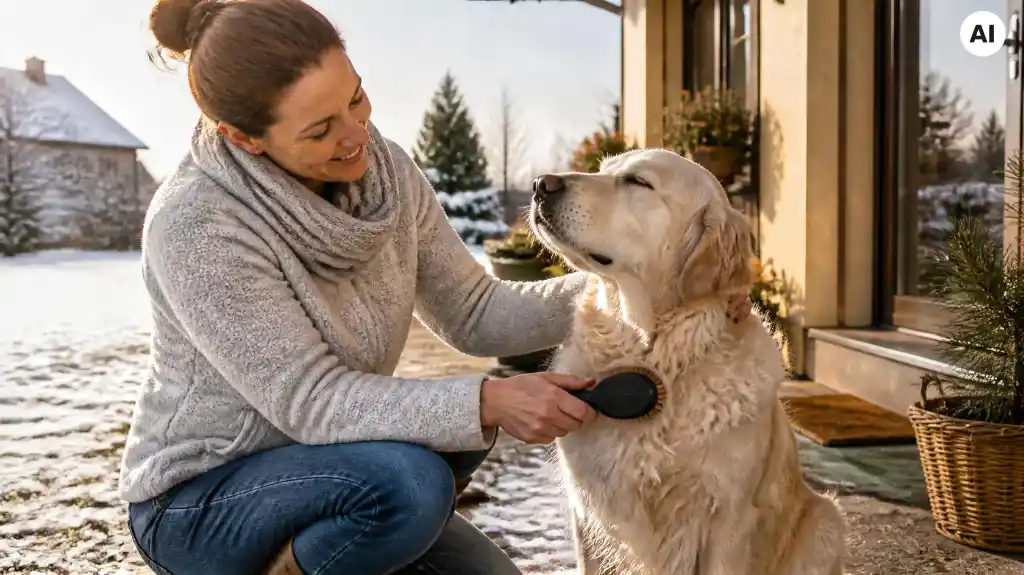
This is how the winter coat protects the dog – what dog owners should know now
Boppard. As the days become shorter and the temperatures drop, one of the most important physical changes of the year begins for dogs: the transition from light summer fur to thick winter fur. This process is not just a seasonal rhythm, but a highly complex protective mechanism that protects the dog from cold, wet and wind. It is a good opportunity for owners to tailor fur care and nutrition to the needs of the cold season.
When does the dog change from summer to winter coat?
and how can you support that??
The shedding usually occurs in early autumn (between September and November) triggered by the decreasing amount of daylight. Less light means more melatonin – and this hormone signals to the body that it is time to build up the thick winter coat. Depending on the breed and living environment, the change usually takes six to eight weeks.
 The main way to support your dog is through regular brushing, as loose hair blocks the development of the new coat. Dogs with an undercoat in particular benefit from this, as the new, warming layer can develop better when old hair is removed. A balanced diet with high-quality proteins and fatty acids also makes the process easier.
What is the best way to care for winter fur?
Winter fur is denser, heavier and often more structured than summer fur. In order for it to optimally fulfill its protective function, it needs care that takes both skin and hair into account. Regular brushing prevents mats, promotes blood circulation and ensures that moisture can dry out more quickly. For long-haired dogs, it makes sense to specifically check the undercoat so that no knots form that can later become painful.
To scissor or not to scissor –
what makes sense?
A common misconception is that dogs should be sheared in winter to make their coat “airier”. In fact, winter fur is a natural thermal protection that should not be removed. Complete clipping can cause the dog to cool down more quickly and put more strain on the skin.
However, it makes sense to shorten the tips of the fur, especially between the paws. Clumps of ice and road salt quickly form in the snow, which can be painful. Careful shortening ensures that there is less sticking and the dog runs more safely.
Should you wash your winter fur?
and if so, how?
In principle, winter fur should only be washed when it is really necessary – for example after heavy dirt, mud or contact with irritating substances. Frequent washing can affect the skin's natural oil layer, which is particularly important in winter.
If a bath is necessary, you should definitely use a moisturizing dog shampoo. It supports the skin barrier, prevents drying out and ensures that the fur remains supple even in the cold. After bathing, it is important to dry thoroughly so that the dog does not cool down.
Raw egg and vegetable oil –
does that do anything for the fur?
A raw egg per week can have a positive effect on skin and coat. The egg yolk contains biotin, high-quality fats and vitamins that support hair growth. It is important to mix the egg well and not to give it daily to avoid oversupply.
A small dash of vegetable oil (0.3 to 0.5 ml of oil per kilogram of body weight) – such as salmon oil, rapeseed oil, sunflower oil, linseed oil or hemp oil – can also help. These oils provide omega-3 and omega-6 fatty acids, which are crucial for healthy skin and a shiny coat. They support metabolism and can make shedding easier. Vegetable oil can be given to the dog several times a week (three to five times) up to daily depending on the type of feeding.
What if the coat change doesn't work properly? A normal coat change occurs evenly and without any discomfort. However, if this process stalls or goes abnormally, it could be a sign of health problems. A visit to the vet makes sense as soon as the dog shows noticeable changes that no longer fit in with the usual seasonal coat change.
- Bald spots or significant thinning in the fur.
- Severe itching, increased scratching or licking.
- Redness, flaking, eczema or inflamed areas of skin.
- Unusually severe or sudden hair loss that is out of season.
- Fur falling out in clumps.
- Bad smell of skin or fur.
- Behavioral changes such as tiredness, restlessness or loss of appetite.
- When fur change stagnates for weeks without new fur coming in.
These symptoms can indicate parasites, fungal infections, allergies, hormonal disorders, nutritional deficiencies or skin diseases. A veterinary examination will clarify the cause and prevent the problem from getting worse.
Early action is important
Skin and fur react sensitively to internal and external influences. The sooner a veterinarian identifies the cause, the easier it is to treat the dog. Many illnesses can be easily treated if they are detected early.
Checklist: properly care for winter fur
- Watch the coat change: Brush regularly and remove loose hair.
- Check undercoat: Loosen tangles early.
- Don't forget to care for your paws: Carefully trim the fur between the toes.
- Wash only when necessary: Use moisturizing dog shampoo.
- Optimize nutrition: Mix one raw egg per week into the food and supplement the food with vegetable oil for Omega-3 and Omega-6.
- Avoid scissors: Winter fur protects – do not remove.
- Adjust sleeping place: dry, warm, draft-free.
- Check skin regularly: Take dandruff, redness or bald spots seriously.
Was this amount interesting or helpful?
Your rating shows us what you and your furry friend like – it's like a treat for us.