
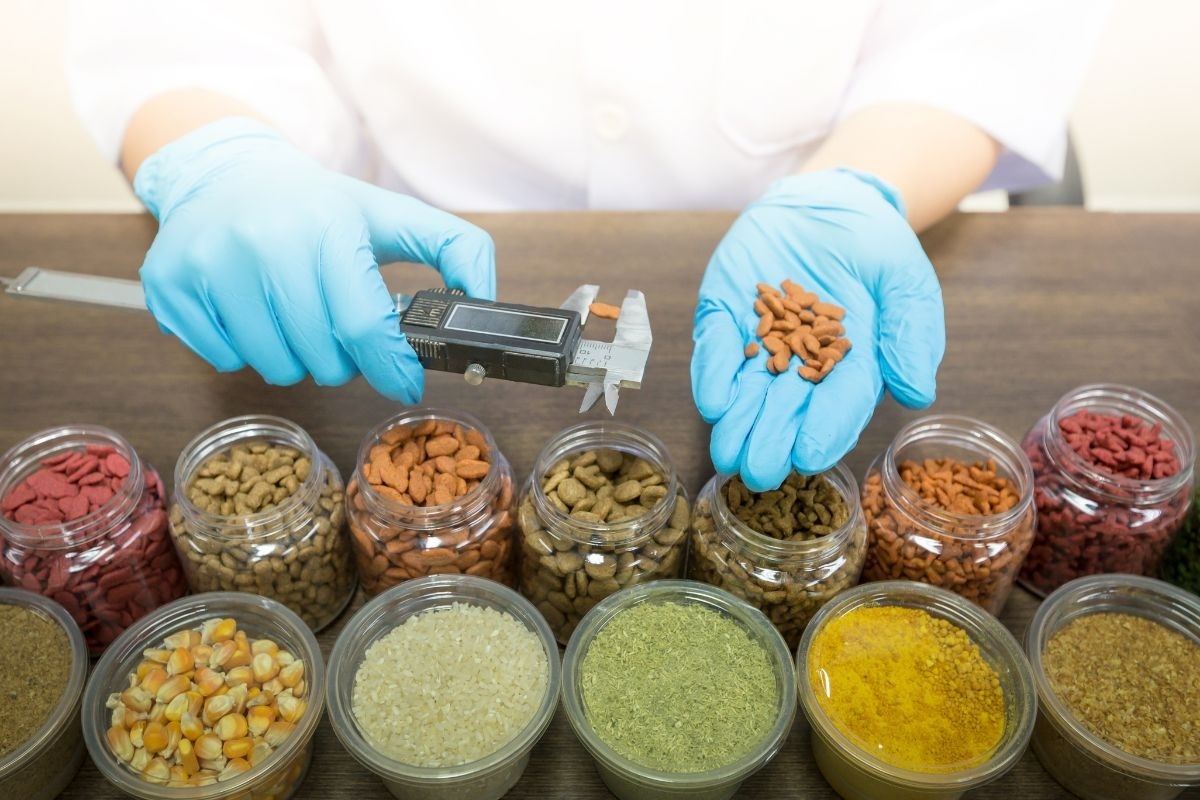
Additives are an integral part of many industrially produced dog food. They ensure durability, ensure sufficient supply of nutrients, improve the processing quality or influence taste and consistency. Not all additives are to be assessed equally – some are necessary and sensible to view others from a nutritional point of view. Anke Jobi, nutritionist for dogs clarifies.
In recent years, the awareness of the dog owners for the quality of dog food has increased significantly. Additives play a central role in this because they often serve as a guide to assess the quality of a feed.
What are additives?
Substances are substances that are specifically added to a feed in order to achieve or improve certain properties. They can be roughly divided into three groups: technological additives (e.g. preservatives, emulsifiers), nutritional additives (e.g. vitamins, minerals) and sensory additives (e.g. color and aroma substances).
The use of such additives is strictly regulated. All additives approved in the EU must be harmless to health and meet a technological or nutritional necessity. Your admission takes place after a scientific assessment by the European Food Safety Authority (EFSA).
Important additive groups and their functions:
1. Conservatives and antioxidants
Preservatives prevent microbial spoilage and extend the durability, antioxidants protect sensitive fats from oxidation. Today, natural antioxidants such as tocopherols (vitamin E), ascorbic acid (vitamin C), rosemary extract or citric acid are mostly used. In contrast, artificial preservatives such as BHA (Butylhydroxyanisol), BHT (Butylhydroxytoluole) and ethoxyquin are rarely used. Ethoxyquin has been banned in the EU since 2017, but can occur in import feed. Antioxidants can also have antioxidant effects in the dog's body by neutralizing free radicals.
2. Thickening and gelling agents, emulsifiers
These additives improve the texture in particular in wet food, prevent segregation and ensure an even consistency. Typical examples are Johannisbrotkernmehl, Guarkernmehl, Cassia Gum, Pectin, tapiocast strength or Xanthan. Many of these fabrics are of natural origin and at the same time deliver fiber. In moderate quantities, they fulfill a sensible function, but they can be viewed critically in excessive quantities.
3. Aroma fabrics and flavor enhancers
Flavors improve the smell and taste of the feed. Natural flavors such as meat extracts, herbs or yeast extracts are more compatible than artificial aroma substances or classic flavor enhancers such as mononatrium glutamate (MSG). Hydrolyzed protein can be used as a natural flavor enhancer to increase the acceptance and tastiness of the feed, especially when inferior raw materials have been processed. In addition to this use as a sensory additive, it is also useful in a hypoallergenic feed, where it is no longer recognized by the dog's immune system. Sprayed fats such as poultry fat or fish oil also increase acceptance and increase the energy content of the feed.
4. Dyes
Dyks play no role for dogs, since on the one hand they can only perceive colors to a limited extent and, on the other hand, primarily orient themselves with the nose. They are used exclusively for marketing reasons to make the feed more apparent for humans.
5. Nutritional additives
Nutrients such as vitamins, minerals and amino acids are indispensable for a balanced diet. Since natural nutrients are sometimes lost in the processing of ready -made feed, they are specifically added. Of course, additions obtained often have better bioavailability, synthetic can be dosed more stable and more precisely. Overdoses, e.g. For example, with vitamin A, D or calcium, health risks can hide and must therefore be avoided as well as underdoses.
6. Probiotics and prebiotics
Prediotic microorganisms such as Enterococcus Faecium and prebiotic fiber such as fructooligosaccharides (FOS) or mannoligosaccharides (MOS) promote intestinal health and can have a supportive effect in dogs with a sensitive digestive wing.