
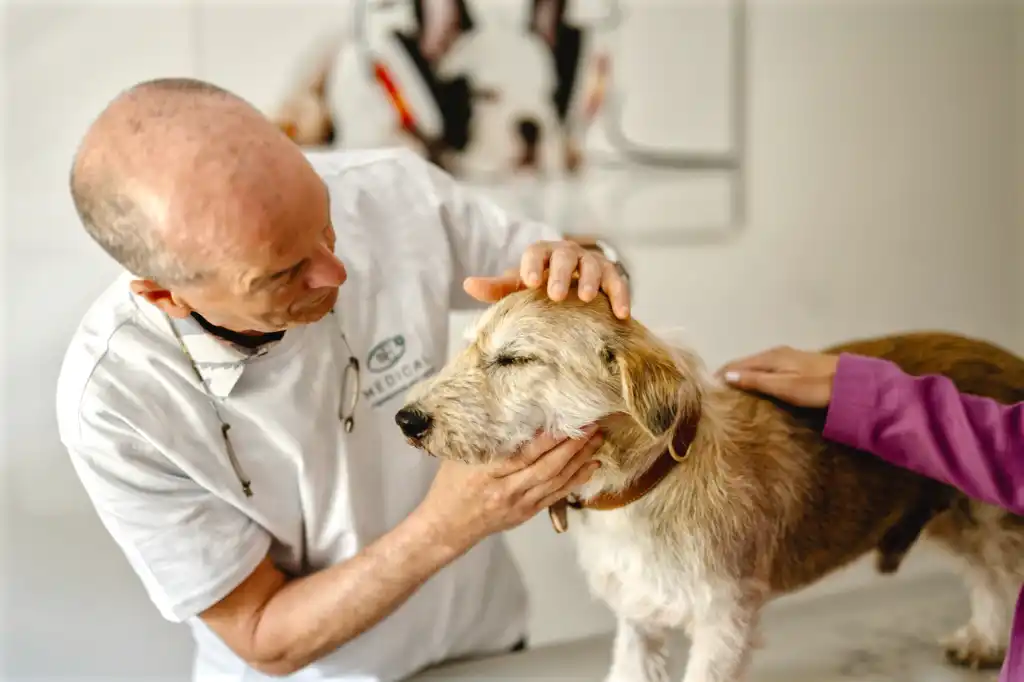
Veterinarians warn against changing food too often for dogs and cats
Constantly new types of food, functional snacks, oils, intestinal treatments and social media tips: the nutrition of dogs and cats is increasingly becoming an optimization project. What many pet owners mean well can, however, overwhelm the organism. Experts observe that animals are changed, supplemented and “treated” more frequently today than they were just a few years ago. And this often happens without sufficient stabilization between measures. At the same time, the market for animal supplements is growing rapidly worldwide. According to data from the American Pet Products Association, 53 percent of dog owners already use supplements, and usage has increased by 56 percent since 2018. From the experts' point of view, this also increases the risk of using several products at the same time or switching between types of food more frequently. The consequences can be digestive problems, non-specific complaints and increasing uncertainty among owners. Veterinarian Thomas Backhaus and animal health practitioner Ines Mart from 'Das Gesunde Tier' explain why biological adaptation processes take time, why constant food changes can be problematic and why not every nutritional trend is automatically healthy.
Berlin. Today, pet owners are more concerned with nutrition, gut health and nutritional supplements than ever before. At the same time, however, uncertainty is growing. Hardly any other area is currently being discussed as emotionally on social media as animal nutrition: hypoallergenic food, intestinal structure, functional snacks, oils, herbs, mushrooms or nutritional supplements for fur, joints and the immune system. Many dogs and cats are therefore regularly changed, supplemented or fed with new concepts. From the point of view of the experts at 'The Healthy Animal', however, this is increasingly creating a problem: permanent “health stress” for the organism.
By health stress, the experts mean the sum of frequent food changes, changing nutritional supplements and constantly new health measures that hardly give the organism any time to adapt. “Many pet owners want to help their animal as quickly as possible. The only problem is: the organism doesn't work like a switch,” explains veterinarian Thomas Backhaus, an expert in integrative veterinary medicine. Based on over 50 years of veterinary practice experience, he is increasingly observing that animals are being changed, supplemented and “optimized” more frequently than before. Many physical processes would take place with delays and require stability instead of constant changes. “The biggest mistake in thinking is often the idea: one product in – one problem out,” says the veterinarian. Chronic complaints in particular are usually significantly more complex and arise over longer periods of time.
 Ines Mart, animal health practitioner and head of nutritional advice at 'Das Gesunde Tier', is also observing increasingly unrealistic expectations of food and nutritional supplements. “Many biological processes take place with delays. Especially with chronic problems, we often only see stable changes after several weeks. Nutritional supplements do not act like a switch, but rather support them over longer periods of time,” explains Ines Mart.
Frequent food changes are usually problematic
According to experts, the frequency of feed changes has increased significantly in recent years. An internal evaluation of 500 nutritional consultations from 2024 to 2026 also shows: 68 percent of the dogs with chronic digestive problems that were presented for consultation had tried at least three different types of food in the six months before the consultation. The main reasons are social media, influencer recommendations, the enormous product selection and the desire of many owners to respond to complaints as quickly as possible.
 “We are increasingly seeing that animal health is treated in a similar way to human self-optimization – with constantly new trends, superfoods, supplements and quick solutions,” explains Ines Mart. This often results in a constant change between types of food, snacks, nutritional supplements and health measures – often without sufficient time for real stabilization. For the organism, however, every change initially means adjustment work. Digestion, enzyme activity, intestinal flora and metabolic processes would have to be reregulated. “Many people always only talk about the intestines. But in practice we often see that the stomach and pancreas are the actual bottlenecks when changing food,” explains veterinarian Thomas Backhaus. Initial changes such as changed stool consistency, increased stool output or temporary reluctance to eat should therefore not automatically be viewed as negative. “Especially if a dog has been given very processed food or products with lots of flavor enhancers for a long time, we sometimes see that higher quality and more natural recipes are not immediately enthusiastically accepted,” explains veterinarian Thomas Backhaus. However, many animal owners would change new types of food after just a few days. But: “Many animal owners today change their food faster than the organism can even react,” explains Ines Mart.
Social media creates attention –
but simplifies complex processes
Basically, the experts are positive about the fact that more and more owners are actively concerned with high-quality nutrition and animal health in order to do something good for their four-legged friends. At the same time, the large amount of information on social media makes it more difficult to distinguish technically sound recommendations from marketing and trends. Individual products are often presented there as a quick solution to complex health problems. “In social media, complex health relationships are often presented in a very simplified manner. This can become problematic if complex health processes are reduced to individual products,” explains veterinarian Thomas Backhaus. A nutritional concept that works for a young, healthy dog could be unsuitable for a senior, allergy sufferer or chronically ill animal. Age, previous history, medications, intestinal condition, parasite status and metabolism always have to be considered individually. “Our approach is therefore always to look at nutrition individually and in the overall context of the animal – instead of unthinkingly adopting trends or general recommendations,” explains Ines Mart.
Dietary supplements must also be given in a controlled manner According to 'The Healthy Animal', the use of nutritional supplements is also increasing significantly. Products related to digestion, intestinal health, joints and daily health support are particularly in demand. In principle, supplementary feed could be useful in certain situations, such as during growth, under high stress or as an accompaniment to chronic complaints. “However, it is crucial that they are used in a targeted, high-quality and biologically understandable way,” explains veterinarian Thomas Backhaus. The experts are particularly critical of the trend of using more and more products at the same time “on suspicion”. Even high-quality ingredients can only be used sensibly if the organism's digestion and absorption capacity are functioning properly. “If digestion is disturbed, this can significantly affect the absorption and utilization of nutrients,” explains Ines Mart. In addition, according to the experts, many heavily advertised products can hardly achieve any biologically relevant effects. “Functional snacks in particular often give the impression of strong health benefits. However, not every product contains the ingredients used in quantities that the experts believe can make a relevant contribution,” says veterinarian Thomas Backhaus.
Stability instead of daily health revolution
From the experts' point of view, the real challenge is not to use as many products as possible, but rather to stabilize the organism in the long term. “Some animals today experience real health stress due to constant new food, frequent changes and ever new measures,” explains veterinarian Thomas Backhaus. Especially in chronic or sensitive animals, the organism needs time, rhythm and comprehensible structures. “The intestines don’t need a daily revolution, but rather stability,” he emphasizes. The experts therefore recommend that changes in feed and nutritional supplements should not be implemented impulsively, but rather in a targeted manner and with sufficient observation time. “In our opinion, the change should only be made if there is an understandable reason for it,” summarizes veterinarian Thomas Backhaus. He concludes: “Sometimes the best health measure is not the next change, but a little more patience.”
About 'The Healthy Animal'
'The Healthy Animal' stands for holistic animal health with a focus on nutrition, intestinal health and individual advice. The company offers food, supplementary feed, care products, test kits and digital advice for dogs, cats and horses. The basis is the 5‑E™ health concept developed by veterinarian Thomas Backhaus, which does not look at animal health in isolation, but rather considers nutrition, intestines, organ connections and individual needs together. 'The Healthy Animal' draws on over 50 years of veterinary experience, an interdisciplinary team of experts and its own veterinary practice. Through DGT MEDICAL, the company also offers individual online veterinary and nutritional advice. The products are developed and manufactured in Germany and are aimed at pet owners who want to holistically support their animal's health, feeding and everyday life. Further information at: www.dasgesundetier.de.
Was this amount interesting or helpful?
Your rating shows us what you and your furry friend like – it's like a treat for us.