
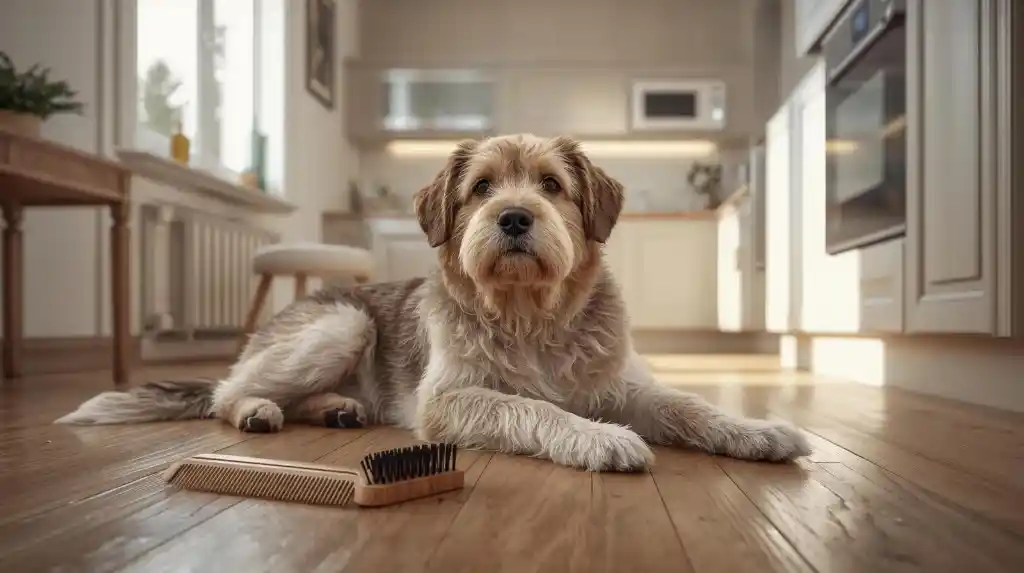
Boppard. It's that time of year again: the days get longer or shorter, and suddenly the sofa seems to take on a new, furry texture. Shedding is a challenge for dogs and owners alike. But brushing is much more than just a fight against dust mice in the apartment. It's active health care and a valuable bonding time. If you brush and comb your dog correctly, you do much more than just ensure a shiny coat. Careful grooming of dogs supports skin health, prevents matting and, at the same time, strengthens the bond between humans and animals. However, if you brush indiscriminately, you risk skin irritation or painful itching.
 Before you brush your dog, you should clarify what coat structure it has: smooth short hair, long fur, rough fur or a combination with a dense undercoat. A short-haired dog with little undercoat usually benefits from a soft rubber brush or grooming glove that loosens loose hair and dust while massaging the skin. Long-haired dogs, on the other hand, need a combination of brush and comb that gets down to the undercoat without damaging the skin. For dogs with an undercoat, special undercoat brushes are useful that remove loose undercoat while protecting the top hair. If you use a brush that is too soft, you are only caring for the surface – knots and loose undercoat remain in the fur and can cause problems later.
The technology
Proper brushing starts with patience. Many people make the mistake of only brushing the top hair superficially. The actual problem – the loose undercoat – often remains untouched and matted.
The right technique when brushing and combing dogs is just as important as having the right tools. Basically, brushing is carried out in the direction of growth of the fur, with calm, even movements and without excessive pressure. Particularly sensitive areas such as the armpits, behind the ears, on the pants and in the groin region deserve attention because lumps can quickly form there. For longer fur, it has proven useful to work in sections: divide the fur into layers with your hand or a comb and brush from bottom to top until you have really reached every layer. Tangles should first be carefully loosened with your fingers and then gently worked on with a comb or a detangling brush – pulling them through forcefully hurts the dog and can break the hair.
For particularly long-haired dogs, the “layer method” is recommended: lift the fur with one hand and brush the underlying layer until the skin is visible. This is the only way to reach the undercoat, where dirt and loose hair collects.
The most common mistakes
Despite all the good intentions, dogs and their owners are often confronted with typical mistakes when grooming. A common mistake is choosing the wrong brush: hard wire brushes on sensitive short-haired skin can cause micro-injuries, while a brush that is too soft has little effect on a long-haired dog with a dense undercoat. Brushing too infrequently, especially when changing coats, is also problematic. If loose undercoat remains in the fur, it can become matted, hinder air circulation on the skin and promote heat build-up, itching or skin inflammation. Another mistake is brushing against the grain, which is uncomfortable or painful for many dogs and can strain the hair follicles. Getting already matted fur wet is also tricky: wetness tends to pull knots closer together, making them difficult to loosen later.
 Typical grooming mistakes include using clippers on dogs with a thick undercoat if the fur is perceived as too warm in summer. If the undercoat is simply shaved off, this can affect the natural thermoregulation and protection from the sun. It makes more sense to regularly brush out the loose undercoat so that air can reach the skin and the dog can “climate” itself better.
Even experienced dog owners often fall into the same traps:
- Too much pressure: Dogs' skin is more sensitive than humans'. Pressing too hard with wire brushes can lead to “brush fire” (red streaks and irritation).
- Dry brushing for curls: In breeds such as poodles or water dogs, dry brushing can cause hair breakage. A special care spray helps here.
- Neglected zones: Matting occurs most quickly behind the ears, in the armpits and on the inside of the thighs. If you avoid these areas, you risk painful knots that can often only be sheared away by a professional.
The right tool
Not every brush suits every dog. The choice of equipment determines whether the care becomes a wellness session or torture.
- Slicker brush (Slicker Brush): The all-rounder for almost all coat types to remove loose hair and light tangles.
- Undercoat rake: Indispensable for breeds with thick undercoats (e.g. Golden Retriever, German Shepherd). He pulls out the loose wool without trimming the top hair.
- Rubber curry comb: Perfect for short-haired dogs (e.g. Boxer, Beagle). It massages the skin and gently removes loose hair.
- Comb with rotating teeth: Ideal for checking after brushing whether all knots have really been solved.
Bathing and hairdressing –
Secret weapons when changing fur?
A question that is often asked is: Should you bathe your dog during shedding? The answer is a resounding yes – but with caution. A warm bath will help loosen the dead hair in the undercoat. However, it is important to use a moisturizing dog shampoo so as not to destroy the skin's natural protective film. If you gently massage your dog with a rubber curry comb while soaping, you will be amazed at how much loose fur is already in the drain (please use a hair sieve!) lands.
When is the professional needed? Going to the dog groomer (groomer) is particularly useful when changing fur. Professionals have powerful hair dryers, so-called “blowers”. These literally blow the loose undercoat out of the dog, which is hardly possible at home. They also know exactly which areas can be trimmed, plucked or just thinned out.
In addition to brushes and combs, there are other tips for good dog grooming. A balanced diet with high-quality proteins, essential fatty acids, vitamins and minerals is the basis for a healthy, shiny coat. Regular checks by the veterinarian or animal health practitioner can help to detect skin problems, parasites or allergies at an early stage. When brushing yourself, it's worth taking the opportunity to check the skin for redness, dandruff, ticks or small wounds. In this way, grooming becomes health care, not just cosmetics.
Regular brushing is not a necessary evil, but a health check. If you choose the right technique and the right tools, you will save your dog from itching and matting – and at the same time create small moments of well-being. (SR)
Was this amount interesting or helpful?
Your rating shows us what you and your furry friend like – it's like a treat for us.