
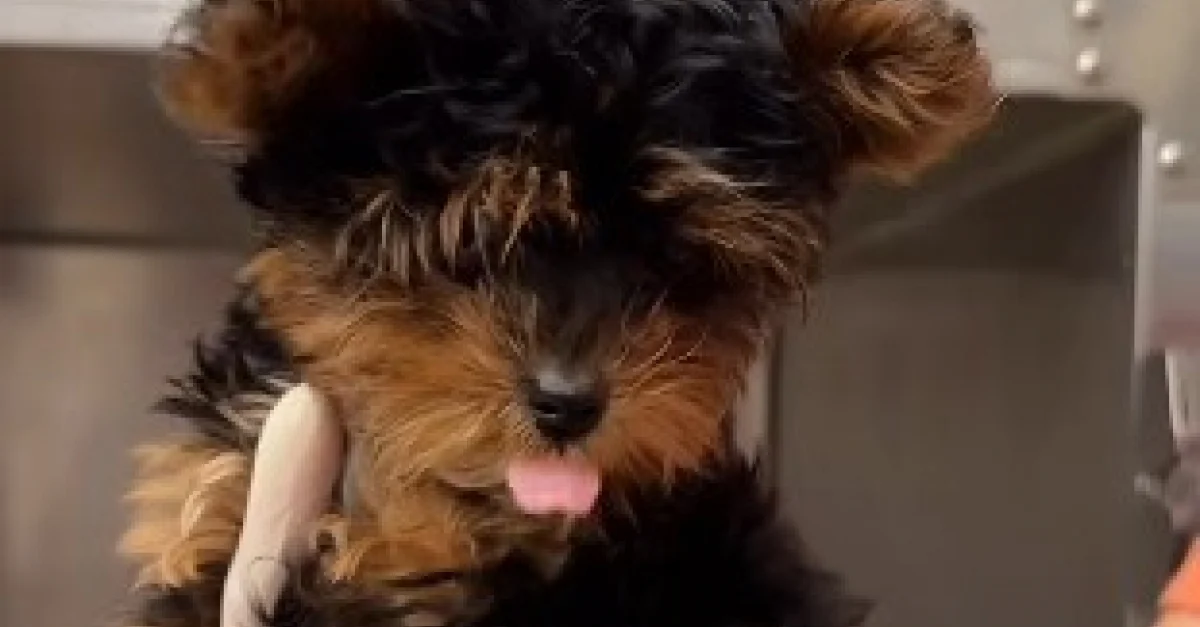
In June 2026, the American Animal Welfare Association Pennsylvania SPCA had discovered and rescued dozens of dogs victims of abuse, kept in a completely dilapidated house. Among the survivors was a 4-month-old Yorkshire Terrier cross puppy, called Shakey afterwards.
Like all his rescued animals, he had been examined by a veterinarian, who immediately noticed that he had difficulty controlling his movements and that he was constantly trembling.
Weeks later, Shakey is still at the shelter of the association based in Philadelphiain Pennsylvania (United States). His tremors have certainly not stopped, but his condition has not worsened. He likely has a neurological abnormality called cerebellar hypoplasia, which is more common in kittens than puppies.
However, the young canine does not intend to let his handicap hold him back. He constantly displays boundless joie de vivre and enthusiasm.
“All he knows is that he wants to play, explore the world and receive love”
“ He's still shaking. He still needs help. Many challenges await him. But he is also playful, curious, happy, indicates, in fact, the Pennsylvania SPCA in his post relayed by The Dodo. He doesn't know he's different. He doesn't know he has special needs. All he knows is that he wants to play, explore the world and receive love. »
The volunteers are hopeful that he will find a loving and warm home, a family willing to be patient and understanding towards him. The association specifies that it must be kept in a restricted space for its safety and fed by hand. In addition, he has not yet completely acquired cleanliness and his health will need to be regularly monitored, particularly neurologically.
“ He's not like any other puppy. He never will be, but that doesn't mean he doesn't deserve a chance too », concludes the Pennsylvania SPCA.
Woopets info: what is cerebellar hypoplasia in dogs?
Cerebellar hypoplasia is an avenue suggested to explain disorders of Shakeybut it is not yet confirmed at this stage. The puppy will need to undergo further veterinary examinations in order to establish an accurate diagnosis and to rule out other possible causes for its tremors and coordination difficulties.
Regardless, this neurological condition corresponds to insufficient development of the cerebellum, a region of the brain involved in balance and coordination of movements. Affected dogs may exhibit tremors, unstable gait, loss of balance or difficulty controlling certain movements.
There is generally no treatment to repair the cerebellum, but the disease does not necessarily mean suffering. Many affected dogs learn to adapt to their limits and can enjoy a good quality of life with a secure environment and appropriate support.
Veterinary follow-up remains essential to monitor the animal's progress, meet its specific needs and put in place the necessary daily arrangements. The objective is to allow him to remain independent as much as possible while limiting the risks linked to his motor disorders.