
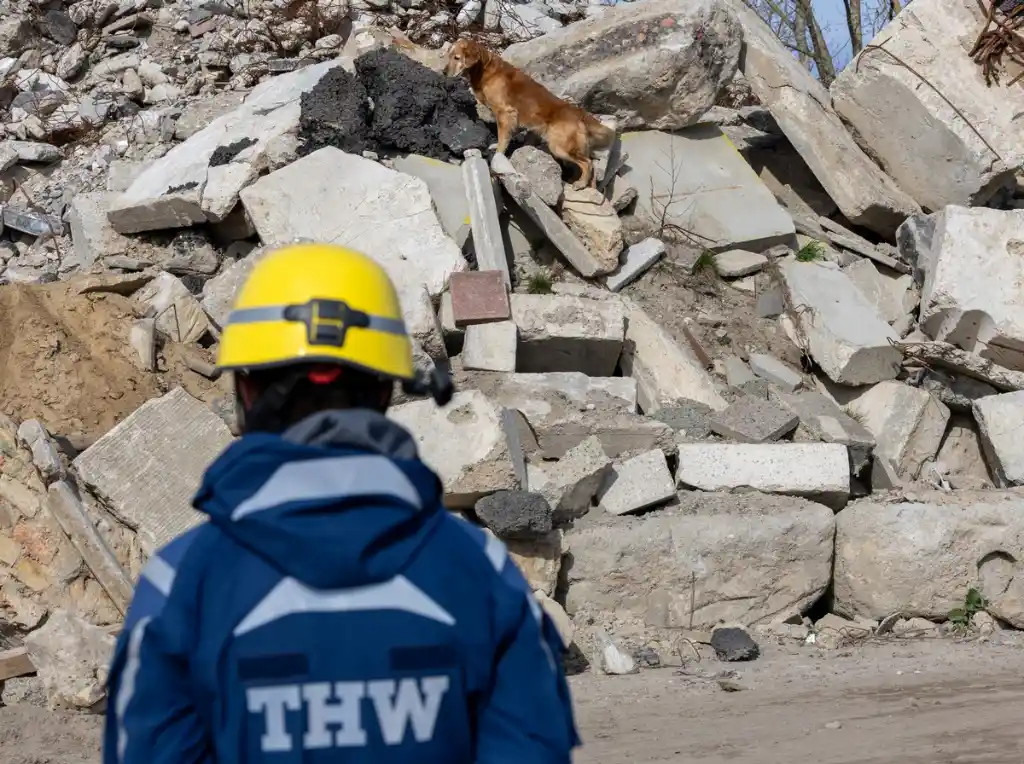
Berlin (ots). Around 90 dogs from the Technical Relief Agency (THW) train to search for missing people in western Berlin on the last weekend in March. Rescue dog units from all over Germany are taking part in the meeting in Berlin. The aim is to network the nationwide THW biological tracking forces more closely and to promote professional exchange.
 Luisa Busch is the trainer in the specialist group for tracking rescue dogs in the THW Berlin Steglitz-Zehlendorf branch, which initiated the meeting. “The meeting has served its purpose so far: everyone is having fun, people and dogs, they are getting closer and closer, getting to know each other better,” says Luisa Busch, and explains: “The focus here is networking. We want to learn from each other, because there are different approaches, especially when working with dogs. The exchange is important, for example in order to benefit from mutual training methods.”
On Friday, teams searched for missing people in large and difficult-to-reach areas. The rubble search followed on Saturday, during which the rescue dog teams practice finding buried or trapped people in complex damage situations, such as those that can arise after a flood disaster or a gas explosion. This type of search is one of the central skills of the rescue dog component at THW. The THW people search dog teams also train in the surrounding city area on both days.
The work of rescue dog teams is an essential part of civil protection. It is used in particular when searching for missing, buried or trapped people after natural disasters, accidents or attacks. Rescue dogs at THW are specialized in live searches, especially in rubble searches, and are also used in area searches. Well-trained dogs can search large or difficult-to-access areas quickly and reliably and thus provide emergency services with crucial support in the search.
The THW dogs are deployed not only at home but also abroad, such as after the major earthquake in Turkey in 2023 and after the explosion at the port in Beirut in 2020.
Location specialist groups with a biological component are comparatively rare in the THW. There are 23 type A location specialist groups nationwide (biological and technical) and 9 specialist groups for location type B (biological). The meeting therefore mainly served to exchange experiences, compare training levels and learn from each other.
Was this amount interesting or helpful?
Your rating shows us what you and your furry friend like – it's like a treat for us.