

FOUR PAWS gives tips on how pets can survive the turn of the year without stress
Hamburg. The official sale of New Year's Eve fireworks and firecrackers starts on December 29th. And so on New Year's Eve – and days before and after – numerous dogs, cats and small animals as well as wild animals and agricultural animals will again suffer from noise, flashes of light and smoke. The global animal welfare foundation FOUR PAWS therefore appeals to everyone to avoid fireworks and gives tips on what pet owners can do to ensure that our pets survive the turn of the year without fear.
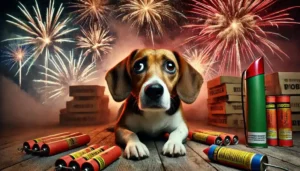 “Fear of fireworks is widespread among pets and represents a significant animal welfare problem. Some animals panic and try to escape the terrible noise and lights as quickly as possible. They often need a long time to recover after the experience. The best thing you can do for all animals and the environment is to consistently avoid fireworks,” says Dr. Sabrina Karl, qualified biologist and pet expert at FOUR PAWS.
Distraction and workload
On the days around New Year's Eve, dog owners should do their walks in uninhabited, quiet areas if possible. “On New Year’s Eve itself, it’s best to go for a walk in the morning, because the first firecrackers and rockets are often set off as soon as it gets dark,” says the FOUR PAWS expert. “A well-exercised dog often reacts less stressed. That's why you should always include small play or sniffing sessions in the New Year's Eve walk. It's also great if the dog can still let off steam with other dogs.”
Please keep your dog on a leash, chip it and register it
Even if your dog is not very skittish, it should definitely be kept on a leash. “Even a relaxed dog can get frightened by a sudden, bright flash of light or a loud bang and run away in a panic. That's why you shouldn't take any unnecessary risks and keep your four-legged friend on a leash. It's best to attach the leash to the dog at two points: a safety harness can prevent it from slipping out in a panic. The dog should also wear a tag with current contact details of the owner or a pet register and be chipped by now at the latest. If the animal is If you manage to run away despite being on a leash, the microchip can help bring the dog back to its owner,” says Dr. Sabrina Karl.
Distract with chew toys and offer hiding places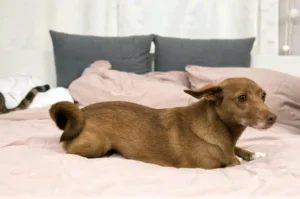 Back home, you can keep the dog busy in the evening with chew toys. The television or radio provides background noise and is a little distracting; classical music can calm you down. “So that the cat or dog is not startled by the flashes of lightning and explosions, you should close the windows well, draw the curtains or lower the blinds,” recommends the expert. “The ability to hide under the sofa, in comfortable beds or caves or in a quiet corner also makes the stress of fireworks easier for anxious and shy cats and dogs. It is important to stay close to the animal and support it if necessary.”
Bring animals into the house
Not only dogs, but also outdoor cats should stay indoors at the turn of the year. Especially at midnight, the sounds of firecrackers and explosions often come from all directions. “Cats and dogs could run in front of a moving car, a bus or a train or become disoriented and no longer find their way home. That's why you should be on the safe side and also leave outdoor animals in the house in the days around New Year's Eve,” says the pet expert.
No party fun for animals
Many people want to spend the New Year with their loved ones – and for many this includes their own pet. However, FOUR PAWS appeals not to take your dog to a public New Year's Eve event. “Crowds of people, dense crowds and fireworks that last for minutes are not a suitable environment for a dog. You are doing your animal a disservice,” says Dr. Sabrina Karl.
Don't forget small animals
Not only dogs and cats, but also small mammals such as rabbits, guinea pigs and hamsters can react to fireworks with a racing heart and fear. FOUR PAWS expert Dr. Sabrina Karl asks that pets that are otherwise kept outside be protected from noise and flashing lights: “Rabbits are flight animals. New Year's Eve is often torture for them. That's why you should adequately insulate and cover their enclosures or, if possible, bring the animals into the house and put them in a quiet room.”
Professional help for extreme anxiety
Animals that have developed a deep-seated fear of fireworks and loud noises can be treated for their fear with professional help. “A carefully developed desensitization and counter-conditioning program – possibly with medication support that is specifically aimed at the fear – can help the dog to reduce his fear and, in the best case, even overcome it. Get advice about this from a veterinary practice or from appropriate experts,” says Dr. Sabrina Karl.