
What is the first step many people forget when handing in – by Susanne Reinke
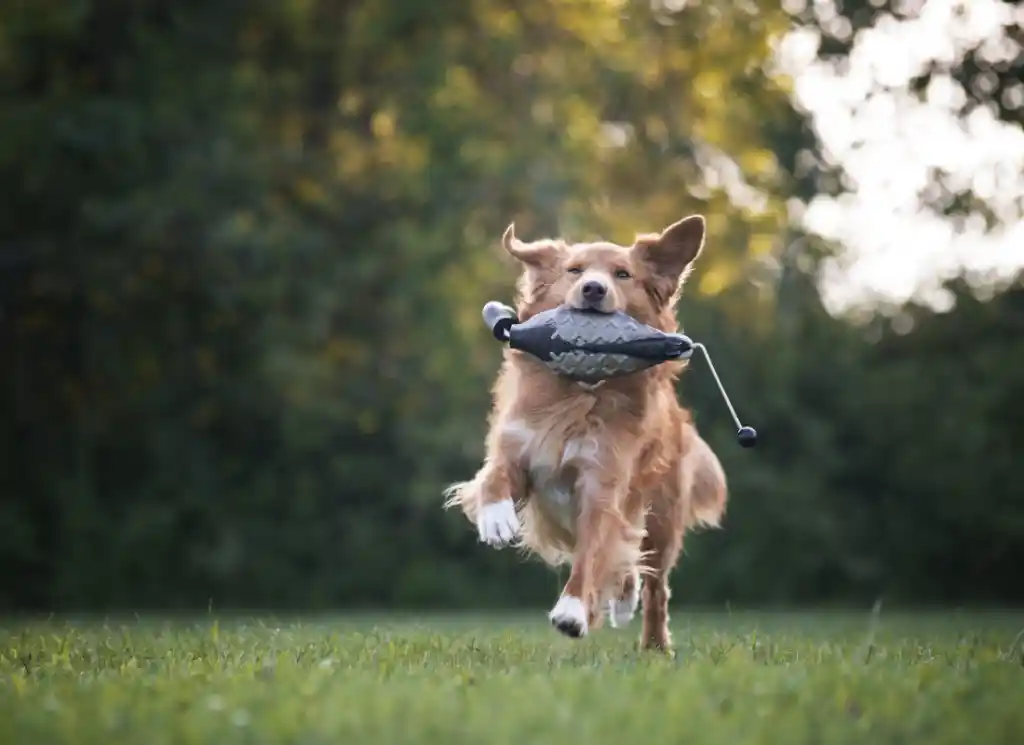
Spring is approaching and that means lots of time outdoors with your dog. You're in the middle of playing on a large meadow, your four-legged friend is running towards you with the toy in his mouth, but as you're holding out your hand, he makes a U-turn and puts the toy somewhere nice and far away from you and chews on it. Then he looks at you as if to say: Go get it! Play and fun quickly turn into curse and frustration.
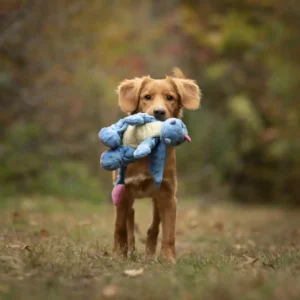 Many then think about how they can set up the drop-off so that they can get the toy back without running after their dog halfway across the play area. Most of the time you start with the dog in front of you and have him hold the toy in his mouth until you say “off”. In most cases, however, it is precisely this exercise that leads to your dog avoiding carrying anything close to you because he knows full well that he will then have to “hold” his toy again in a very boring way.
That's exactly why I want to explain to you today why bringing (do not submit) the delivery – one of the most important elements of the dummy training – precedes it. But even if you're not in dummy training, the following article is for you. The main thing is that you can trust that you will get the thrown toy back. Your dog doesn't have to sit particularly nicely in front of you or be able to hold the ball for hours.
Games in which something is thrown, hidden or laid out (except food), are much more fun when your dog not only finds the items, but also enjoys bringing them back. Unfortunately, there are often a lot of things your dog can think of instead. “I just leave the toy lying there”, “I lie down with it and chew it up” or “I just put it somewhere” are just a few examples. It's no wonder that you quickly find yourself at your wits' end.
The most important exercise before submission In order for delivery to work well, you usually have to take a step back in training, because delivery training does not start with your dog putting something in your hand. First he has to want to bring you the toy, then you can start practicing presenting the toy to you. In order for this to work, you should start with everyday and preliminary exercises:
- Proper play
First, your dog needs to understand that playing with you is fun. So he starts bringing you things just because you're funny and he wants to keep playing, and he automatically starts to enjoy bringing them. This means he doesn't have a problem picking it up, doesn't run somewhere else or chew up the toy or dummy – it has to get back to you quickly so that you can continue playing together!
Fun fact: You can start the fetching exercises at any time, because playing is possible at any age! - Trading and giving away is fun
Your dog should learn that surrender is something nice. With an exchange you can teach him: “Bringing something is great because it’s even more fun afterwards!” Make sure that you don't just take the old toy out of his mouth or say it, but let the game end gently, for example by letting the active toy “die” – it slows down until it stops moving at all. Then the new game can begin with the other toy. At this point you can also add a signal word, for example let go or leave it. All of this combined ensures that you have fun together and encourages your dog to be happy to fetch. He'll learn not to stress toys, and you can also build his frustration tolerance.
If you want to know more about this, feel free to read my article “Everyday Exercises for Every Dog”, in which I introduced the dead mouse game and other great exercises in detail – perfect for learning something in a playful way.
Make sure that your dog has mastered the everyday and preliminary exercises before you begin active training for fetching.
Practice bringing things, not giving things away beautifully
The best way to practice retrieval is in a relaxed situation, like the big search from dummy training. Here your dog searches a large area for objects that are hidden for him and which he is then supposed to look for and bring back.
Tip: Use toys here first, even if you want to start dummy training later. If an exercise doesn't work, your dog collects and associates these experiences not with a dummy, but with a toy that you can easily replace.
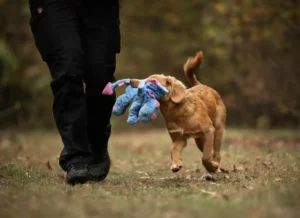 Once your dog has found the toy and picked it up, you turn around and slowly walk away. You keep running until your dog runs past you with the toy. This is important so that later, when you stop at your place, he will bring it to you and not drop it halfway. If he then runs past you, reward him extensively and with good quality, take the toy he brought and continue playing with a new toy. This way you continue to show him: swapping is fun!
Important to note: Only after you have practiced fetching sufficiently – i.e. doing it safely and, above all, with fun – can you move on to training giving it away and holding it. I'll tell you more about this in the next article. Let's now first look at the most important basic rules for retrieval so that you can really have success in training with this system.
Five important basic rules
- Train with the right mindset
If you want to teach your dog that fetching is something fun, then you should also think like this: “I don't want the toy or dummy to be handed over in a certain way, I'm just happy when my dog brings it to me.” As soon as your dog notices that everything is a little more relaxed, fetching will be much more enjoyable for him. - Don't cheat
If the toy or dummy isn't with you, it's not with you – don't try to catch it somehow. If your dog learns that you come towards him and always manage to grab a toy or dummy anyway, he will no longer see any point in bringing it to you. - Distance yourself instead of looking for closeness
If you notice that something isn't working while you're bringing it, just walk backwards slowly. Your dog is slowing down? Does he drop the toy or dummy or lower his head because he would rather keep it for himself? In such situations, if you slowly move away, you allow your dog to remember the system you have built together. “Why are you leaving?” he then asks himself, “Oh, I should bring this to you!” And you have already overcome the difficult situation. - Success lies in difficulty
Imagine you're sitting at a dinner table and the person you're sitting with asks you to pass the salt over, even though it's right in front of him or her. “Why don’t you take it yourself?” you would probably ask yourself. Your dog feels the same way when he has to bring you something that is one meter away from you. It seems pointless to him and he decides that you can do it on your own. So don't make it too easy for him, let him work a little and place toys or a dummy further away. - Adhere to the sequence
Some dogs need more time to learn something than others – this is completely normal and of course you can adapt the training to your dog's learning speed. The only important thing is that you don't skip any steps but go through them all so that your dog has the opportunity to really understand and learn the whole thing.
Conclusion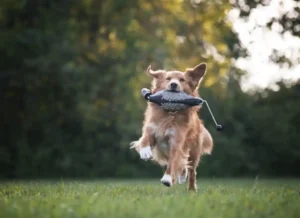 For a fun game for both sides, a secure delivery is needed. To do this, your dog must want to bring the toy to you first. Start with “playing correctly” and incorporate swapping. Once you have consolidated this basis, you can move on to training retrieval using my five basic rules. Only when the bringing goes well do the delivery and holding come slowly and without any pressure, but I'll tell you more about that in the next post. Until then, I hope you have fun playing and bringing things!
Here is the relevant podcast episode on the topic: Boosting fetching – this is how your dog brings joyfully and reliably again.
Tip: Further contributions from Susanne Reinke