
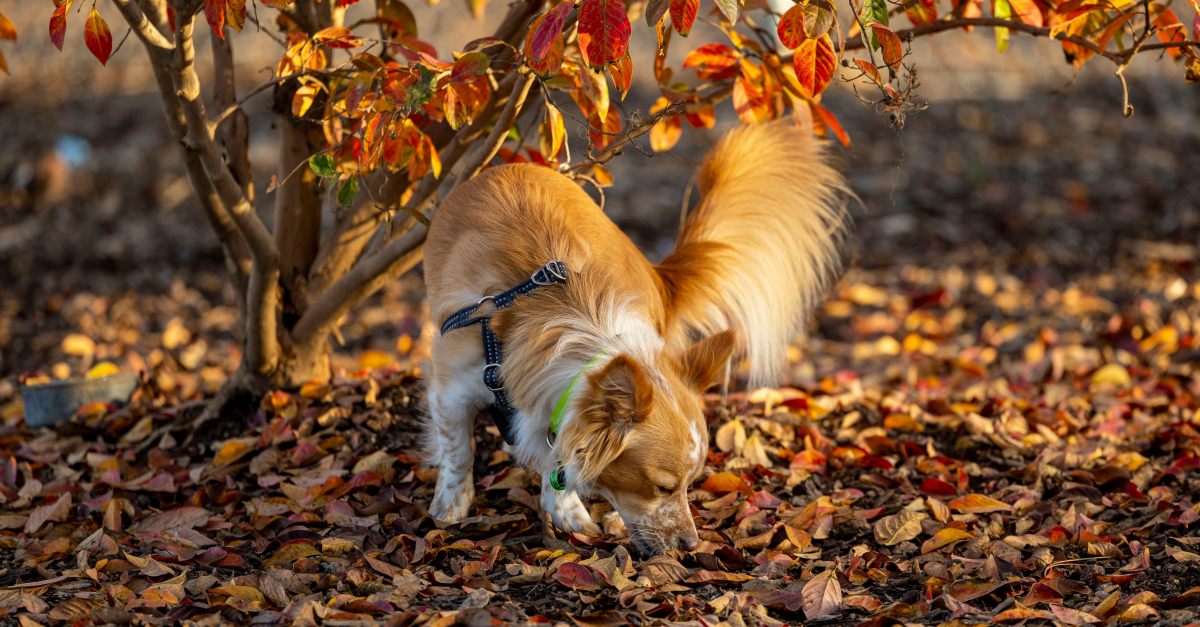
For a dog, sniffing is not a waste of time: it is his main way of discovering the world. Its sense of smell, much more developed than ours, allows it to collect a quantity of information that we are incapable of perceiving. Where we observe a landscape, it “reads” the smells left by other animals, people or recent events. This is why specialists speak of olfactory enrichment (Sniffari) when a walk gives the dog time to freely explore smells. This activity is so important for our legged friends that researchers wanted to know if it really improved their well-being. Their goal was not just to see if the dogs were calmer, but if they approached new situations with a more positive emotional state.
How to measure a dog's optimism?
To find out if a dog is optimistic or pessimistic, researchers used a positive cognitive bias test. The idea is this: when an individual feels good, he or she is more likely to interpret an uncertain situation as promising. Conversely, a more stressed or anxious individual more easily expects a negative outcome.
To test this state of mind in dogs, the researchers imagined a clever experiment. The little 4-legged guinea pigs first learn that a bowl placed in one place always contains a treat, while another, located elsewhere, is always empty. Once this rule is understood, a third bowl is placed between the two. Will the dog rush into it enthusiastically, hoping to find a reward? Or will he approach it with hesitation? His reaction gives clues to his emotional state at the moment.
To find out if sniffing could influence this judgment bias, 20 pet dogs were divided into 2 groups. For 2 weeks, the first group practiced olfactory research sessions (nosework), while the second carried out another activity, foot work. All the dogs took the same test before and after this period, in order to compare the effect of these different activities on their emotional state.
At the end of 2 weeks, the dogs who had practiced nosework were quicker to move towards the bowl placed in an ambiguous location. In other words, they seemed more likely to expect a reward. On the other hand, this change was not observed in dogs in the control group.
For researchers, this behavior is an indicator of a more positive emotional state. This does not mean that the dogs were “happy” in the sense we understand in humans, but that they approached an uncertain situation with more optimism, an indicator often used to assess animal well-being.
Why is sniffing good for dogs?
These results published in Applied Animal Behavior Science* are explained quite easily. By searching for an odor, the dog mobilizes its most developed senses, solves a problem, makes decisions and explores its environment autonomously. Sniffing therefore stimulates your brain as much as your body. As with us, mental expenditure is essential to one's balance and is not limited to running or physical exertion.
This study also reminds us that a walk is not only measured in kilometers traveled. Letting your dog take the time to sniff, varying the places for walks, offering him little search games at home or offering him moments of safe exploration are all ways to enrich his daily life. The goal is not necessarily to walk longer, but to allow him to fully use his sense of smell.
Of course, like any scientific experiment, these results must be interpreted with caution. Carried out on a small number of dogs and over a short period of time, this study must be confirmed by other research. It nevertheless provides an encouraging indication of the benefits of olfactory activities for the well-being of dogs.
*C. Duranton, A. Horowitz, “Let me sniff!” Nosework induces positive judgment bias in pet dogs”, Applied Animal Behavior Science, Vol.211, February 2019, p.61-66.