
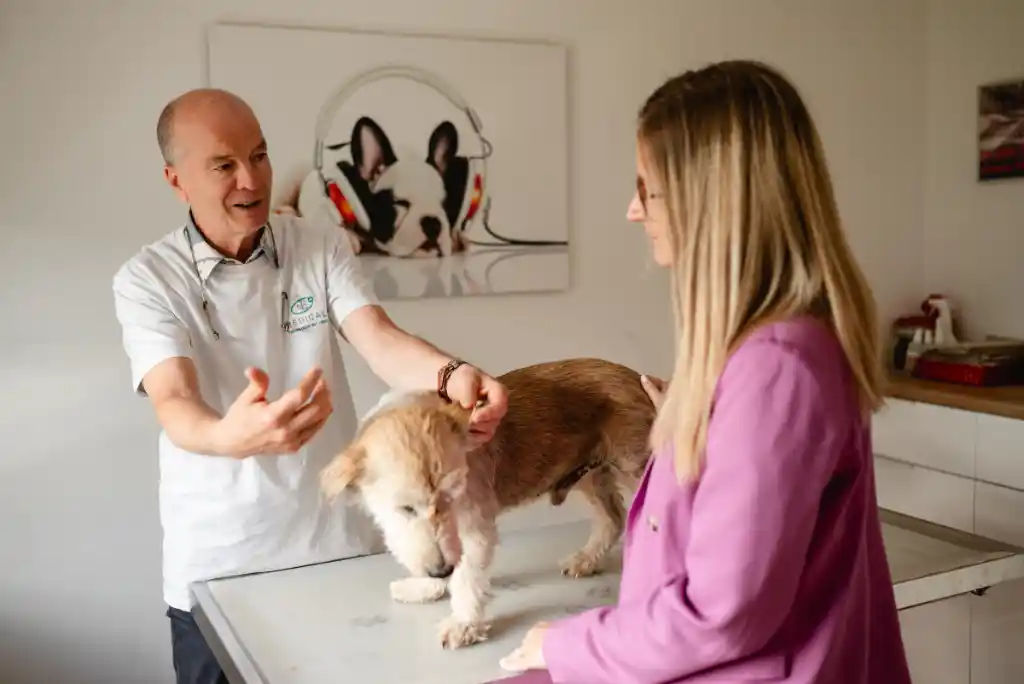
When digital veterinary advice helps – and when it doesn’t
Heat, travel stress, ticks and heated asphalt: In the summer, dogs experience an increasing number of complaints that pet owners often misclassify. The crucial question is rarely what diagnosis is present, but rather how urgent a case is. This is exactly where a veterinary consultation via telemedicine can provide support, for example with minor gastrointestinal complaints, small wounds or questions about parasite protection. In the case of heat stroke, shortness of breath or circulatory problems, however, it clearly reaches its limits. Veterinarian Thomas Backhaus and veterinarian Franziska Mette from “Das Gesunde Tier” explain which misjudgments are particularly common in summer, how an emergency can be recognized and how pet owners can prepare for digital advice.
Berlin. Rising temperatures, long car journeys, holidays at the lake: summer noticeably changes the everyday lives of dogs and with it the reasons why pet owners seek veterinary advice. Beginning dehydration, heat stress, gastrointestinal problems while traveling, sore paws or insect bites are among the most common issues this time of year. However, many of these situations begin unremarkably. From the point of view of the experts at “The Healthy Animal”, this is exactly where the problem lies: pet owners initially judge their pets themselves and are particularly often wrong in the summer. “Heavy panting is often dismissed as normal. It can be one of the first signals that a dog can no longer give off enough heat,” explains veterinarian Thomas Backhaus, an expert in integrative veterinary medicine. Many people also consider a car parked in the shade to be harmless, as does heated asphalt. And repeated vomiting or diarrhea is often observed for too long. The real question is therefore rarely what diagnosis is present. “In the first moment, one thing is particularly important for the owner: How urgent is this? It is precisely this assessment that is difficult for many people,” says Backhaus.
In summer, several stresses come together From a veterinary perspective, several factors come together in the warm season. Heat and insufficient fluid intake can lead to the onset of dehydration, which can lead to heat stress and even heat stroke. Puppies, senior animals, short-nosed breeds and dogs with thick fur or heart or respiratory diseases are particularly at risk. Experts warn that sunburn can also occur on parts of the body that have little hair or are lightly pigmented. At the same time, everyday life is changing for many families: traveling means stress for the four-legged friends because it is often accompanied by a change in food, water from other sources or food that is not sufficiently cooled and therefore spoiled. This often results in gastrointestinal problems. And if you spend a lot of time outside with your animal, you have to pay close attention to tick and insect bites, small skin injuries and injuries to the paws caused by hot asphalt, awns or thorns. Allergic reactions after insect bites, contact with fertilizers or due to grass or pollen also occur more frequently in summer. “In the summer, a single trigger rarely has an effect. Heat stress, exercise, changed feeding and increased parasite pressure usually come together,” explains Backhaus. In addition, there is a common mistake in everyday life: “Many dogs are put under too much physical strain in high temperatures. And the amount they drink is checked too rarely.”
These complaints can be assessed digitally
For some of these situations, just looking at the screen is enough. If a dog has loose stools after a trip, if a paw turns red after a walk or if an insect bite swells without breathing being affected, the case can usually be reliably assessed. The same applies to tick infestations and changes to the skin and ears. In addition, there are all the questions that arise before a vacation: about parasite protection, travel preparation or simply whether a visit to the practice in the next few days makes sense. Anyone looking for a second opinion can also get ahead digitally. However, medication cannot be prescribed this way. “Digital advice does not replace an examination. But it can very well answer the question of whether a situation can be observed initially or whether it belongs in practice,” explains Franziska Mette, veterinarian at “Das Gesunde Tier”. She describes the overall picture of how this can be determined: A dog that is responsive, breathes normally, shows no circulatory problems and is eating or drinking at least something, usually has time to calm down, provided that it is not suffering from severe pain and is not bleeding. “If these points apply, what happens next can usually be clarified digitally,” says the veterinarian.
When pet owners need to go to the practice immediately
The boundaries are just as clear – wherever time becomes a decisive factor. Anything that affects breathing, circulation or consciousness should be taken straight to a veterinary practice or veterinary clinic: shortness of breath, collapse, impaired consciousness, seizures or suspected heat stroke. It becomes just as urgent if the stomach is bloated and the dog is gagging without success, if vomiting or diarrhea is severe or contains blood, or if fever, movement and coordination problems occur. Serious injuries speak for themselves anyway, whether severe bleeding, deep wounds, bite injuries, bone injuries or burns. And anyone who suspects poisoning, fears a foreign body has been swallowed or observes a severe allergic reaction with swelling in the head and neck area should not waste any time thinking about it further. There is also a very practical limit: As soon as infusions, oxygen, imaging procedures or a blood test are necessary, only the local practice can help. “In an emergency, no one should wait for digital advice,” emphasizes Mette. “We see telemedicine primarily as veterinary advice and support as well as an assessment of urgency – not as a replacement for the necessary emergency care on site.”
Good preparation makes the assessment more precise
How reliable a digital assessment is depends primarily on what pet owners bring with them. At the beginning there is a description of the symptoms including the time at which it all began and the key details of the animal, such as age, breed, weight, known illnesses and the medication it is currently receiving. Almost as important is everyday life over the past few days: How much did the dog eat and drink, what did the stool and urine look like, was there vomiting or diarrhea? Anyone who has measured their body temperature writes down the value, as well as possible triggers such as heat, a tick, a foreign body or a previous trip. However, images make the biggest difference. A short video of gait or breathing often shows more than a long description, and a photo depicts a skin change more accurately than words can. “Those who notice and document changes early make every assessment more precise, both digitally and on site,” says Mette. The real strength of digital consultation hours is beyond the acute occasion. It is suitable for follow-up checks after an operation, for checking a healing wound and for follow-up checks on chronic illnesses. Above all, it carries everything that requires time and a conversation: discussing laboratory findings, adjusting therapy, accompanying feeding in the event of intolerances, allergies or skin diseases, keeping an eye on weight or preparing a trip including parasite prophylaxis. Especially when a chronically ill dog goes on vacation in the summer, keeping a short distance pays off. Veterinarian Thomas Backhaus therefore deliberately formulates his advice for the hot season simply: “If you are unsure, it is better to ask too early than too late.” At the same time, he warns against falling into activism: “If you get a lot of opinions and start new therapies again and again, you quickly lose track. It usually helps the animal more to consistently follow a clear path.”
About the company
“The Healthy Animal” stands for holistic animal health with a focus on nutrition, intestinal health and individual advice. The company offers food, supplementary feed, care products, test kits and digital advice for dogs, cats and horses. The basis is the 5‑E™ health concept developed by veterinarian Thomas Backhaus, which does not look at animal health in isolation, but rather considers nutrition, intestines, organ connections and individual needs together. “The Healthy Animal” draws on over 50 years of veterinary experience, an interdisciplinary team of experts and its own veterinary practice. Through DGT MEDICAL, the company also offers individual online veterinary and nutritional advice. The products are developed or manufactured in Germany and are aimed at pet owners who want to holistically support their animal's health, feeding and everyday life. Further information at: www.dasgesundetier.de.
Was this amount interesting or helpful?
Your rating shows us what you and your furry friend like – it's like a treat for us.