
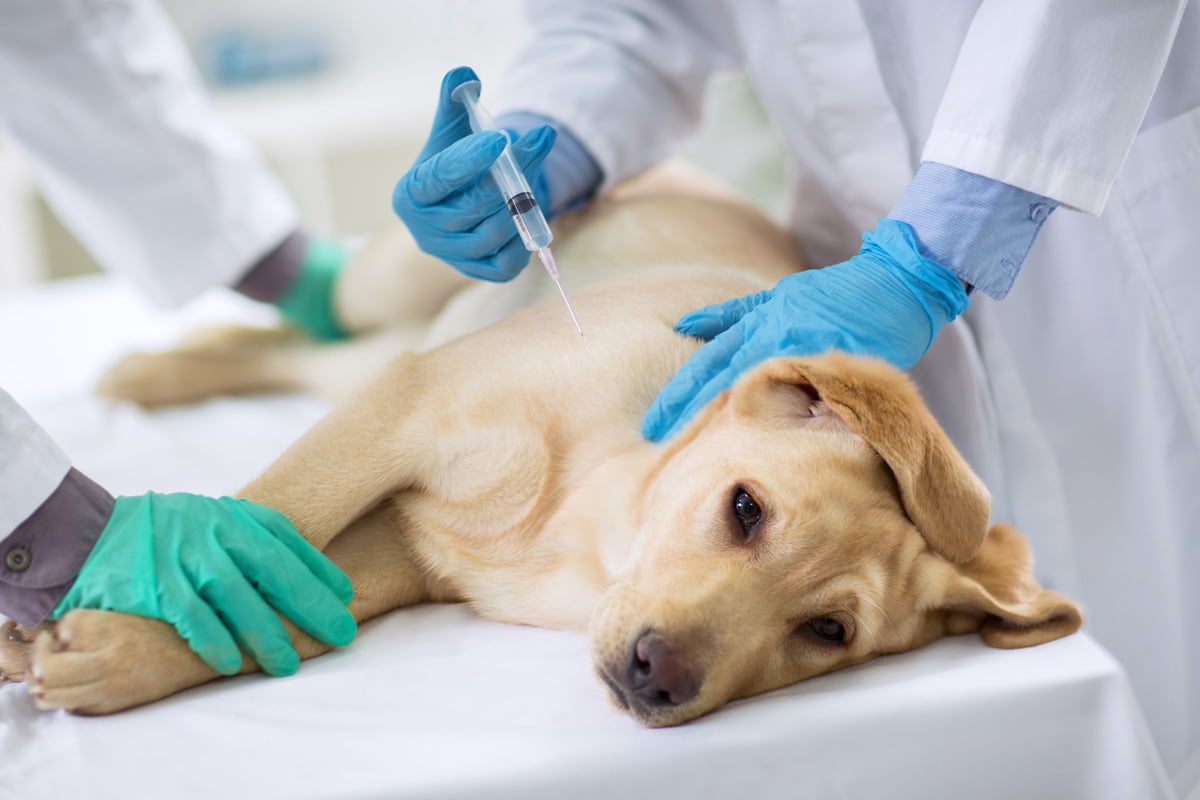
Vaccination is also important for dogs: thanks to nationwide vaccinations, dangerous infectious diseases in Germany have become rare. But the pathogens of these diseases are not extinct. In fact, there are also breakdowns in this country because dog owners do not allow their dogs to be sufficiently vaccinated or unvaccinated animals import from abroad.
We'll tell you which diseases and how often you have to have your dog vaccinated. We also explain how vaccination in the dog works.
Consultation overview
- Which vaccinations are mandatory for the dog?
- How often do I have to have my dog vaccinated?
- Vaccinating dogs: The basic immunization in the dog
- Vaccination in the dog: This is how the vaccines work
- Vaccination dogs: risks and side effects
Which vaccinations are mandatory for the dog?
The vaccinations that a dog needs are called core vaccinations. According to the constant Veternämecrich vaccination commission, there is a vaccination for dogs against these diseases:
- rabies
- Parvovirosis
- distemper
- HCC (Hepatitis Contagiosa Canis)
- Leptospirosis
Garwut is considered extinct in Germany, but can be imported from abroad to Germany at any time. Since rabies is fatal for humans, the official veterinarian can kill a dog with the smallest suspicion of rabies – a correct vaccination of the dog, which was documented in the animal's vaccination pass or in the European pet ID, can protect the dog here.
Parvovirosis, distemper and HCC are not only regularly introduced to Germany with dog transports. They also occur with locals, not sufficiently vaccinated dogs. The staupe virus is also distributed by the feces of foxes or raccoons. Especially in young dogs or weakened animals, these diseases lead to a painful death.
With leptospirosis, a dog can be infected anywhere, because the pathogens of this disease are excreted by rats with the urine and are available anywhere in the environment. Leptospirosis can also be fatal to the dog.
What can I still have my dog vaccinated against?
For dogs, the non-core vaccinations, i.e. the vaccinations that are only recommended for special infection risks, include vaccinations against Lyme disease, kennel cough, puppy death and skin mushroom diseases. With the appropriate hazard, these vaccinations can be very useful. It is best to ask your veterinarian whether he advises a noncore vaccination in the individual case, such as vaccination against puppy deaths at a breeding bitch or for vaccination against kennel cough when visiting a puppy play group.
Before the vacation: Dog against Leishmaniosis vaccinated
Vaccination against travel sickness leishmaniasis is also possible in dogs. If you travel to the south with your dog, you have to start vaccinating at least nine weeks before departure, because for reliable protection, basic immunization with three syringes is required at a distance of three weeks. In addition to the vaccination protection, you have to ward off the sand mosquito as a carrier of leishmaniasis with the appropriate means from the veterinarian in addition to vaccination protection.
How often do I have to have my dog vaccinated?
Depending on what you let your dog vaccinate, it needs to be refreshed with different friction. The risk of infection also decides how often vaccination is necessary for the dog. The period is usually between six months and three years.
If the dog is vaccinated against parvovirosis, distemper or hepatitis, a refreshment is recommended every three years. When vaccination against rabies, a dog should receive a refreshment every two to three years.
What vaccinations do a dog need every year?
Some veterinarians even recommend an annual vaccination. This is particularly the case with leptospirosis, hepatitis and distemper. However, the veterinarian should analyze the risk of infection precisely here and conclude whether an annual vaccination for the dog is really necessary.
Do old dogs have to be vaccinated further?
The fact is that many people no longer let their oldie vaccinate because they fear a high burden on his body and believe that it previously has enough antibodies due to the regular vaccinations.
Unfortunately, it is also a fact that older dogs fall ill after an infection and take longer for healing than younger peers. They are also more susceptible to infection than in their youth. There are antibody tests that can be determined by means of which your dog is (still) protected. However, these are expensive and would have to be repeated regularly.
So if you want to be on the safe side, you should continue to ensure complete vaccination protection. The veterinarian will choose the vaccines that are most gentle for a senior.
Vaccinating dogs: The basic immunization in the dog
However, it is crucial for the success of the vaccination that it is carried out correctly. This includes careful basic immunization. When using certain living vaccines, basic immunization in adult dogs consists in exceptional cases of two vaccinations every year. Most vaccines, however, are at least three vaccinations, the first two at a distance of three to four weeks and the third after one year, for basic immuneization. The first vaccination is very simplified to get to know the pathogen and the following to build up strong defenses.
Puppies have to be vaccinated more frequently for effective protection because the maternal defenses that the puppies have recorded with the so -called colostral milk in the first few hours of life neutralize the vaccine. Only when the maternal defenses have disappeared from the blood of the puppies can vaccinations in the puppy cause the structure of their own defenses.
Vaccination in the dog: This is how the vaccines work
The principle of vaccination of dogs is as simple as it is ingenious: the veterinarian injects harmless pathogens harmlessly so that the immune system can get to know the pathogens and prepare for them.
If the dog is actually infected with the pathogens after a vaccination, the prepared immune system can react quickly and destroy them in a natural way before causing damage. In rare cases, if the dog falls ill despite vaccination, the disease is much milder than with the unvaccinated animal.
Vaccination dogs: risks and side effects
Side effects occur comparatively rarely in the event of vaccinations. Most of the time, these are harmless redness and swelling at the vaccination site or fatigue up to a day after vaccination. Allergic reactions, such as swelling of the neck and head, are more serious. Shock or hemolytic anemia are absolute exceptions.
The benefits of vaccinations are therefore much higher than possible risks. In any case, the highest health risk for the dog is not to vaccinate it.
In this text we use so-called affiliate links. Products with a star (*) are characterized, you can purchase. If the purchase comes about, we receive a small commission. You can find more about affiliate here.