
A contribution from animal health practitioner Tanja Schneewind
Not a gift with a heartbeat
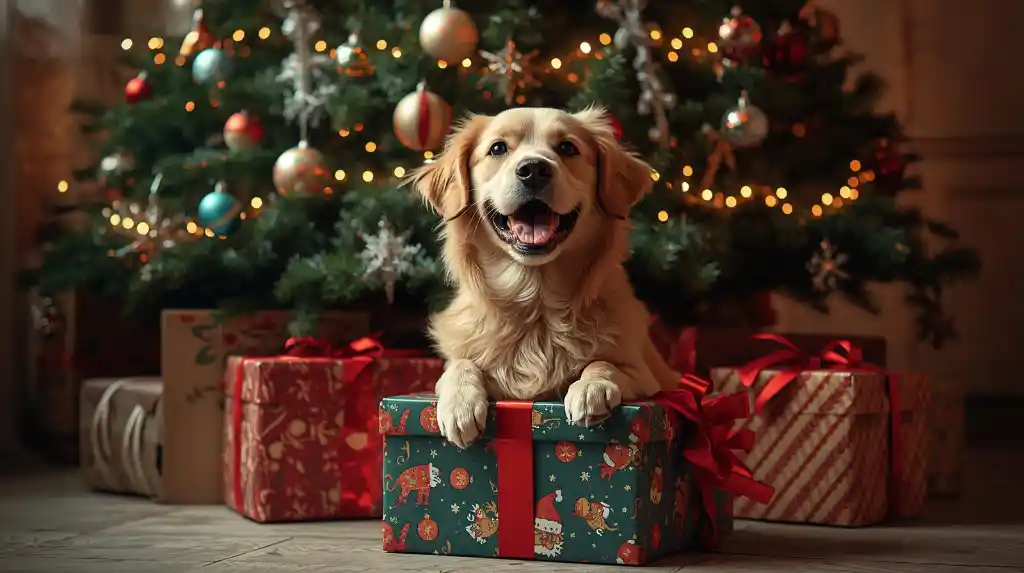
Alps. A living room in warm light, shiny balls on the tree, paper rustling, children laughing. Many families have the same idea every year at Christmas time: a little dog wrapped in a bow that makes Christmas Eve something very special. The scene seems almost idyllic, like something out of a movie.
 But in real life, she rarely just stays in that moment. Animal welfare and behavior training experts have been warning against giving dogs as surprise gifts for years. Not because the idea comes from malicious intent, but because it doesn't do justice to the reality of dog life. This article shows why a dog doesn't belong under the Christmas tree and how you can really do it justice.
A living being is not a gift
A dog represents closeness, joy, care, and it is precisely these feelings that seem to make him the ideal gift. But a dog is not an object, a decorative element or an emotional gap filler, but an independent living being with its own feelings and needs.
Anyone who gives away a dog decides on behalf of the lives of two other living beings, namely the dog and the new owner, permanently.
And the key word here is permanent: a dog accompanies us for many years. With responsibility, training, costs and time. All of this cannot be unpacked on Christmas Eve, but must be lived anew every day.
Christmas rarely offers the right setting
The holidays are considered contemplative – but in fact they are characterized by hustle and bustle, visitors, noises and hectic processes. Often beautiful for people, but often confusing for dogs.
In the first few days in its new home, a dog mainly needs stability: recurring routines, sufficient periods of rest, clear reference people and an environment in which stimuli act on him in a measured and controlled manner. All of this forms the basis for him to feel safe and to develop healthily.
But between gifts, music, food and visitors, that's hard to do. Trainers regularly report that dogs who move in during the holidays are more likely to develop difficulties with bonding, staying alone or environmental noises. Not because they are “more difficult”, but because their start was unfavorable.
After the holidays the seriousness begins
The real challenge begins when the fairy lights disappear. School, work and everyday life return and the dog stays, with all its needs. He needs:
- Support with settling in and, depending on age, with housetraining.
- A careful habituation to staying alone in the future.
- Daily support and communication – regardless of the weekend, weather or schedule.
- time, financial resources and patience,
- as well as genuine affection.
Many families are surprised at how much energy a puppy requires. In the weeks after Christmas, animal shelters repeatedly record a significant increase in donations. The dogs are usually a few weeks old and have already experienced their first loss.
A look behind the scenes
Animal shelters report annually on “Christmas puppies” that are given away after a short period of time. These dogs are often insecure, poorly socialized or come from questionable sources.
Because when demand increases, dubious dealers also react. Before Christmas, an increasing number of puppies from illegal breeding appear: often given too young, without valid papers, and sometimes sick.
Reputable breeders do not give away their puppies spontaneously and especially not as a gift idea. Anyone who gets a puppy “immediately” just before the holidays should be skeptical.
Love is shown in preparation, not in spontaneity
Nobody wants to harm an animal, on the contrary. Often there is a loving intention behind the desire to give a dog as a Christmas present. But real love for animals also means choosing the right moment and being well prepared.
Christmas is emotional. And that is exactly where the risk lies: decisions are often made based on feeling rather than with foresight. But a dog needs both – heart and mind.
Real alternatives
There are many ways to meaningfully express love for animals at Christmas:
- Sponsoring a shelter dog.
- Donate to local animal welfare organizations.
- Books, courses or advice vouchers for dog training.
- Joint preparation time in which the family consciously deals with race, attitude and everyday life.
When it's clear after the holidays that a dog really fits into your life, that's the right moment – not Christmas Eve.
When a dog comes into the family, that's right
A dog is not a celebratory moment. He is a long-term companion who needs trust, stability and care. Bringing a dog home should be a conscious, calm step – one that gives him security and gives the family time to adjust to him.
It's not the emotional climax of an evening that counts, but the life together afterwards.
A dog is not a gift, but a choice
Dogs don't belong under the Christmas tree because they need more than a pretty environment for a special moment. A dog is a decision that must be supported by time, knowledge, patience and genuine care – not by a celebratory mood or surprise effects.
Anyone who chooses a dog is choosing a family member who will be part of their life for many years. And this step deserves a calm, conscious framework – free of Christmas stress, but full of genuine affection and care.
About the author Tanja Schneewind, www.thp-schneewind.de, is an animal health practitioner, laser therapist and nutritionist with a focus on dogs with a mobile practice in the Alps/Lower Rhine area. It combines individually tailored nutritional advice with holistic methods such as laser and color light therapy, bioresonance and laser acupuncture. Your focus is on activating the dog's self-healing powers and bringing the dog into balance in the long term. The aim of their work is to treat complaints initially and to sustainably promote well-being.