
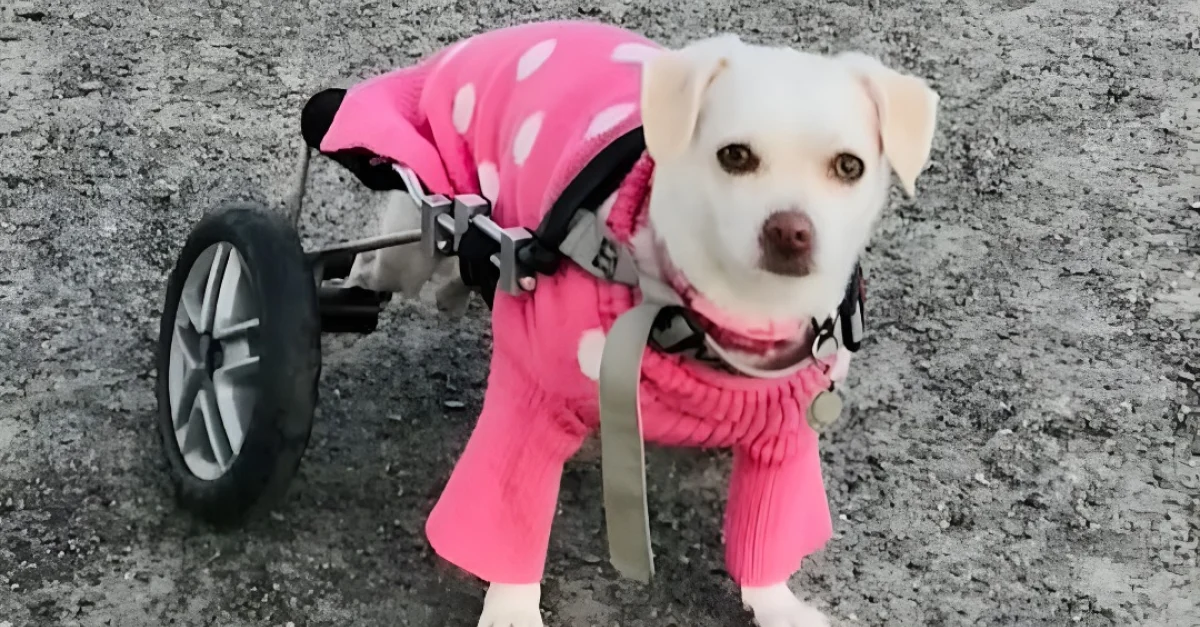
Smidgen is no longer very young, having been 10 years old, but this dog lacks neither energy nor joy of life. Her handicap – she has been paralyzed in her hind legs for 6 years – does not prevent her from being happy either, even if she certainly misses her owner. The latter being suffering from cancer, she had entrusted her to Lisa Lavoie so that she can take care of herself.
To help him move, Smidgen had a custom-made cart, but it recently disappeared.
In April 2026, the Chihuahua cross had to undergo major and expensive surgery. That's when his cart was stolen in front of his house. Lisa Lavoiehas Halifax in Nova Scotia (Canada).
“ I don't understand who could steal a small dog's wheelchair or what purpose it could be used forconfides Lisa Lavoie has CTV News. We checked to see if it was children. We looked around to see if anyone had just taken it and thrown it in a dumpster for fun. We searched everywhere. »
Emotion and solidarity
This episode caused great excitement within the local community. A woman called Stephanioe Gustys decided to take action by launching a solidarity fundraiser on the platform GoFundMe.
Stephanioe Gustys / GoFundMe
The goal was 3,500 Canadian dollars to buy a new cart. It was finally exceeded, a total of 3,600 dollars (approximately 2,200 euros) having been collected, which will also cover part of the dog's veterinary costs.
Smidgen will soon receive his new cart and will be able to run freely again.
Woopets advice: how to secure and optimize the use of a cart for disabled dogs?
The trolley is a real tool of comfort and mobility for a paralyzed dog, but some precautions are necessary to guarantee its durability and the well-being of the animal:
- Always store the trolley indoors: even for a short absence, to avoid theft, damage or bad weather.
- Adapt the harness: poor adjustment can cause chafing, injury or back pain.
- Monitor the skin and points of contact: in paraplegic dogs, bedsores and irritations can appear quickly if the equipment is incorrectly adjusted or poorly cleaned.
- Plan for gradual adaptation: some dogs need short, repeated sessions to regain their bearings and their confidence in movement.