
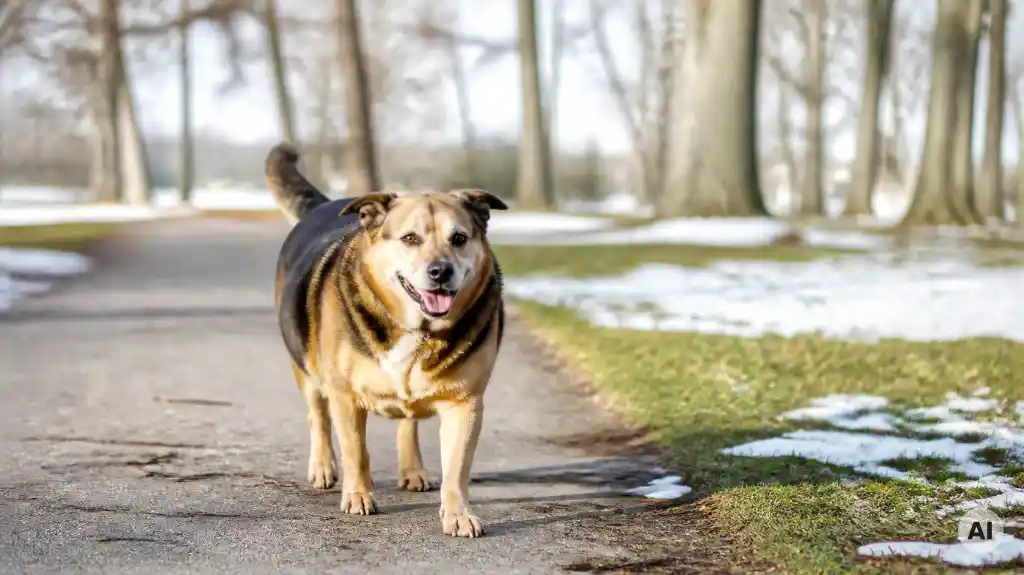
This is how dog owners can tell the difference
Thick winter fur quickly makes many pets look rounder. But a little extra fluff can hide real extra kilos that can cause health problems. Veterinarian Annabelle Pohl from “Das Gesunde Tier” explains why weight can get out of balance more easily, especially in winter, how owners can recognize changes early and what is important when it comes to food, snacks and exercise.
Berlin. In winter, things can get a little fluffier for our pets. But one day the question arises: Is it really just the thicker fur or is there one or two extra kilos underneath? This is difficult to judge with the naked eye, especially with long-haired and particularly plush animals. In addition, weight often increases so slowly that it goes unnoticed in everyday life for a long time. “The winter fur is a kind of optical down jacket. I therefore recommend that owners never rely on the appearance alone, but rather specifically check the weight,” says veterinarian Annabelle Pohl from “Das Gesunde Tier”.
Winter quickly becomes a calorie trap When it gets dark, wet and cold outside early, dog walks quickly become shorter and outdoor cats also spend more time indoors. The amount of food, however, often remains the same. Especially in the run-up to Christmas, there is a treat here and maybe a nibble from the table there. According to Pohl, this can cause energy intake and energy consumption to become unbalanced. Older and neutered animals in particular may have lower energy requirements. However, the veterinarian does not recommend a blanket winter diet: Whether and to what extent the energy intake should be adjusted must be considered individually and depends, among other things, on body condition, activity, energy content of the food and weight progression.
Don't just look, feel:
Three places reveal hidden extra kilos
From a veterinary perspective, three areas of the body are crucial for estimating weight even under thick fur: the ribs should be easy to feel under a thin layer of fat, a waist should be felt behind the costal arch and the abdominal line should rise slightly towards the hind legs. Comparison with your own hand can also serve as a simple guide. If the ribs feel roughly like the knuckles on the back of the hand, this may indicate normal body condition. “The comparison can give owners an initial orientation, but it does not replace a professional assessment,” explains Pohl. In veterinary practice, the so-called body condition score is used, among other things. On a scale of 1 to 9, values of 4 to 5 are considered the ideal range. Pohl also points out a special feature in cats: the loose fold of skin on the lower abdomen, the so-called primal fold, is normal and in itself is not a sign of overweight. In addition, the veterinarian recommends checking the weight every two to four weeks in order to detect changes early. “The number on the scales shows the trend, the hands show the condition,” summarizes Pohl.
If the sofa suddenly becomes too high
According to Pohl, changes in everyday life can also provide initial indications of obesity. Dogs may tire more quickly, pant earlier, or lag more often during walks. Stairs or jumping onto the sofa are avoided, while cats are less likely to jump onto elevated favorite places or have difficulty reaching their backs and rear ends when cleaning. A suddenly tighter collar or harness can also be a first sign. Fat pads on the loin, base of the tail, chest or neck can often be easily felt even under thick fur. Pohl therefore advises pet owners not to just keep an eye on the number on the scale.
The biggest calorie trap often lurks in your pocket A snack on a walk, one after training and another because the dog or cat is looking particularly nice: Treats seem harmless individually, but can quickly add up over the course of the day. Veterinarian Annabelle Pohl therefore recommends including additional snacks in the daily amount of food. They should make up a maximum of ten percent of your daily energy intake. A simple trick can help you keep track: In the morning, pour the entire amount of snacks for the day into a container. If it is empty, the daily quota has also been exhausted. Alternatively, some of the regular food can serve as a reward during training. In households with several people, a small snack diary can also prevent your four-legged friend from getting “just a little something” several times a day. Exercise can also be adapted in winter: several short, active rounds as well as search and sniffing games can help keep dogs moving even in bad weather. For cats, hunting games provide additional activity.
Obesity is more than a beauty problem
Extra weight can put strain on your joints, ligaments and spine, while placing greater demands on your heart and breathing. The risk of various metabolic diseases can also increase. According to the veterinarian, being overweight can shorten a dog's life expectancy by up to 16 percent. At the same time, she emphasizes that even moderate weight loss can improve the quality of life. In cats, weight loss should be carried out in a particularly controlled manner: severe calorie restriction or prolonged insufficient food intake can promote fatty liver disease, especially in overweight animals. If a dog does not have success for weeks despite adjusted feeding or if it gains weight inexplicably, Pohl also advises a vet to clarify possible hormonal causes. “I don't want to scare anyone. The good news is: As an owner, you can influence a lot and do a lot yourself. And if you don't know what to do, there are of course always professional contact points that pet owners can turn to,” she explains in conclusion.
About “The Healthy Animal”
The “Healthy Animal” stands for holistic animal health with a focus on nutrition, intestinal health and individual advice. The company offers food, supplementary feed, care products, test kits and digital advice for dogs, cats and horses. The basis is the 5‑E™ health concept developed by veterinarian Thomas Backhaus, which does not look at animal health in isolation, but rather considers nutrition, intestines, organ connections and individual needs together. “Healthy Animal draws on 50 years of veterinary experience, an interdisciplinary team of experts and its own veterinary practice. Through DGT Medical, the company also offers individual online veterinary and nutritional advice. The products are developed and manufactured in Germany and are aimed at pet owners who want to holistically support their animal's health, feeding and everyday life. Further information at: www.dasgesundetier.de.
Was this amount interesting or helpful?
Your rating shows us what you and your furry friend like – it's like a treat for us.