
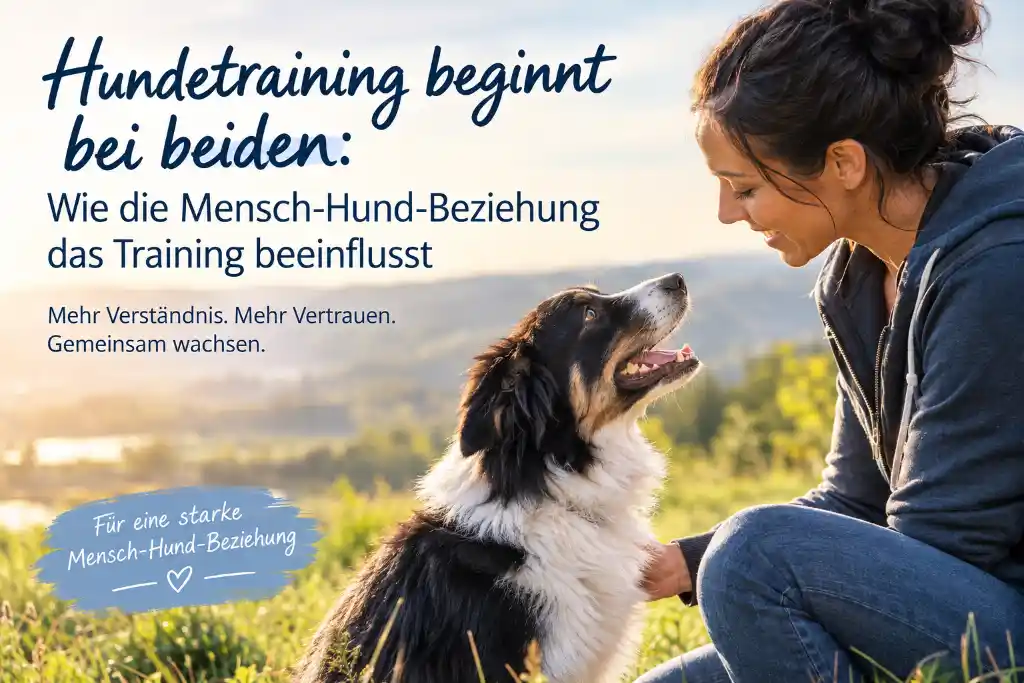
How the human-dog relationship influences training
by Sonee Dosoruth (Dog trainer – help for problem dogs)
Schneverdingen Island. Many people are looking for the right training approach when their dog doesn't hear reliably, pulls on the leash, or reacts strongly in certain situations. They try new exercises, change rewards or repeat signals. Sometimes progress still doesn't happen.
An important step is then to look not only at the dog's behavior, but also at the common everyday situation: How do people and dogs communicate with each other? Are the expectations understandable? Does the training task match what the dog can do?
Good dog training combines practical exercises with a better understanding of each other. Both people and dogs can gain new experiences.
Why relationships play a role in dog training
A dog does not learn independently of its environment. Distractions, stress, previous experiences and the situation at hand influence how well he can respond to a signal.
 For example, if a dog responds reliably to the callback at home but is hardly responsive outside, that does not automatically mean that he ignores his human. Perhaps the stimuli are too interesting, the distance to distraction is too small, or the exercise has not yet been sufficiently developed under more difficult conditions. Here it helps to take a step back and look at the situation more closely instead of simply calling out more often or louder.
Three questions that will help in training
- Are my expectations understandable for my dog?
People often know exactly what behavior they want. However, it is not always clear to the dog what a signal means or which behavior is worthwhile in a new environment.It therefore makes sense to initially set up exercises under simple conditions and gradually increase the difficulty. Small, comprehensible training steps make it easier for the dog to learn successfully.
- Can my dog even concentrate well in this situation?
A dog that is excited, frightened, or stressed by his environment may have difficulty executing familiar cues.Instead of demanding more and more in such moments, it can help to create distance, reduce distractions or find a quieter environment. This is not a step backwards, but can be the prerequisite for being able to train sensibly again later.
- How do I react if something doesn't work?
People also develop habits when training dogs. Some repeat a signal several times, others become hectic or give up too quickly. Such reactions are understandable, but they can make a situation more difficult for both parties.It's helpful to come up with a simple plan: What do I do if my dog doesn't react? Can I reduce distraction? Should I simplify the exercise or take a break?
Anyone who consciously observes their own behavior can better assess training situations and implement changes more specifically.
Clarity does not mean harshness
A good human-dog relationship does not require constant harmony. She benefits from understandable rules, reliable processes and respectful interaction.
Clarity means communicating in a friendly and consistent manner what behavior is desired. Boundaries can be set without intimidating the dog or putting him in a situation that he is currently unable to handle.
It's not about the dog recognizing the human as the dominant leader. What is more important is that he can learn through understandable experiences what behavior is worthwhile and what is expected of him in different situations.
What people can learn through training
Dog training also allows people to examine their own communication, become more patient and adjust expectations. If you learn to look more closely, you may be able to recognize sooner when an exercise is becoming too difficult or when a break makes sense.
 These changes do not only come about through positive thinking or a certain inner attitude. They develop primarily through people observing situations, reflecting on their actions and trying out new behaviors in everyday life. This is exactly where a special opportunity lies: people and dogs can learn together to deal with challenges better.
If there is no progress
Sometimes small adjustments in everyday life are not enough. If you have severe anxiety, aggressive behavior or persistent stress, professional support should be sought. Possible health causes also deserve attention, especially if behavior suddenly changes.
A qualified dog trainer can help to assess the situation individually and develop a suitable training plan.
Dog trainer Sonee Dosoruth deals with the challenges of living together between people and dogs and how training and the organization of everyday life interact.
Conclusion: Learn together instead of just changing behavior
Dog training is more than repeating individual commands. It also means understanding the dog better, checking your own expectations and designing training conditions appropriately.
When people observe carefully, communicate clearly and provide their dog with fair learning opportunities, cooperation can improve step by step. Not every difficulty can be solved through the relationship alone. But a better understanding of each other is a valuable basis for learning together.
Further information at www.soneedosoruth.de.
Was this amount interesting or helpful?
Your rating shows us what you and your furry friend like – it's like a treat for us.