
Meaning, body language and clear signals for dog owners
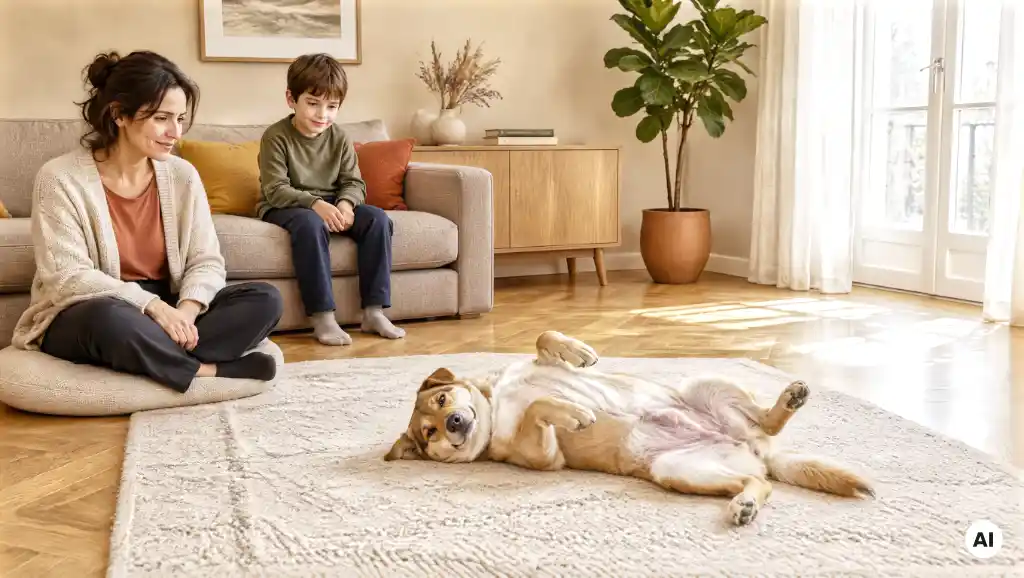
Boppard. For many people, when a dog turns on its back and shows its belly, it seems like an invitation to be petted. But this behavior is more complex than it appears at first glance. Dogs use tummy time in a variety of situations, from deep comfort to appeasement. Body language in the overall picture is always crucial.
Well-being and trust In a relaxed environment, a dog will often show his belly because he feels safe. The body is soft, breathing calm, the corners of the mouth relaxed. Many dogs enjoy touch in such moments because they are already familiar with tummy care from puppyhood: the mother stimulates the tummy to strengthen bonding and stimulate digestion. This early experience can later lead to dogs finding belly rubs pleasant.
Gaming behavior and social interaction
When playing with other dogs, the supine position is often a dynamic element. Dogs switch between roles, test movements and show signals that structure the game. The prone position can be a tactical maneuver or an invitation to continue playing – without submission in the classic sense playing a role.
appeasement and uncertainty
Showing your stomach doesn't always mean relaxation. Many dogs use this position to defuse conflicts or reduce stress. The body then appears rather stiff, the gaze is averted, and sometimes the dog licks its lips or freezes briefly. In such moments, the dog doesn't want closeness, but rather distance and peace.
Submission – an outdated term
In the past, lying on your stomach was often interpreted as a sign of submission. However, modern behavioral research shows that dogs do not act according to rigid patterns of dominance. Belly showing is a situational signal that has different meanings depending on the context. It is not an expression of a fixed ranking system, but rather part of the fine communication between dog and human.
How can you tell if your dog wants to be petted? It clearly shows whether a dog allows touch: a soft body, a calm look, relaxed ears and a slight movement towards the human indicate that petting is welcome. However, if the dog shows tension, turns its head away, holds its breath or appears unsure, you should keep your distance. Sleeping dogs in particular should never be touched on their stomachs – the sleeping area is a protected place of retreat.
Checklist for dog owners
When is belly rubs welcome?
- The dog appears relaxed and relaxed.
- The corners of the mouth are soft, the eyes are friendly.
- He moves slightly towards the human.
- The body remains soft even during the touch.
When should you keep your distance?
- Body becomes stiff or dog freezes.
- Head is turned away, eye contact is avoided.
- Lip licking, trembling or whining.
- Dog tries to get up or turns away.
- Dog is visibly sleeping or resting deeply.
Basic rules for everyday life
- Always look at body language in the big picture.
- Never force belly rubs.
- Explain to children that showing your stomach is not a free pass.
- Respect places of retreat.
- Trust is built through clear, respectful communication.
The prone position is a complex communication signal. If you know your dog well, you can quickly tell whether he is looking for closeness or needs peace and quiet. It is important to look at body language as a whole and not just interpret your stomach as a single sign. Respect for the dog's boundaries builds trust and ensures that touch remains pleasant for both parties. (SR)
Was this amount interesting or helpful?
Your rating shows us what you and your furry friend like – it's like a treat for us.