
Spring is just around the corner and the sunny days invite you to train – if only it weren't for the breeding and breeding season. When the offspring of local wild animals comes into the world, special caution is required when walking and training with the dog. But don't worry – if you pay attention to a few things, you can train your dog during this time!
Five dos in the breeding and setting season
1. Find suitable terrain During the breeding and breeding season, the offspring of local wild animals are hidden everywhere, but there are still places where you can train. The be-all and end-all: questions, questions, questions. Often suitable areas – they can also be smaller – are not as far away as expected, and those who ask around diligently are often successful and find a usable area. Fenced areas with mown lawns are particularly suitable and offer an optimal training environment.
Important to note: The mown grass should no longer be left on the meadow, because deer fawns like to hide here too.
An example of great training grounds: orchards. These are usually fenced in and can often be used for training upon request. If your dog trainer has a training area, you can also use this if necessary. However, you should discuss this beforehand. Alternatively, you can use public dog parks and training areas. These are usually a bit fuller, but that doesn't have to get in the way of your training. You can use these circumstances, for example, to train your dog not to be distracted and to carry out exercises despite temptations. You can also join forces with others to find a suitable training location together. If you know a group that already has a location they use, you may be able to join. If you have no success finding a suitable site, you can also place advertisements.
2. Use avenues
If meadows, forests and large areas are eliminated, you can also train wonderfully on paths – for example during walks. If your dog is on a leash, footwork is particularly suitable. You don't have to leave the path to do this and you don't run the risk of encountering game.
Dummy training exercises can be carried out on paths and with a tow line. You can send your dog down paths or over the corners between paths at intersections to practice changing terrain – but only if you have previously checked whether there are any wild offspring hidden there.
Even if your dog is stressed out by a lot of exercise and running, working with his head and nose is at least as strenuous for him. Once you have checked a small section on the side of the path or in the green strip in the middle of the path and made sure that you can use this area with your dog without disturbing wildlife, you can lay out toys or dummies here and send your dog ahead.
3. Practice the little search whistle
If you want to get a little more intensive with your search, you can train your dog to use the small search whistle – an element from dummy training. This also works very well in the breeding and breeding season, because the small search whistle means that your dog stays small while searching, i.e. in a small area (2 × 2 m) seeks. This is often neglected during training, and it happens that the dogs search over a large area even when they are sent to a specific area that they are supposed to search. However, you should make sure that he starts searching immediately after the small search whistle. You can also practice the small search whistle in different directions. A dog's first instinct is to move forward. If he has to carry out the small search behind, to the right or to the left instead, this makes the exercise even more challenging. Later you can also train with distractions and, for example, have your dog look to the right while there is something interesting to the left.
4. Train instead of in the water During the breeding and breeding season, bodies of water are often taboo because while fawns are hiding in the meadows, waterfowl chicks are waiting here. Nevertheless, you can use the water during this time to build and strengthen your frustration tolerance. A simple exercise that allows you to relax at the same time helps: Grab a blanket and sit on it with your dog so that you have a good view of the water. Because the exercise doesn't involve going swimming, you can also choose waters that you otherwise avoid, for example because they don't have a suitable entry point for your dog. This exercise is particularly difficult for real water lovers: simply lying there, watching the water and not being allowed to jump in, demands a lot from them and thus strengthens their frustration tolerance. This exercise isn't a hindrance if your dog is on a leash – it's all about standing still, waiting and enduring.
5. Work on the basics
During this time you can work wonderfully on the basics. In addition to footwork, you can also do many other things, such as everyday exercises such as resting – a relaxed place – and that (long) Sitting or swapping and bringing, training. The dead mouse game is particularly suitable for practicing the latter.
Five don'ts in the breeding and setting season
1. Don't let your dog run off-leash The regulations for the breeding and setting times are a matter for the states, but the breeding and setting times exist everywhere, regardless of how the respective federal states deal with them. In order to protect the environment and local wildlife as best as possible, it is best to always keep your dog on a leash unless you are in a safe, fenced area.
Tip: If you would like to know more precisely in which federal states the leash requirement applies and at what times, then take a look at the article “Does the leash requirement for dogs apply everywhere in spring?” to. There you will find a list with the most important information.
2. Do not send your dog to meadows, fields, woods or water
Even if it looks like there is no game nearby, the offspring can be hidden anywhere! Fawns in particular often lie in places where you wouldn't expect them, for example on the edge of a path that is often used by people. Deer also like to hide their offspring in tall meadows or in the forest. In order to protect the game, you should not send your dog into meadows, fields, woods or into the water if you cannot be sure that there is no game nearby.
3. Don't train the big search in the wrong places
Anyone who is in dummy training has probably already guessed after the last Don't: The big search should not be practiced in the wild during the breeding and breeding season – the risk of coming across young wild animals is far too great. Of course, the big search can still be practiced, but in suitable, fenced areas. If you can't find a suitable place for this, you can concentrate on the small search or do basic training.
4. Don't misjudge the leash
The leash is often used during the breeding and breeding season, but is often misjudged. What sounds obvious at first is sometimes not so easy to implement: once you're out and about, the leash quickly becomes irrelevant; after all, there are a whole lot of other things that you have to pay attention to. The leash can quickly become a danger. Towing lines in particular can be a tripping hazard – so make sure you always grab hold of them when you are using a longer line. When throwing or laying something out for your dog, choose smaller distances so that it is not further away than the length of the leash. This will ensure that your dog is not pulled backwards and you do not stumble forward.
5. Do not touch wild animals
Fawns freeze in fear instead of running away when they are spotted. In such a case, the following applies: Under no circumstances should it be touched and your dog should not have the opportunity to approach the animal, even if he just wants to sniff and say “hello” in a friendly manner. The animals should only be photographed, if at all, from a sufficient distance and without a flash. If you come across an injured animal, the following also applies: under no circumstances should you touch it. Please inform the responsible hunters or the police so that the animal can be helped.
Conclusion: Correct training in the breeding and setting season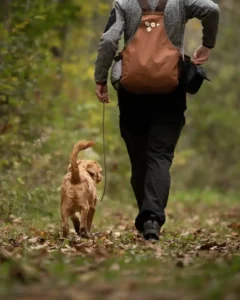 Even though caution is required during the breeding and breeding season to protect the wild animals, training does not have to stand still during this time. Make sure you choose the right training locations and stick with it (if necessary) Keeping an eye on the line, you can also practice during the breeding and breeding season, including the small search whistle, footwork or other basics. If you do come across young animals, you can avoid something happening by adopting the right behavior or you can help injured animals. I hope that these five dos and don'ts will help you get through the breeding and breeding season well and spend nice moments with your four-legged friend!
Here is the relevant podcast episode on the topic: Training in the breeding and setting season.
Tip: Further contributions from Susanne Reinke
Was this amount interesting or helpful?
Your rating shows us what you and your furry friend like – it's like a treat for us.