

Dusseldorf. Heel, down, off: What should every dog listen to so that coexistence works reliably? A question that almost all owners ask themselves when a new dog moves in. If dogs learn to obey every word when they are puppies, it makes things much easier later on. But you also need to learn how to deal with other dogs and people in order to get through everyday life in a relaxed manner.
 “The foundation for good cooperation should be laid in puppyhood,” explains Verena Helfrich, author, owner of a dog school for many years and coach for personality development with dogs. “The dog's mother and so-called, well-run puppy play sessions in dog schools contribute a lot to the socialization of the small dogs, so that they can later interact with people and other dogs in a relaxed manner. There are also some basic commands that are later important in order to be able to control the dog. This type of training usually begins as soon as the puppy is allowed to move in.” If you want to teach your dog something, the basic rules include a lot of patience, regular repetition and positive reinforcement – i.e. rewarding desired behavior with petting, praise or treats.
Experienced dog owners can basically teach their dog everything themselves. Beginners, on the other hand, should seek advice from a dog school and then deepen the exercises at home. They also learn how to create good conditions for training. Regardless of your level of experience, professionally trained dog trainers can always help if problems arise, such as no progress being made or the dog refusing.
Every dog should listen to this
1st headquarters – basic command for control
“Sit” is one of the lessons every dog should master. On the one hand, it helps to bring calm to excited situations if the dog is supposed to sit down. With “space” he is also asked to lie down. “At the same time, 'Sit' is also an important starting point for training other exercises. It helps the dog concentrate completely on its owner so that it can then react appropriately to further instructions,” says the expert.
2. Stay – patience and self-control
“Stay” is basically the same as “sit”. It prevents the dog from running away or getting into dangerous situations, such as crossing a street. “During training, it helps if you gradually increase the amount of time the four-legged friend should stay in its place. And if that works, the owner can move away a few meters or even change rooms,” advises Helfrich. “If the dog stays where he is as asked, you should reinforce this behavior positively.”
3. Here or come – callback signals
With a trained recall command, owners can call their dog to them at any time, even if it is not on a leash. “Dogs always find distractions when walking or can get into a dangerous situation near a road,” explains the trainer. “Reliable recall, even from distracting, challenging situations, is one of the supreme disciplines in dog training. It should therefore be well developed and trained gradually.”
4. Off – letting things go
With “Off” the dog learns to let go of objects again. This can help when playing together – but primarily it protects the four-legged friend if he has picked up potentially dangerous objects on the side of the road that could, for example, injure or poison him. You can also prevent him from recording anything at all with commands like “No” or “Stop”.
Exercises for relaxed coexistence
5. Leash walking – walking together
Walking on a leash also needs to be trained so that the dog always walks on a loose leash next to his human and orients himself towards him. If he pulls against it, it can quickly cause stress. If the ground is slippery in winter, it can even be dangerous. The expert tip for practice: “Orientation towards its owner is also an important preparation for being able to let your dog run freely without a leash. It should therefore be practiced right from the start that the dog cooperates well with its owner and stays close to him.”
6. Socialization –
Dealing with other dogs and people A dog that has been used to dealing with dogs and people from an early age is more relaxed and less likely to react fearfully or aggressively. “It's not so much about him carrying out certain exercises with strangers or animals. It's enough if a dog has positive and calm experiences when interacting with strangers in the first few weeks of life,” explains Helfrich. “In general, especially in puppyhood, care should be taken to ensure that social contacts do not take place absolutely randomly, but with competent dogs. Contrary to popular opinion, there is no protection against puppies – not every adult dog is friendly with puppies. An adult dog is allowed to regulate a puppy if, among other things, it physically harasses it – but it should do this appropriately.”
7. Practical Example: Medical Training –'
relaxed walk to the vet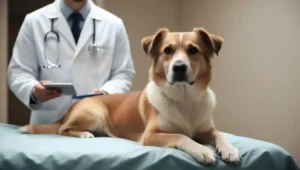 “With so-called medical training, dogs and other pets get used to going to the vet. On the one hand, this is intended to give them the feeling that going to the vet is not a bad thing, so that the dog can be taken to the practice and treated there in a relaxed manner. On the other hand, it is also about getting used to the many special touches: both the veterinarian and the owner have to repeatedly examine and touch the mouth, ears or paws. A dog that learns this as a puppy has fewer or, in the best case, no problems with this and can be care and treat in a more relaxed manner,” says the dog trainer.
Even senior dogs can still learn
Like us humans, dogs learn very quickly, especially in their early development, and reliably internalize learned lessons. But that doesn't mean that a senior can't learn anything more. “Patience is particularly required here, because senior dogs or animals from animal welfare can still learn, it just may take a little longer to change entrenched behavior patterns. You should keep trying and reward even small progress. Then, on the one hand, greater progress will gradually become visible – but on the other hand, the relationship between dog and owner will also improve through regular intensive cooperation,” says the trainer. Dog trainers can provide support and give further tips if a lesson just doesn't work. Those interested can find overviews of dog trainers in their area at the professional association of dog trainers and behavior consultants (BHV) or the professional association of certified dog trainers (BVZ dog trainer).
Was this amount interesting or helpful?
Your rating shows us what you and your furry friend like – it's like a treat for us.