
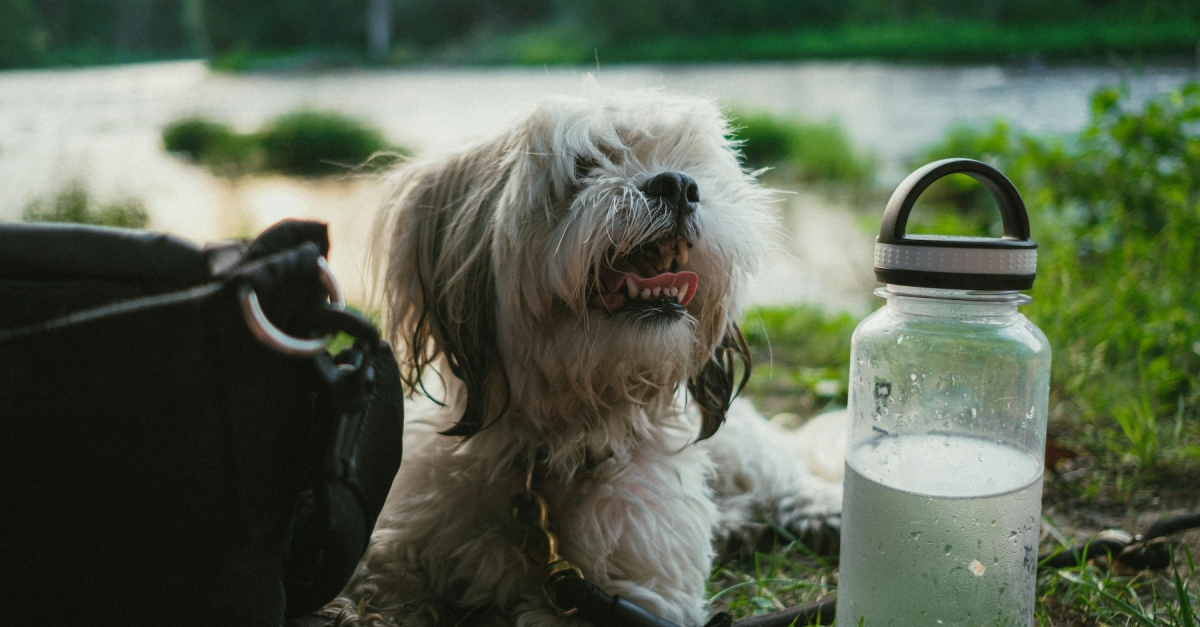
For us humans, a glass of cold water can be nice on a very hot day. But our 4-legged friends do not react in the same way, especially if they have just exerted themselves or if they have spent several minutes in direct sunlight.
When your dog overheats, his body is already trying to regulate his temperature. Drinking ice-cold water all at once can cause thermal shock to the stomach. This sudden change favors the appearance of digestive spasms, abdominal pain or even vomiting.
In large dogs, the risk is even higher. After a walk or a play session, they often tend to drink very quickly. A large amount of ice water can cause stomach dilatation, a veterinary emergency that requires immediate attention.
However, you should not deprive your faithful companion of fresh water! On the contrary, he must be able to drink as soon as he feels the need. Simply cool, clean water is sufficient. It allows him to hydrate properly without exposing his digestive system to too much temperature change.
Ice cubes are therefore not a solution for cooling Medor. They provide a feeling of freshness, but do not effectively cool your body and can even harm your health.
Woopets' advice: how to cool your dog in summer?
To help your dog better cope with extreme heat, we invite you to adopt a few simple daily actions. Always leave fresh, clean and regularly replenished water available. Likewise, do not hesitate to offer him food to maintain good hydration.
When temperatures rise during the day, also remember to adapt your walks. Take it out early in the morning or late in the evening, that is to say during the coolest hours. In the middle of the afternoon, your dog risks heat stroke and serious burns to his paw pads from the hot asphalt.
At home, if possible, provide a cool place where he can rest. Did you know, for example, that there are cooling mats for our animal friends? You can also moisten his paws, stomach and chest (again, don't use ice water!).
To finish this little overview, we strongly recommend that you pay attention to your dog's behavior. Very pronounced panting, unusual fatigue, vomiting or difficulty standing are all signs that should alert you. If in doubt, contact your veterinarian quickly, as heatstroke can progress very quickly.