
There are many different types of assistance dogs that all have their own strengths and skills. Assistant dogs take on responsible tasks and can even save their humans.
Content overview:
- What can an assistance dog do?
- These dog breeds are suitable as assistance dogs
- Assistance dogs: You can help in these areas
- Your right to an assistance dog: Who pays the costs?
- Training of assistance dogs
What can an assistance dog do?
For some people, everyday task is insurmountable obstacles because they have physical or mental restrictions. So -called assistance dogs can help here.
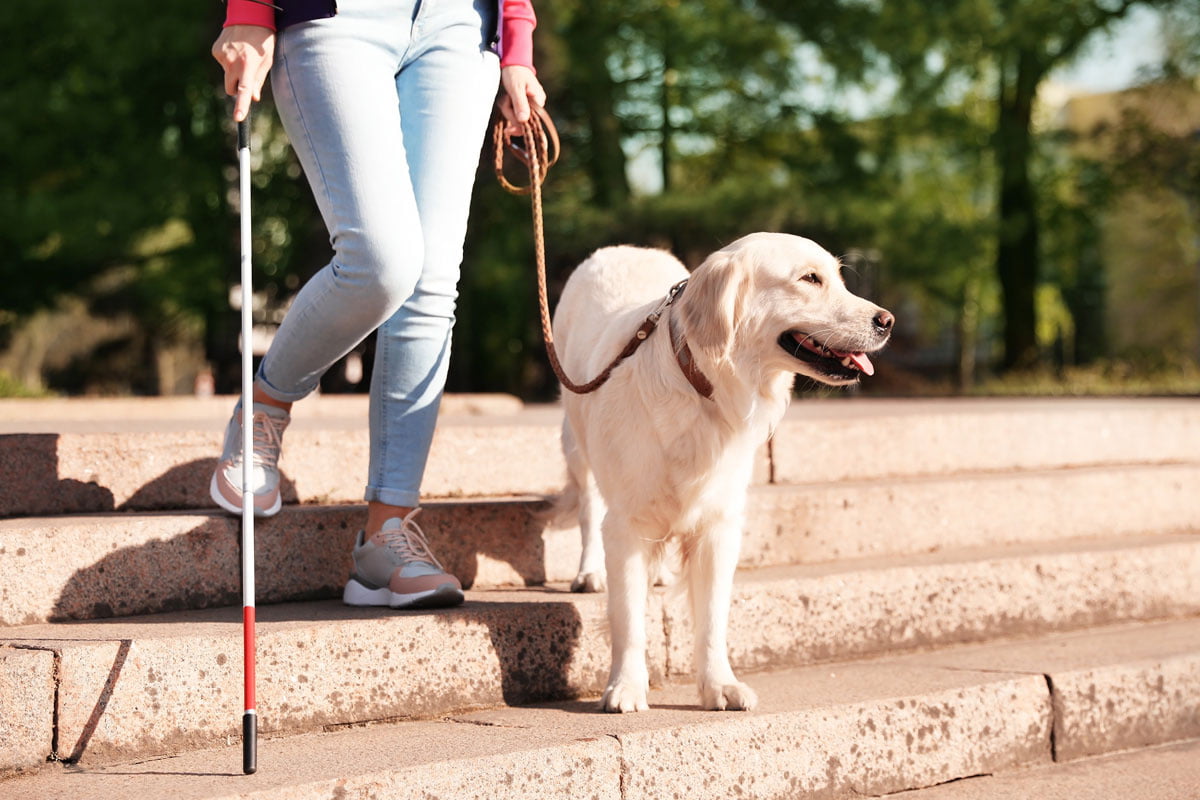
The most famous assistance dogs are blind dogs. But there are many more tasks and areas of life in which assistance dogs can help their owners. The dogs are trained for very specific tasks that specifically fit the people they will then accompany and support.
However, assistance dogs are clearly differentiated from therapy dogs. In contrast to assistance dogs, therapy dogs are less complex. They primarily serve to support therapies and enjoy significantly fewer special rights such as assistance dogs.
These dog breeds are suitable as assistance dogs
Medium -sized dog breeds are best suited to become an assistance dog. The essence of the dog is more important than the size. An assistance dog should be willful and mentally and physically resilient. It is also helpful if he has a good protective instinct.
These dog breeds are particularly often trained as assistance dogs:
- Golden Retriever
- Shepherd
- Collies
- Huskys
- Labrador
Assistance dogs: You can help in these areas
Dogs can support people in many areas of everyday life. The dogs carry out different tasks. There are:
- Diabetic warning dogs
- Epilepsy warning dogs
- Asthma warning dogs
- Migraine warning dogs
- Stroke warning dogs
- Guide dogs
- Signal dogs for deaf
- LPF assistance dogs (LPF = practical life skills)
- Mobility assistance dogs
- PTBS assistance dogs (for post-traumatic stress disorders)
- Fasist dogs (with fetal alcohol syndrome)
- Autism dogs
- Dementia assistance dogs
- Assistance dogs for depression, anxiety disorders, eating disorders, etc.
All assistance dogs wear a dishes that she identifies as such.
Your right to an assistance dog: Who pays the costs?
An assistance dog can offer life -changing support for people with PTSDs and other psychological stress.
In a current court judgment of March 2025 of the Karlsruhe Social Court, it has now been decided that in a special individual case, the health insurance company not only has to cover the purchase and training of a PTBS assistance dog, but also the running costs such as dog food and veterinary treatments. For the affected patient, the dog is more than just a companion – he gives her security, helps her to cope with her fears and structures her everyday life. Without this support, their social participation would be severely restricted.
The court made it clear that a dog cannot offer the same protection and the same help without special training.
In Germany there is no legal right to an assistance dog, with the exception of the blind leader dog. Therefore, the takeover by the health insurance company depends on the individual case.
The training of assistance dogs
Until the dog is at least twelve months old, he stays with his sponsor family and is socialized there, gets to know his environment and is sensitized to his role.
When the dog is one year old, he begins with basic training. There he learns the basic commands. An assistance dog has to show a perfect behavior at all times and must not be disturbed by anything. He also gets a specially guided training that prepares him for his later task as an assistance dog: for example, sitting in front of stairs or on the edge of the sidewalk, wheelchair training, retrieving or opening doors.
If the prospective assistance dog has completed basic training, he gets special training. This often happens with the later owner, so that both get to know each other properly and the assistance dog learns to understand the special needs of its person and learn his specific tasks.
Who trains the dog to the assistance dog?
The training as an assistance dog can be carried out in different ways:
External training:
The training takes place entirely by specialized dog trainers, the dog lives in a sponsor family for as long.
Cost: up to € 30,000
Duration: up to 1.5 years
Dual training:
The dog lives with its owner and is trained by a trainer.
Cost: up to € 20,000
Duration: up to 2.5 years
Self -expression:
Self -oriented is only allowed in assistance dogs who started their training before July 1, 2021. Only people who have a lot of experience in training dogs can train a dog into an assistance dog.