
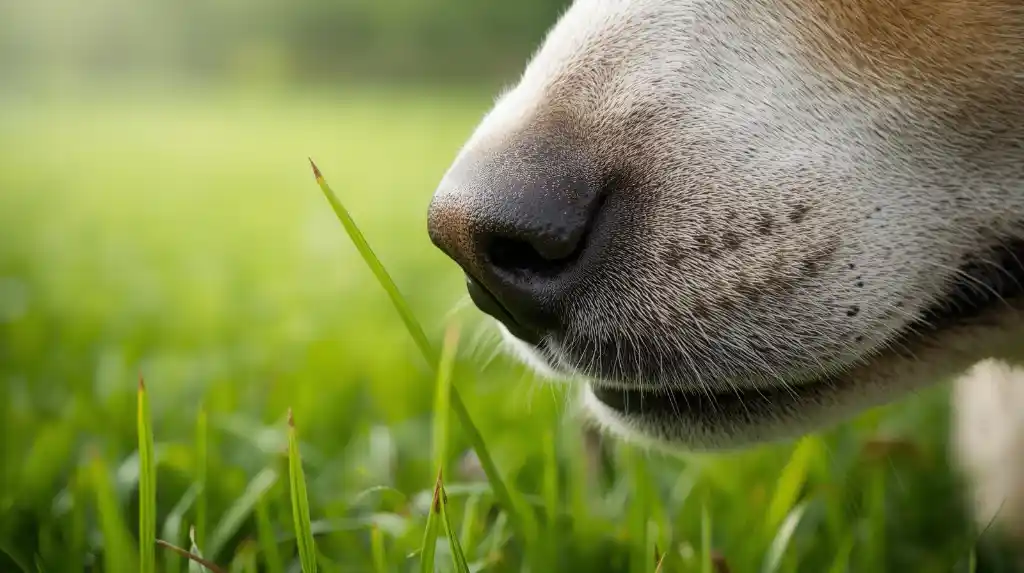
Boppard. It's a familiar picture for us dog owners: with the first warm days, the grass begins to grow again and turns the meadows into a lush green, and the loyal four-legged friend mutates into a passionate herbivore. The delicate, light green tips of the fresh grass are selected and plucked with dedicated meticulousness. Many owners ask themselves: Why does my dog eat grass – and why especially now? The answer is complex, ranging from natural instincts to digestive needs to seasonal changes in nature.
An ancestral legacy
Contrary to the popular belief that dogs are pure carnivores, science today classifies them as “facultative carnivores”. This means that your diet naturally includes plant-based ingredients. A look at their wild ancestors, the wolves, provides the explanation: They often eat their prey including the contents of their stomachs – and for herbivores such as deer or rabbits, this consists of pre-digested grass and herbs. They also regularly consume plant material – not as their main food, but as a supplement. The young shoots in spring are particularly easy to digest and provide fiber that supports the gastrointestinal tract. Eating grass is not a sign of “misbehavior” but is deeply rooted in our dogs’ DNA.
Why the fresh tips?
There is a simple, almost culinary reason why dogs graze particularly intensively in spring and early summer: the quality is right. During this time, the young grass is particularly juicy, soft and contains a higher concentration of natural sugar. While the old, strawy grass of winter is rather tough and tasteless, the fresh shoots look like a crisp spring salad. In addition, the moisture content in the young green is particularly high, which is a welcome refreshment for many dogs.
Fiber and the “intestinal broom” theory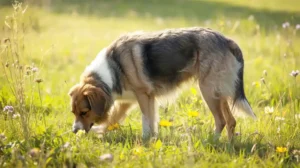 Dogs often use grass as a natural regulator of their digestion. The indigestible cellulose fibers act like a broom in the intestines, stimulating intestinal transit and helping with cleansing. If you observe that a dog devours the grass very greedily and then vomits, soft spring blades usually serve as a mechanical trigger. The stalks tickle the mucous membrane in the throat and stomach, which helps get rid of foreign bodies, too much stomach acid or indigestible hair. Nevertheless, the majority of dogs eat grass simply because they like it – without having to vomit afterwards.
When does grazing become dangerous?
Even though “grazing” is completely harmless in most cases, owners should be vigilant. The greatest danger comes not from the grass itself, but from what rests on it. Freshly fertilized meadows are taboo. Dogs also often love the tops of small grain plants. Particular caution is required here because they are sprayed with pesticides and herbicides in autumn and spring. This can cause skin rashes, nausea and vomiting, eye irritation and respiratory problems. Another risk in spring are lungworms, their intermediate hosts (snails) often stick to the stalks and are accidentally eaten.
In most cases, eating grass is harmless. But if the behavior changes or is accompanied by other symptoms, there could be a serious organic cause (such as gastritis, pancreatitis or parasites) be behind it. Warning signs that something may be wrong include:
- Hustle and greed: The dog does not eat the grass with pleasure, but appears panicked, stressed and swallows large quantities without chewing.
- Persistent vomiting: The dog vomits after every grazing or vomits multiple times throughout the day (especially if there is yellow mucus or white foam).
- Blood alert: You discover blood in the vomit or feces (light red or tarry black).
- Loss of appetite: The dog prefers grass to his normal food or refuses to eat it completely.
- Changed general condition: The four-legged friend looks limp (Lethargy), trembling, panting heavily, or slouching (stomach pain).
- Digestive stop: The dog tries to defecate, but nothing comes out – or he suffers from persistent, watery diarrhea.
- Foreign body: You see a blade of grass sticking out of the anus. Important: Never pull on it! This can lead to cuts in the intestines. Have this removed by the vet.
Tip: When you go to the vet, it is best to take a stool sample with you. This means you can quickly test for parasites such as lungworms or giardia.
As long as the dog chooses in a relaxed manner, shows no signs of pain and the grazing does not degenerate into compulsive excess, he can enjoy his green gourmet buffet to the fullest. It is simply the canine way of properly welcoming spring and early summer. (SR)
Was this amount interesting or helpful?
Your rating shows us what you and your furry friend like – it's like a treat for us.